
Desserts
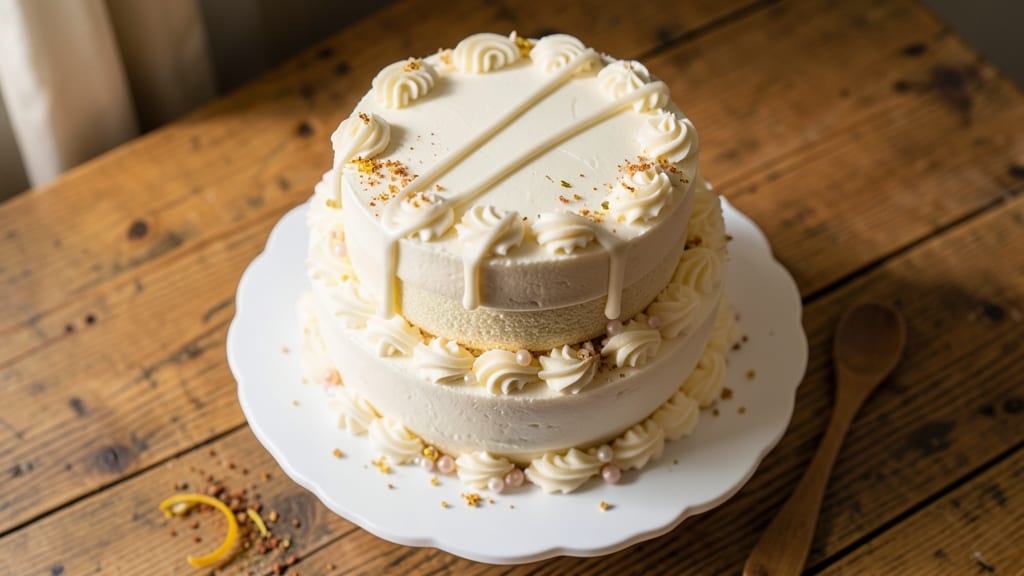
This bakery white cake recipe delivers the same light, fluffy layers and buttery vanilla frosting you’d expect from a professional bakery. The secret lies in properly creaming butter and sugar, folding in egg whites for volume, and baking at the right temperature for even rise. I’ve perfected this method over years of testing—no shortcuts here, just reliable results every time.
The cake batter is simple yet precise: all-purpose flour, baking powder, and a touch of salt combine with room-temperature butter and sugar for a smooth, velvety texture. The key to that signature bakery finish? Whipping egg whites to stiff peaks before gently folding them into the batter—this ensures layers that are tender yet sturdy enough to hold the frosting. Bake at 350°F for 25-30 minutes, then let the cake cool completely before assembling.
Once baked, the layers reveal a clean white crumb with just the right density—neither too dry nor too moist. The buttercream frosting, made with powdered sugar, butter, and vanilla, is rich but not overly sweet, creating a smooth, professional finish. This recipe yields a cake that’s elegant enough for weddings or celebrations but simple enough for everyday baking.
For decorating, pipe swirls or a smooth coat work beautifully, or add fresh berries and edible flowers for a modern touch. The frosting can also be tinted for special occasions without compromising texture. Whether you’re baking for a crowd or treating yourself, this recipe delivers bakery-quality results at home.
Ingredients for bakery white cake
The foundation of bakery-quality white cake: precise measurements and quality ingredients.
| Ingredient | Amount | Notes |
|---|---|---|
| All-Purpose Flour 🌾 | 3 cups | Sifted for even texture |
| Granulated Sugar 🍚 | 2 ¼ cups | Divided for batter and frosting |
| Unsalted Butter 🧈 | 1 ½ cups | Room temperature, softened |
| Large Eggs 🥚 | 6 whole | Room temperature, separated |
| Baking Powder 🌶️ | 2 ½ tsp | Diamond Crystal preferred |
| Salt 🧂 | ½ tsp | Fine sea salt preferred |
| Pure Vanilla Extract 🌿 | 1 ½ tsp | High-quality Madagascar bourbon |
| Milk 🥛 | ¾ cup | Room temperature, whole preferred |
| Powdered Sugar 🍚 | 4 cups | Sifted for smooth frosting |
| Vanilla Bean Paste 🌿 | 1 tbsp | For enhanced vanilla flavor |
| Heavy Whipping Cream 🥛 | 1 cup | Chilled for stable peaks |
The flour and butter are your game-changers here. King Arthur or Gold Medal all-purpose flour gives the best rise, but don't stress if you've only got standard brand—just sift it first. For the butter, Plugrá or Land O'Lakes unsalted are reliable choices, but any good-quality brand works as long as it's room temperature. The vanilla extract matters too—Madagascar bourbon vanilla has that rich, complex flavor that separates home bakes from bakery ones. I always buy mine in the baking aisle at Whole Foods where they keep it sealed properly. Room temperature eggs are non-negotiable for proper volume—just pop them in warm water for 10 minutes if they're straight from the fridge.
No vanilla bean paste? Double the vanilla extract and add a pinch of ground vanilla bean seeds if you've got any. Running short on powdered sugar? Confectioners' sugar from the store works fine, but sift it well to avoid lumps. The heavy whipping cream should be cold but not icy when you whip it—if it's too warm, you'll end up with butter instead of stable peaks. For the milk, whole milk works best for richness, but 2% is fine in a pinch. The baking powder is critical—Diamond Crystal measures differently than Rumford, so if your recipe calls for 2.5 tsp, stick with that brand. Need a shortcut? Pre-sifted flour mixes like Betty Crocker's are a lifesaver for busy days, though they lack the professional finish of homemade.
Store your dry ingredients like flour, powdered sugar, and baking powder in airtight containers in a cool, dark place—they'll keep for 6-12 months that way. Butter can be stored in the fridge for up to 3 months once opened, but for best results, keep it in the freezer and let it sit out just 30 minutes before using. The vanilla extract lasts years unopened, but once opened, it's best used within 12 months. For the cake layers, wrap them tightly in plastic wrap and store at room temperature for 2 days or in the fridge for 5 days. The frosting can be made a day ahead and stored in the fridge—just re-whip it briefly before using. Freeze cake layers for up to 3 months if you're prepping for a big event.
Why You'll Love This Recipe
- The secret’s in the ratio: rich, creamy butter and just the right amount of sugar create that signature tender crumb. Honestly, the first bite tastes like a bakery’s secret—light but never dry, with that melt-in-your-mouth finish.
- No-Mix Madness: I swear, this cake comes together with just a few strokes of a spatula—no stand mixer required. Cream butter and sugar until light, toss in eggs one at a time, fold in dry ingredients, and boom. That’s it. No overmixing, no stress.
- Butter-Sugar Bliss: The secret’s in the ratio: rich, creamy butter and just the right amount of sugar create that signature tender crumb. Honestly, the first bite tastes like a bakery’s secret—light but never dry, with that melt-in-your-mouth finish.
- Birthday to Brunch: This cake is my go-to for celebrations and lazy mornings. Frost it with buttercream for a party, slice it plain with tea for a weekday treat, or even cube it into trifles. It handles any vibe without extra effort.
Step-by-step instructions for bakery white cake
This method delivers professional-quality layers with tender crumb and smooth frosting every time.
Prepare the Cake Batter
Preheat your oven to 350°F and grease two 9-inch round cake pans with butter, then line the bottoms with parchment paper. In a large mixing bowl, combine the 3 cups all-purpose flour, 2.5 teaspoons baking powder, and 0.5 teaspoon salt. Sift this mixture together to remove any lumps and create a light, airy base for the cake.
In a separate bowl, beat the 1.5 cups softened unsalted butter and 2.25 cups granulated sugar together on medium speed until the mixture is light and fluffy—this should take about 3-4 minutes. Add the 6 whole large eggs one at a time, mixing well after each addition. Stir in the 1.5 teaspoons pure vanilla extract and 0.75 cup milk until fully combined. Gradually add the dry ingredients to the wet mixture, mixing just until everything is incorporated.
Bake the Layers
Divide the batter evenly between the prepared cake pans, filling each about two-thirds full. Bake for 25-30 minutes, or until a toothpick inserted into the center comes out clean. The edges should be golden brown, and the tops should spring back gently when pressed. Rotate the pans halfway through baking for even browning.
Once baked, remove the cakes from the oven and let them cool in the pans for 10 minutes. Then transfer them to a wire rack to cool completely. This gradual cooling prevents cracking and ensures even layers for frosting. I always tap the sides of the pans gently to loosen the cakes before removing them.
Prepare the Vanilla Frosting
In a large mixing bowl, combine the 4 cups powdered sugar with the 1 tablespoon vanilla bean paste and 1 cup chilled heavy whipping cream. Beat on medium-high speed until the mixture is smooth and fully incorporated. The frosting should be thick but spreadable—if it's too stiff, add a few drops of milk to loosen it.
Spread a thin layer of frosting over the first cake layer to help prevent crumbs when assembling. Place the second layer on top and gently press down to create an even surface. Apply the remaining frosting, starting from the outer edge and working your way inward to avoid air pockets. Use an offset spatula to smooth the sides and create clean, professional-looking edges.
Chill and Serve
Cover the frosted cake and refrigerate for at least 2 hours to allow the frosting to set. This step is crucial for achieving a polished finish and preventing the cake from becoming too warm or sticky. Once chilled, you can decorate with fresh berries, sprinkles, or a dusting of powdered sugar if desired.
The cake will keep well at room temperature for 2-3 days when stored in an airtight container. For best results, serve slices at room temperature so the frosting melts slightly and creates a creamy texture. Each slice should have a tender, moist crumb with a smooth, velvety frosting that complements the delicate vanilla flavor.
Pro Tips For Making Bakery White Cake
- Weigh Your Butter: I learned this the hard way—packing butter into a measuring cup leaves air gaps, and your cake ends up denser than a brick. Use a kitchen scale for 227g (1 cup) of softened butter, or press it firmly into the cup and level it off. No more guessing if it’s actually 1 cup.
- Room-Temp Eggs Matter: Cold eggs sink in batter like rocks, causing uneven texture. Take them out of the fridge 30 minutes before mixing—no need to wait longer. If you’re in a rush, place them in warm water for 10 minutes. Your cake’s crumb will thank you.
- Stop When It Springs: The second your cake pulls away from the pan edges but still jiggles slightly in the center, that’s your cue. Overbaking dries out white cake faster than a summer breeze. If unsure, poke with a toothpick—moist crumbs mean it’s done; wet batter means 5 more minutes.
- Sift the Dry Mix: Flour clumps like a lazy cat in sunlight, and baking powder needs to be evenly distributed. Sift the flour and baking powder together before adding wet ingredients—this prevents lumps and guarantees a light, airy texture. I skip this sometimes, and the cake still rises, but it’s noticeably better when I don’t.
Common mistakes when making perfect results
Overmixing the Batter
I’ve seen countless cakes turn dense and tough because someone mixed the batter too long after adding the flour. Once you incorporate the dry ingredients, stop mixing immediately—just until combined. Overmixing develops gluten, which makes the cake chewy instead of light and airy. Use a spatula to gently fold in the last bit of flour. 🔥
Room-Temp Ingredients
Cold butter or eggs are the #1 reason cakes fail. If your butter has fridge marks or your eggs are straight from the fridge, give them 30-60 minutes to warm up at room temperature. I test butter by pressing my finger into it—it should leave a slight indent but hold its shape. For eggs, float them in warm water for 10 minutes if you’re in a hurry.
Skipping the Cooling Step
Rushing to frost warm cakes leads to cracks and uneven layers. Let your cakes cool completely in the pans for 10 minutes, then transfer to a wire rack for another 1-2 hours. This patience prevents soggy bottoms and ensures clean slices. I’ve learned this the hard way—once, I frosted a cake that was still warm, and it collapsed within hours.
Incorrect Oven Temp
Your oven might say 350°F, but it’s probably running hotter. Use an oven thermometer to confirm the actual temperature—many ovens run 25°F hotter than set. If your cake browns too quickly, lower the temp to 325°F and add 5-10 minutes to the bake time. Preheat for 20 minutes before baking to ensure even heat distribution.
Uneven Batter Distribution
Piling batter high in the center creates domed, uneven layers. Fill your pans only two-thirds full and tap them gently on the counter to settle the batter. Use a ruler to check the height—it should be even across the pan. I’ve seen cakes with one side rising higher than the other because someone overfilled the pan. This leads to uneven baking and messy frosting.
Ignoring the Toothpick Test
Don’t rely on time alone—always check for doneness with a toothpick. Insert it into the center; it should come out clean or with a few crumbs. If it’s wet, bake for another 5 minutes. Overbaking dries out the cake, while underbaking leaves it gummy. I pull mine out when it’s just slightly underdone and let it carry through in the residual heat. 💡
Nutrition facts
Frequently asked questions about bakery white cake
Why does my white cake turn out dense instead of light?
The most common causes are overmixing the batter or using cold ingredients. Stop mixing as soon as the flour is incorporated to prevent gluten development. Also, ensure your butter and eggs are at room temperature—cold ingredients don't incorporate air properly.
Can I substitute buttercream frosting with cream cheese frosting?
Yes, but the texture will differ slightly. For cream cheese frosting, replace the butter with 8 oz cream cheese (softened) and reduce the powdered sugar to 3 cups. Add 1 teaspoon lemon juice to balance the richness. The frosting will be tangier but still smooth when chilled.
How do I prevent my cake layers from cracking?
Cracking usually happens when cakes cool too quickly or are frosted while still warm. After baking, let layers cool in pans for 10 minutes, then transfer to a wire rack to cool completely. Also, use a thin layer of frosting (called a "crumb coat") before adding the final layer—this seals in moisture and prevents crumbs from causing cracks.
What's the best way to store leftover cake?
For short-term storage (2-3 days), keep it in an airtight container at room temperature. For longer storage, wrap each layer tightly in plastic wrap and place in the fridge for up to 5 days. To freeze, wrap layers individually and store for 3 months—thaw at room temperature before frosting.
Can I make this cake in a bundt pan instead of round pans?
Reduce the batter by 1 cup to account for the pan's shape. Bake at 325°F for 45-55 minutes (check with a toothpick). The cooling time will be longer—2-3 hours—due to the thicker center. Frosting will be trickier, so consider a simple dusting of powdered sugar for decoration.