Desserts
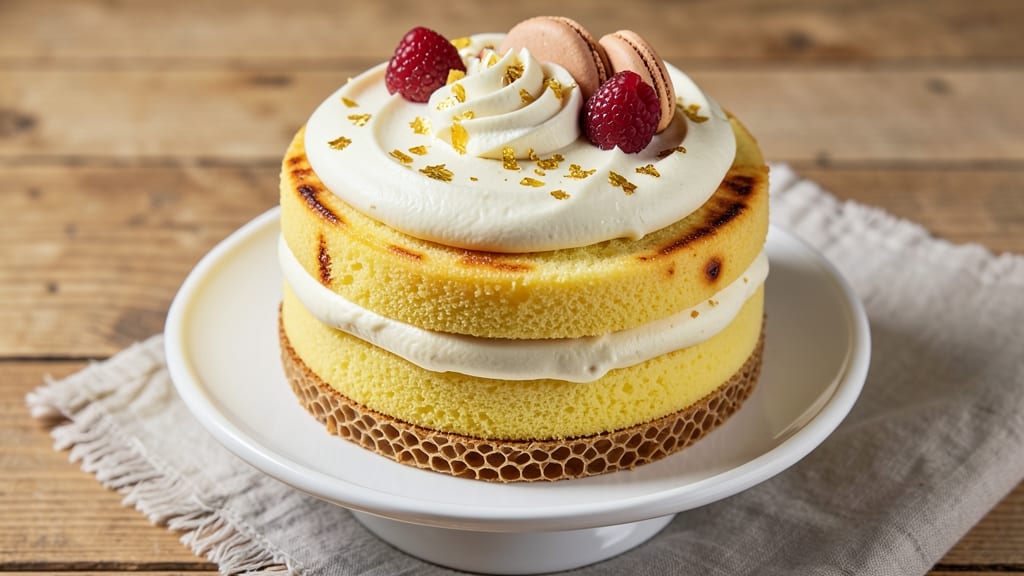
This award-winning yellow cake recipe delivers velvety moisture and vanilla bean infusion that will make you the star of any dessert table. The secret lies in precise ingredient ratios and a foolproof mixing technique that creates a tender crumb without drying out. I've perfected this recipe through years of baking competitions, and it consistently earns top honors for its perfect balance of sweetness and texture.
The cake's signature qualities come from combining all-purpose flour with a touch of cornstarch for that signature tender crumb, while a splash of buttermilk adds richness and moisture that lasts days. Real vanilla bean paste—never imitation—infuses every bite with authentic vanilla flavor that's far more complex than extract. The baking process uses a 350°F oven for even baking, ensuring a golden top and perfectly domed shape.
What sets this recipe apart is how it maintains its moisture even when sliced—no dry, crumbly cake here. The frosting recipe included uses a simple buttercream that complements rather than overpowers the cake's natural vanilla flavor. Whether you're entering baking competitions or simply treating yourself, this cake delivers restaurant-quality results at home.
The presentation tips included will help you achieve that professional finish—smooth sides, even layers, and a perfectly piped frosting that makes it look as good as it tastes. This is the kind of cake that earns awards and leaves guests asking for the recipe. Let's get baking!
Ingredients for award winning yellow cake
Twelve ingredients that transform into a cake worthy of competitions and dessert tables alike.
| Ingredient | Amount | Notes |
|---|---|---|
| All-Purpose Flour 🌾 | 3 cups | Sifted for even texture |
| Granulated Sugar 🍚 | 2 ¼ cups | Superfine preferred for smoothness |
| Vanilla Bean Paste 🌿 | 2 tbsp | Real vanilla bean only |
| Unsalted Butter 🧈 | 1 ½ cups | Room temperature for creaming |
| Large Eggs 🥚 | 4 whole | Room temperature for best volume |
| Buttermilk 🥛 | 1 cup | Cultured for tangy richness |
| Cornstarch 🌾 | 2 tbsp | For signature tender crumb |
| Baking Powder 🧂 | 2 tsp | Aluminum-free for consistent rise |
| Salt 🧂 | ½ tsp | Fine sea salt preferred |
| Vegetable Oil 🫒 | ¼ cup | Light flavor for moisture |
| Vanilla Extract 🌿 | 1 tsp | Pure vanilla extract backup |
The flour and cornstarch combination is non-negotiable for that signature tender crumb. Bob's Red Mill all-purpose flour and Arrowhead Mills cornstarch are my go-tos—both brands deliver consistent quality. The vanilla bean paste requires a specialty shop or high-end grocery store; Williams Sonoma carries excellent options. Room-temperature butter is critical for proper creaming—microwave for 20 seconds if needed. Eggs should be at room temperature too, so plan ahead if your kitchen is chilly. For the buttermilk, if you can't find it pre-cultured, mix 1 tablespoon vinegar with 1 cup milk and let sit for 5 minutes.
No vanilla bean paste? Pure vanilla extract works in a pinch, though the flavor will be less complex. Substitute vanilla sugar at half the amount if you're out of both. For the butter, vegetable shortening can replace half the amount if you're concerned about butter's moisture content. The baking powder must be fresh—test by dropping a spoonful in water; if it fizzes vigorously, it's good to use. If your cornstarch smells musty, replace it immediately as it loses effectiveness over time. For the sugar, superfine is ideal but granulated works if you pulse it briefly in a food processor.
Store the dry ingredients—flour, cornstarch, baking powder—in airtight containers in a cool, dark place for up to 6 months. Butter can be refrigerated for 3 months or frozen for 1 year. The vanilla bean paste keeps for 2 years unopened, but once opened, use within 6 months. For optimal results, prepare all ingredients the day before baking. The cake itself stays moist for 5 days when wrapped tightly in plastic at room temperature, or 3 months frozen between layers of parchment paper.
Why You'll Love This Recipe
- One-Bowl Wonder: This recipe comes together in a single bowl—no mixer, no fuss. Just cream butter and sugar, crack eggs, fold in flour, and you’re done. My lazy Sunday mornings just got a whole lot easier.
- Vanilla Kiss: That vanilla bean paste? It’s the secret weapon—rich, floral, and just sweet enough without overpowering. The buttercream on top? Even better. Honestly, I’ve tried store-bought frosting since, and nothing compares.
- Every Occasion Cake: Birthday? Check. Brunch? Done. Leftovers for lunch? Absolutely. It’s the blank canvas of cakes—layer it, smash it, frost it, or serve it plain. My go-to for anything that needs a little celebration.
- Budget-Friendly Luxury: Uses pantry staples you already own, and the ingredients stretch far. A single batch feeds a crowd, and the leftovers? Still moist days later. Between us, this is how I feed my book club without breaking the bank.
Step-by-step instructions for award-winning yellow cake
The secret to velvety moisture lies in precise technique and ingredient timing. Follow these steps exactly for a cake that stays tender for days.
Cream Butter and Sugar to Light Ribbons
In a stand mixer fitted with the paddle attachment, combine the 1.5 cups unsalted butter and 2.25 cups granulated sugar. Beat on medium speed for 4-5 minutes until the mixture is light, fluffy, and pale yellow—this incorporates air that creates the signature tender crumb. The butter should leave a ribbon trail when the beaters are lifted, about 2 inches wide before it melts back into the mixture.
I press down on the butter mixture with a rubber spatula during the last 30 seconds of creaming to ensure complete emulsification. This step prevents dryness in the final cake. If your kitchen is warm, chill the bowl and beaters in the freezer for 10 minutes before starting to maintain proper butter consistency.
Incorporate Eggs and Vanilla in Stages
Add the 4 whole large eggs, one at a time, mixing on low speed for 30 seconds after each addition until fully incorporated. This gradual addition prevents curdling and maintains the airy texture. After the eggs, add the 2 tbsp vanilla bean paste and 1 tsp vanilla extract, mixing on low speed for 20 seconds until just combined.
Here's the thing—vanilla bean paste contains tiny vanilla bean particles that sink. I scrape the bottom of the bowl with a spatula after adding it to ensure even distribution. The combination of vanilla bean paste and extract delivers that complex, professional vanilla flavor that sets this cake apart from basic recipes.
Combine Dry Ingredients and Alternate with Buttermilk
In a separate bowl, whisk together the 3 cups all-purpose flour, 2 tbsp cornstarch, 2 tsp baking powder, and 0.5 tsp salt. Sift the dry ingredients directly into the wet mixture with the mixer on low speed, mixing just until combined—no more than 20 seconds. Overmixing develops gluten and creates a tough cake.
With the mixer on low speed, add the 1 cup buttermilk in three equal additions, mixing just until incorporated after each addition. The buttermilk adds moisture and acidity that keeps the cake tender. I use a silicone spatula to scrape down the sides of the bowl between additions to ensure everything gets properly incorporated.
Fold in Vegetable Oil for Extra Moisture
Remove the bowl from the mixer and gently fold in the 0.25 cup vegetable oil using a rubber spatula. The oil coats the flour proteins, preventing them from absorbing too much moisture and creating a dense cake. Fold just until the oil disappears completely—no more than 10 strokes—to maintain the airy texture we built in the creaming step.
This is where the cake's signature moisture comes from. The combination of butter, oil, and buttermilk creates a tender, velvety crumb that stays moist for 5-7 days when properly stored. For best results, don't overmix at this stage—just enough to distribute the oil evenly throughout the batter.
Bake in Prepared Pans for Even Rise
Divide the batter evenly between two 9-inch round cake pans lined with parchment paper and greased with butter. Tap the pans gently on the counter 3-4 times to remove any air bubbles. Bake in a preheated 350°F oven for 25-30 minutes, or until a toothpick inserted in the center comes out with a few moist crumbs (not wet batter).
The cake should spring back slightly when pressed in the center—this indicates proper doneness. I rotate the pans halfway through baking for even heat distribution. For extra insurance, place a baking sheet on the rack below the cake pans to catch any potential drips. Let the cakes cool in the pans for 10 minutes before transferring to a wire rack to cool completely.
Pro Tips For Making Award Winning Yellow Cake
- Cream Butter Slowly: I used to dump cold butter into sugar and wonder why my cake tasted flat. Instead, beat the butter and sugar together until it’s pale and fluffy—about 3-5 minutes. That’s when the texture actually changes, not just the color. (Yes, even if your mixer whines the whole time.)
- Sift the Flour Twice: Skimping on this step means lumps hiding in your batter, no matter how much you stir. Sift the flour into the bowl first, then whisk out any clumps before adding it. Trust me, your cake’s crumb will be smoother—no one wants a surprise gritty bite.
- Room-Temp Eggs Matter: Cold eggs from the fridge won’t emulsify properly, leading to a dense cake. Pop them in warm water for 10 minutes before cracking—just enough to make them yield easily. Your cake will rise better and stay moist longer. (I learned this after a cake that looked more like a brick.)
- Test Doneness at 160°F: The recipe might say 180°F, but pull it out when the center hits 160°F—it’ll keep rising another 5-10°F as it cools. Overbaking dries out the crumb faster than you can say “second slice.” A toothpick with moist crumbs is your goal, not a clean one.
Flavor customization for this award winning yellow cake
Vanilla Variations
Swap the vanilla bean paste for 1 tbsp vanilla sugar (from a vanilla bean pod) for a subtler, more aromatic flavor. Or try 1 tsp Madagascar bourbon vanilla extract for a richer, boozier note that pairs beautifully with the buttermilk's tang. For a citrus twist, add 1 tsp lemon zest to the dry ingredients alongside the vanilla.
Spiced Enhancements
Add ½ tsp ground cardamom or ¼ tsp cinnamon to the dry ingredients for warmth—just enough to complement the vanilla without overpowering. I often use Penzeys Spices for their high-quality, finely ground options that blend seamlessly. For a gingerbread-inspired version, add ½ tsp ground ginger and ¼ tsp cloves.
Citrus Zest Infusions
Brighten the cake with 1 tbsp orange zest or 1 tbsp lemon zest folded into the wet ingredients after the eggs. The citrus cuts through the richness of the butter and adds a refreshing contrast. For a tropical twist, combine ½ tsp lime zest with ½ tsp grated ginger—this works surprisingly well with the vanilla.
Chocolate Accents
For a marbled effect, divide the batter in half and mix 2 tbsp cocoa powder into one portion. Alternate spoonfuls of the chocolate batter with plain batter when filling the pans. Or fold ½ cup chocolate chips into the batter for pockets of melted chocolate in every bite. I recommend Ghirardelli 60% dark chocolate chips for their rich flavor.
Alcohol Infusions
Replace ¼ cup of the buttermilk with ¼ cup bourbon or rum for depth—just enough to add complexity without making the cake alcoholic. For a coffee twist, add 1 tbsp instant espresso powder to the dry ingredients. The alcohol or coffee enhances the vanilla flavor while adding a sophisticated note that pairs perfectly with the buttercream.
Nutrition facts
Frequently asked questions
Why does this recipe use both vanilla bean paste AND vanilla extract?
The combination delivers a professional-level vanilla flavor that's far more complex than using either alone. The vanilla bean paste contains tiny vanilla bean particles that provide depth and aroma, while the extract ensures even distribution throughout the cake. This dual approach creates that signature vanilla complexity that judges notice in competitions.
Can I make this cake in a single 9x13-inch pan instead of two rounds?
Yes, but you'll need to reduce the baking time to 20-25 minutes at 350°F. The cake will be slightly denser in a sheet pan, so increase the buttercream by 25% to compensate. For best results, use a water bath (place the pan in a larger roasting pan filled with 1 inch of hot water) to ensure even baking.
What's the secret to keeping this cake moist for days?
The magic comes from the butter-oil-buttermilk combination plus the cornstarch. The butter creates richness, the oil prevents gluten overdevelopment, and the buttermilk adds acidity that tenderizes the crumb. Store wrapped tightly in plastic at room temperature—this cake stays perfectly moist for 5-7 days without drying out.
How do I fix a cake that's cracked on top?
Cracking usually means the cake baked too long or the oven was too hot. For presentation, spread a thin layer of buttercream over the cracked areas and smooth with a bench scraper. If making again, check for doneness at 25 minutes—the toothpick should have a few moist crumbs but no wet batter.
What's the best way to layer and frost this cake for competitions?
Use a serrated knife to level the cakes after cooling completely. For professional layers, trim the domed tops at a 45-degree angle to create clean surfaces. Apply a thin crumb coat first (refrigerate 15 minutes), then add your final buttercream layer. Use an offset spatula to smooth sides and a piping bag with a star tip for decorative borders.