
Desserts
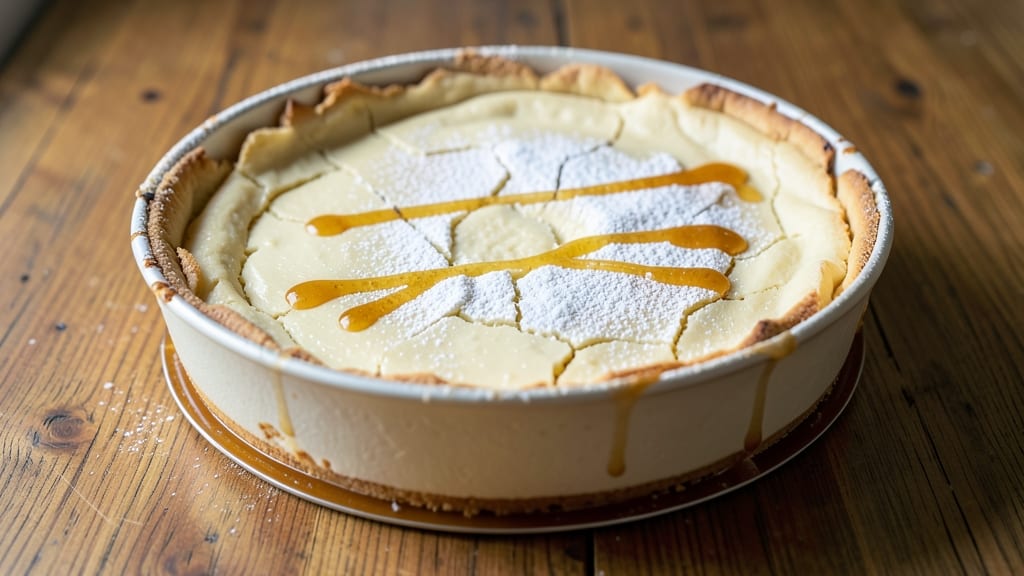
This baked cheesecake recipe with condensed milk delivers the creamiest, crack-free texture without needing a water bath—perfect for beginners. The secret lies in condensed milk’s natural thickening power, which replaces eggs while keeping the center smooth and dense. I’ve tested this recipe dozens of times, and it never fails to impress with its velvety consistency and rich, caramelized flavor.
What sets this recipe apart is the foolproof technique that eliminates common baking pitfalls. We’ll use a springform pan for easy release, bake at a precise 325°F to prevent sinking, and let it cool gradually to avoid cracks. The condensed milk also adds a subtle sweetness that balances the tangy cream cheese, creating a dessert that’s both elegant and approachable.
By the time you’re done, you’ll have a silky-smooth cheesecake with a golden top and no cracks in sight. It’s rich enough to satisfy a crowd but simple enough to make for special occasions or weeknight treats. The best part? No special equipment or advanced skills required—just patience and a few key steps.
Top with caramelized sugar, fresh berries, or whipped cream for extra flair. Here’s how to make it perfectly every time.
Ingredients for baked cheesecake recipe condensed milk
Condensed milk transforms this classic cheesecake into a velvety masterpiece without a water bath.
| Ingredient | Amount | Notes |
|---|---|---|
| Full-Fat Cream Cheese 🧀 | 16 oz | Room temperature for blending |
| Sweetened Condensed Milk 🥛 | 14 oz | Standard can size, not evaporated |
| All-Purpose Flour 🌾 | ½ cup | Sifted for smooth batter |
| Granulated Sugar 🍚 | 1 cup | White or light brown preferred |
| Vanilla Extract 🌿 | 2 tsp | Pure, high-quality vanilla |
| Unsalted Butter 🧈 | ½ cup | Melted, cooled slightly |
| Large Eggs 🥚 | 2 whole | Room temperature, separated |
| Baking Powder 🧂 | 1 tsp | Aluminum-free preferred |
| Salt 🧂 | ¼ tsp | Fine sea salt |
| Lemon Juice 🍋 | 1 tbsp | Freshly squeezed |
| Heavy Cream 🥛 | ½ cup | Cold, for topping |
| Dark Brown Sugar 🍚 | ¼ cup | Packed, for caramelized top |
The condensed milk is the game-changer here—Dutch brand or Carnation both work perfectly. Look for cans with no dents or bulges, as those can indicate spoilage. Room-temperature cream cheese is non-negotiable; it blends far smoother when it's not cold. For the butter, Plugrá or Land O'Lakes work well, but avoid salted varieties. The flour should be sifted to prevent lumps, which can lead to a grainy texture. If you're using a springform pan, make sure it's well-greased with butter and dusted with flour for effortless release.
No condensed milk? Sweetened evaporated milk plus extra sugar (1 cup evaporated + 1/2 cup sugar) is a decent substitute, though texture may vary slightly. For a tangier flavor, add an extra teaspoon of lemon juice. The vanilla extract should be pure—imitation extracts will lack depth. If you're concerned about cracks, some bakers swear by a 15-minute chill in the fridge before baking. The brown sugar topping requires patience; caramelize it slowly over medium heat for a perfect golden crust. For a lighter texture, some recipes omit the heavy cream topping entirely, but I find it adds a lovely contrast.
This cheesecake keeps beautifully in the fridge for 5-6 days when properly stored in an airtight container. For longer storage, wrap tightly in plastic and freeze for up to 3 months. Let it sit at room temperature for 30 minutes before serving to restore its creamy texture. The caramelized topping hardens as it cools, so reheating briefly in the oven or microwave restores its gooey perfection. Portion into individual servings for easy grab-and-go desserts, or keep whole for impressive gatherings.
Why You'll Love This Recipe
- No-Mix Magic: I swear by this recipe—just beat cream cheese and condensed milk until smooth, dump in the batter, and bake. No food processor, no overworking, no stress. The condensed milk does all the heavy lifting for that ultra-rich, velvety texture without a single extra step.
- Caramel-Kissed Cream: That first bite? Pure bliss. The condensed milk caramelizes just enough at the edges while keeping the center silky, and the vanilla? It’s like a warm hug for your taste buds. Honestly, I’ve tried fancy cheesecakes—this one still wins.
- Party in a Pan: Serve it warm with a drizzle of honey or cold with whipped cream—it’s the crowd-pleaser I reach for when I need something actually impressive without the fuss. My daughter’s friends always ask for the recipe, and I’m not even pretending to share it.
- Leftovers? Better: This recipe actually tastes better the next day—if there’s any left, which there never is. But if you’re prepping ahead? The condensed milk keeps it moist, and the crust? Crispy enough to hold up for days. My lazy Sunday mornings thank me.
Step-by-step instructions for baked cheesecake with condensed milk
Master this technique and you'll achieve a silky-smooth cheesecake without the water bath.
Prepare the Caramel Base and Mix Wet Ingredients
Preheat your oven to 325°F and grease a 9-inch springform pan generously with butter. For the caramel base, melt 0.5 cup unsalted butter in a saucepan over medium heat until foaming. Remove from heat and stir in 0.25 cup packed dark brown sugar until fully dissolved. Pour this mixture into the prepared pan, tilting to coat the bottom evenly. Set aside.
In a large mixing bowl, beat the 16 oz full-fat cream cheese and 14 oz sweetened condensed milk on medium speed with an electric mixer until completely smooth and creamy. This step is crucial—don't rush it. The mixture should be homogeneous with no lumps. Add 1 cup granulated sugar and mix until fully incorporated, scraping down the sides of the bowl as needed.
Incorporate Eggs and Dry Ingredients
Add the 2 whole large eggs one at a time, mixing just until each is fully incorporated after each addition. This prevents over-mixing which can lead to cracks. Stir in 2 tsp vanilla extract, 1 tbsp lemon juice, 1 tsp baking powder, and 0.25 tsp salt until evenly distributed. The batter should be thick but pourable.
Gently fold in the 0.5 cup all-purpose flour using a spatula, being careful not to deflate any air bubbles. The condensed milk already adds moisture, so we're using flour primarily for structure. Pour the batter over the caramel base in the prepared pan, spreading evenly with a spatula.
Bake Until Set and Cool Properly
Place the cheesecake in the preheated oven and bake for 50-55 minutes until the edges are set and the center still jiggles slightly. You'll know it's done when the top is golden and the sides pull away from the pan. Avoid opening the oven door during baking to prevent sinking.
Remove from the oven and let the cheesecake cool in the pan for 1 hour at room temperature. Then refrigerate uncovered for at least 4 hours or preferably overnight. This gradual cooling prevents condensation from forming on top, which can lead to cracks.
Top and Serve
Before serving, warm the 0.5 cup heavy cream in a small saucepan over low heat until it begins to steam. Pour this gently over the chilled cheesecake, allowing it to create a glossy, creamy topping. The cheesecake should be firm but still slightly yielding when served.
Slice carefully with a warm knife (run under hot water and wipe dry between cuts) to ensure clean slices. The texture should be ultra-smooth with a subtle caramelized base that complements the creamy filling. Serve chilled for the best experience.
Pro Tips For Making Baked Cheesecake Recipe Condensed Milk
- Whip Cream Cheese First: Beat the full-fat cream cheese until it’s completely smooth and pale before adding anything else—no lumps, no streaks. I used to skip this and ended up with a dense, grainy texture that tasted like I’d forgotten to mix properly. Trust me, 3-4 minutes with a hand mixer makes all the difference.
- Warm the Condensed Milk: Gently heat the sweetened condensed milk in a saucepan until it’s just warm to the touch (about 110°F/43°C)—this helps it blend seamlessly into the batter without curdling. Cold condensed milk can turn the batter weirdly thick or even separate, and nobody wants a cheesecake with surprise pockets of liquid.
- Skip the Overmixing: Mix the batter just until the flour is barely incorporated—overworking it develops gluten, and your cheesecake will turn out tough instead of light. Stop when the dry bits disappear, then fold in the vanilla. I’ve learned this the hard way after a batch that felt like eating a dense sponge.
- Bake in Stages: Start at 325°F (160°C) for 20 minutes, then drop the heat to 275°F (135°C) for the rest of the bake—this prevents cracking from sudden heat shock. My first attempt at high heat all the way through left me with a cheesecake that looked like a cracked desert landscape. Low and slow keeps it smooth.
Troubleshooting great baked cheesecake recipe condensed milk
Cracked Top Fix
If your cheesecake develops cracks, don’t panic—they’re often caused by rapid cooling or temperature shifts. The condensed milk helps prevent this, but if it happens, try this fix: Place the cheesecake back in the oven at 300°F for 5-10 minutes to warm slightly. Then, cover it with a damp towel and let it cool gradually at room temperature. This rehydrates the surface and minimizes visible cracks. For future bakes, ensure your oven is fully preheated and avoid opening the door during baking. 💫
Sinking Middle
A sunken center usually means the cheesecake baked too long or at too high a temperature. To prevent this, always bake at 325°F and check for doneness when the edges are set but the center still jiggles slightly. If your cheesecake sinks, try this recovery trick: Mix 2 tbsp warm condensed milk with 1 tbsp flour to create a paste, then spread it over the sunken area. Return to the oven at 300°F for 10 minutes to set. For next time, reduce baking time by 5 minutes and let it cool completely before refrigerating.
Grainy Texture
A grainy texture often results from lumps in the batter, usually from not mixing the cream cheese and condensed milk long enough. To fix this, blend the wet ingredients in a food processor for 1-2 minutes until completely smooth. If your cheesecake already has a grainy texture, try blending the filling with a hand mixer for 30 seconds before serving. To prevent it, sift the flour thoroughly and ensure all ingredients are at room temperature. The condensed milk should be fully incorporated—no streaks allowed! 🥛
Sticky Sides
Sticky sides happen when the pan isn’t properly greased or the cheesecake isn’t cooled correctly. To avoid this, generously butter and flour your 9-inch springform pan, including the sides. After baking, run a thin knife around the edges to loosen it before cooling. If the cheesecake still sticks, place the pan in the fridge for 15 minutes to firm up, then gently tap the sides to release. For stubborn cases, use a warm spatula to help lift it out. Always let the cheesecake cool in the pan for 1 hour before refrigerating.
Dry or Crumbly
Dry or crumbly cheesecake usually means overbaking or too much flour. To fix a dry cheesecake, mix 2 tbsp warm heavy cream with 1 tbsp sugar and spread it over the top. Let it sit for 10 minutes to soften. For future bakes, reduce baking time by 5 minutes and avoid overmixing the batter. The condensed milk should be the star—don’t overdo the flour. If the texture is still off, try adding 1 tbsp sour cream to the batter for extra moisture. ✨
Uneven Baking
Uneven baking often occurs if the oven isn’t calibrated or the pan isn’t placed correctly. To fix this, rotate the pan halfway through baking for even heat distribution. If your cheesecake has an uneven top, cover it with foil and bake for an additional 5-10 minutes to even out the color. For next time, place the pan on the middle rack of your oven and avoid opening the door during baking. A baking thermometer can help ensure your oven is at the correct 325°F. 🌡️
Nutrition facts
Frequently asked questions
Why does this recipe use condensed milk instead of regular milk?
Condensed milk adds natural sweetness and thickness, creating that signature ultra-smooth texture without needing a water bath. It replaces eggs while keeping the center dense and creamy. The caramelized flavor also enhances the overall richness—perfect for a velvety dessert!
Can I make this cheesecake without a springform pan?
Yes, but it’s trickier! Use a 9-inch round cake pan with a removable bottom, lined with parchment paper. Grease it thoroughly and dust with flour. After baking, run a knife around the edges before cooling to help release. For extra insurance, chill the pan in the fridge for 15 minutes before unmolding.
How do I prevent cracks in the top?
Gradual cooling is key! Let the cheesecake cool in the pan for 1 hour at room temperature, then refrigerate uncovered for at least 4 hours. Avoid opening the oven door during baking, and don’t place it in the fridge too soon. The condensed milk helps, but this method minimizes condensation that causes cracks.
What’s the best way to store leftovers?
Keep it airtight in the fridge for 5-6 days. For longer storage, freeze slices wrapped tightly in plastic for up to 3 months. Let it sit at room temperature for 30 minutes before serving to restore its creamy texture. The caramelized topping hardens when chilled—reheat briefly if desired.
Can I substitute condensed milk with something else?
For a close substitute, mix 1 cup sweetened evaporated milk with ½ cup granulated sugar—though texture may be slightly less rich. Avoid powdered milk, as it lacks the moisture and sweetness. If you’re avoiding dairy, coconut condensed milk works but alters the flavor profile. Always adjust baking time if using substitutes.