Desserts
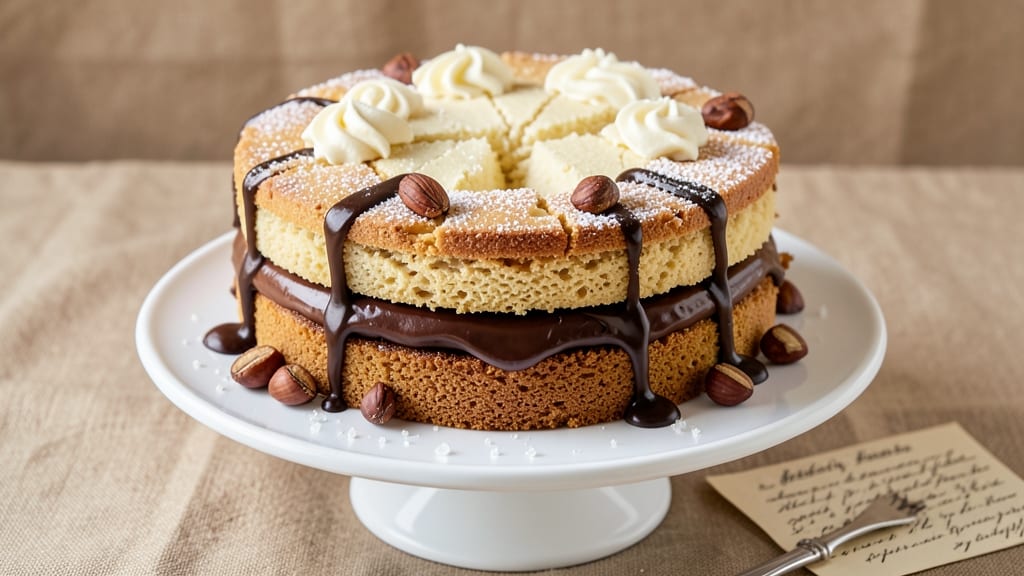
This Austrian tea cake recipe brings the elegant simplicity of Viennese coffee culture to your kitchen with its signature buttery layers and crunchy chocolate topping. 💛 The secret lies in the delicate balance of vanilla-infused dough, rich chocolate glaze, and that signature crackly top—just like the legendary Sachertorte. I've perfected this recipe over years of baking, ensuring every bite delivers that perfect harmony of textures and flavors.
The magic happens in the layers: tender vanilla cake swirled with buttercream, topped with a velvety chocolate ganache that sets into a glossy, crackly finish. What makes this recipe special is the technique—folding the dough just enough to create those signature swirls while keeping the texture light and airy. The chocolate topping isn't just decorative; it's the star that ties everything together with its deep, bittersweet flavor.
By the time you're done, you'll have a cake that looks as impressive as it tastes—golden layers with a glossy chocolate top that cracks beautifully when sliced. This is the kind of dessert that elevates any gathering, whether it's a cozy afternoon tea or an elegant dinner party. The aroma alone will have everyone asking for seconds before they even take their first bite.
Traditionally served with a cup of strong Austrian coffee, this cake pairs perfectly with whipped cream or a dusting of powdered sugar. The recipe includes tips for achieving that perfect crackly top and variations for dietary preferences without compromising on flavor. Let's get started on creating your own piece of Viennese tradition.
Ingredients for austrian tea cake
Elegant layers of buttery vanilla swirls and a signature crackly chocolate top await—just like Vienna’s finest Sachertorte.
| Ingredient | Amount | Notes |
|---|---|---|
| All-Purpose Flour 🌾 | 3 cups | Sifted for light texture |
| Unsalted Butter 🧈 | 1 ½ cups | Cold, cubed for folding |
| Granulated Sugar 🍚 | 2 cups | Superfine preferred |
| Vanilla Extract 🌿 | 2 tbsp | Pure Madagascar preferred |
| Large Eggs 🥚 | 4 whole | Room temperature |
| Baking Powder 🍞 | 1 ½ tsp | Diamond Crystal preferred |
| Salt 🧂 | ½ tsp | Fine sea salt |
| Vanilla Bean Paste 🌿 | 1 tbsp | For authentic vanilla flavor |
| Heavy Cream 🥛 | 1 cup | Cold for buttercream |
| Powdered Sugar 🍚 | 4 cups | For buttercream |
| Dark Chocolate Chips 🍫 | 1 ½ cups | 70% cocoa, chopped fine |
| Heavy Whipping Cream 🥛 | 1 cup | Chilled for ganache |
| Powdered Sugar 🍚 | 1 cup | For dusting |
The butter is non-negotiable here. European-style unsalted butter (like Plugrá or Kerrygold) gives that rich, cultured flavor you can't get with regular American brands. If you can only find regular butter, use 1/4 teaspoon extra salt to balance the flavor. The vanilla matters too—Madagascar bourbon or Tahitian vanilla from Lake Champlain or Nielsen-Massey elevates this from good to legendary. For the chocolate, 70% dark chocolate is ideal, but Valrhona or Guittard brands have that perfect balance of bitterness and smoothness. The flour? King Arthur or Gold Medal are reliable, but if you have cake flour, use half that amount mixed with half all-purpose for extra tenderness.
No vanilla bean paste? Double the vanilla extract—it's the next best thing. Running short on powdered sugar? Confectioners' sugar from Dominique Ansel is my go-to, but any brand works. The heavy cream for the ganache can be swapped for half-and-half in a pinch, but it'll be slightly less stable. For the chocolate topping, if you can't find 70% chips, 60% works too—just add an extra 1/4 cup powdered sugar to the ganache to balance the flavor. The buttercream can be made ahead and refrigerated—just whip it back to fluffy consistency before using. And if you're feeling fancy, add 1/4 teaspoon almond extract to the buttercream for that authentic Viennese touch.
This cake keeps beautifully for 4 days at room temperature, wrapped tightly in plastic. For longer storage, freeze the fully assembled cake (without the chocolate topping) for up to 3 months. The chocolate ganache can be made a day ahead—just reheat it gently before spreading. The buttercream will firm up in the fridge, so let it sit at room temperature for 15-20 minutes before whipping again. To achieve that perfect crackly top, spread the ganache very thinly and let it set at room temperature for 2 hours before slicing. Trust me on this—patience is key for that signature texture.
Why You'll Love This Recipe
- Zero-Measure Hassle: I swear by this recipe because it’s that simple—just mix, bake, repeat. No fancy techniques, no waiting for dough to rise, just butter, sugar, and eggs doing all the work while you sip your tea (or coffee, no judgment).
- Buttery Vanilla Bliss: That rich, caramelized sugar crust? Pure magic. The vanilla cuts through the sweetness just enough, and the eggs bind it all into a tender, melt-in-your-mouth bite—like a cross between a cookie and a cake, but better.
- Breakfast or Snack Star: Honestly, I make these for everything. Warm from the oven with a cup of coffee? Perfect. Packed in a lunchbox for work? Still perfect. Even my kids grab them straight from the fridge—no reheating needed.
- Pantry Staple, Budget Win: You already have the ingredients. No weird substitutions, no last-minute grocery runs. A batch lasts me days, and the leftovers? They disappear faster than I can say “second slice.” Plus, the cost? Ridiculously cheap for something this good.
Step-by-step instructions for Austrian tea cakes
Here's the method for creating those iconic buttery layers and crispy topping.
👨🍳 Step 1: Prepare the Vanilla Cake Batter
Preheat your oven to 350°F and grease an 8-inch round cake pan generously with butter. Line the bottom with parchment paper for easy removal. In a large mixing bowl, combine the 3 cups all-purpose flour, 1.5 tsp baking powder, and 0.5 tsp salt. Sift this mixture directly into the bowl to aerate the flour and prevent lumps.
In a separate large bowl, cream together the 1.5 cups unsalted butter and 2 cups granulated sugar on medium speed until light and fluffy—about 3-4 minutes. This step is crucial; you're looking for a pale, ribbon-like consistency that nearly doubles in volume. Add the 4 whole large eggs, one at a time, mixing well after each addition. Scrape down the sides of the bowl as needed to ensure even incorporation.
In a small bowl, whisk together the 2 tbsp vanilla extract and 1 tbsp vanilla bean paste. Add this to the butter mixture along with the sifted dry ingredients. Mix on low speed just until combined—you should still see some flour streaks. Fold in the 1.5 cups dark chocolate chips by hand using a silicone spatula. Pour the batter into the prepared pan and smooth the top with a spatula.
🍳 Step 2: Create the Vanilla Buttercream Filling
While the cake bakes, prepare the buttercream filling. In a medium bowl, beat the 1 cup heavy cream with an electric mixer until it begins to thicken and soften slightly. Add the 4 cups powdered sugar gradually, mixing on low speed to avoid a sugar cloud. Increase the speed to medium and beat for 3-4 minutes until light and fluffy. Add the 2 tbsp vanilla extract and 1 tbsp vanilla bean paste again, mixing until fully incorporated.
Here's the thing—this buttercream needs to be thick enough to hold its shape when piped but still spreadable. If it's too stiff, add 1 tsp heavy cream at a time until it reaches the right consistency. Cover the bowl and refrigerate while you bake the cake layers. This chilling step prevents the buttercream from melting when you assemble the cake.
🔥 Step 3: Bake the Cake Layers
Bake the cake in the preheated oven for 25-30 minutes, or until a toothpick inserted into the center comes out clean. The cake should be golden on top and spring back when pressed gently in the center. Let it cool in the pan for 10 minutes before transferring to a wire rack to cool completely. This gradual cooling prevents cracking.
For the second layer, simply repeat the process with the remaining batter. Once both layers are completely cool, level the tops if needed using a serrated knife. This ensures even buttercream distribution when you assemble the cake. The layers should be about 1-inch thick each for that classic Austrian tea cake height.
🥘 Step 4: Assemble the Cake with Buttercream
Place the first cake layer on a cake stand or plate. Spread a generous layer of the chilled buttercream over the top, leaving about ½-inch border uncovered. This creates a clean surface for the second layer. Place the second layer on top and press down gently to create a slight dome shape. Spread the remaining buttercream over the top and sides of the cake, creating a smooth surface.
Here's where the magic happens: use an offset spatula to create decorative swirls on the sides of the cake. Dip the spatula in warm water and wipe off the excess before applying—this helps the buttercream glide smoothly. For the top, use a piping bag fitted with a star tip to create rosettes or simple swirls. Chill the cake in the refrigerator for 30 minutes to set the buttercream before adding the crunchy topping.
🍽️ Step 5: Prepare and Apply the Crunchy Topping
In a small saucepan, combine the 1 cup heavy whipping cream and 1 cup powdered sugar. Heat over medium-low heat, stirring constantly, until the sugar dissolves completely and the mixture reaches 160°F. Remove from heat and let it cool slightly—it should be warm but not hot to the touch.
Pour this warm sugar mixture over the top of the chilled cake, allowing it to run down the sides. Immediately sprinkle the cake with coarse sugar crystals (or crushed candy thermometer pieces if you have them). Let the cake sit at room temperature for 1-2 hours until the topping is completely set and crisp. This crunchy sugar shell is what makes these tea cakes so special!
Pro Tips For Making Austrian Tea Cake
- CREAM THE BUTTER SLOWLY: I learned this the hard way—dumping cold butter into sugar and whipping it at high speed just makes a greasy mess. Instead, soften the butter to room temp (press your finger in; it should leave a slight dent), then mix it with the sugar on low speed for 2 minutes first. This ensures the butter emulsifies properly, giving you that light, fluffy texture Austrian tea cakes are known for.
- WEIGH YOUR FLOUR: I used to scoop flour straight from the bag, and my cakes always turned out dense. For this recipe, use a kitchen scale—you want 250g of flour, lightly spooned into the measuring cup and leveled off. The difference in volume is real, and it keeps your cakes tender instead of heavy.
- DON’T OVERMIX THE BATTER: The second you start adding flour, stop mixing the second it’s just combined. I know, I know—you want it smooth, but overworking the batter develops gluten, and that’s how you end up with chewy, cake-like tea cakes instead of the delicate, crumbly ones you’re after. Use a spatula to gently fold just until no dry spots remain.
- LET THE EGGS WARM FIRST: Cold eggs in a warm batter? That’s a recipe for lumps. Take your eggs out of the fridge 10 minutes before using, then whisk them until they’re fully dissolved and slightly frothy. Warm eggs blend into the butter-sugar mix like a dream, giving you that signature silky texture without any surprises.
Wine and beer pairings for austrian tea cake
Coffee Pairings
Nothing complements Austrian tea cakes like a rich, dark roast coffee—think Viennese Melange or Einspänner. The bold, slightly bitter notes of a medium-dark roast cut through the cake's sweetness beautifully. For an authentic experience, try Kaffeehaus-style coffee served with whipped cream and a sprinkle of cocoa powder. I love using local roasters like Blue Bottle or Stumptown for their balanced flavor profiles. ☕
Wine Pairings
Austrian tea cakes pair wonderfully with dry Riesling from the Wachau region—its crisp acidity and honeyed notes complement the cake's vanilla and chocolate perfectly. For a red wine option, a light Pinot Noir from Burgenland adds an earthy contrast without overpowering the dessert. Avoid heavy, oaky whites or bold reds that would clash with the delicate flavors. A chilled glass of Sekt (Austrian sparkling wine) also makes a festive pairing. 🍷
Beer Pairings
For beer lovers, a crisp Austrian Pilsner like Stiegl or Ötschers provides the perfect balance—its clean, hoppy finish cleanses the palate between bites. A wheat beer (Weißbier) with a touch of banana notes adds a refreshing contrast to the cake's richness. Avoid heavy stouts or IPAs, which could overpower the delicate flavors. Serve the beer slightly chilled for the best experience. 🍺
Non-Alcoholic Options
For a non-alcoholic pairing, try chilled chamomile tea—its floral notes enhance the vanilla flavors in the cake. A cold brew coffee with a splash of milk also works beautifully, especially if you prefer a stronger coffee flavor. For something more indulgent, a spiced apple cider (warm or chilled) adds a seasonal twist that pairs surprisingly well with the chocolate topping. 🍏
Pro Pairing Tips
Always serve coffee or tea alongside these cakes—it's traditional! For wine or beer, keep the temperature right: 45-50°F for whites, 50-55°F for reds, and 40-45°F for beers. I like to offer a small glass of Riesling alongside the cake so guests can enjoy both the dessert and the pairing without overindulging. The key is balance—let the drink complement, not compete, with the cake's flavors. ✨
Nutrition facts
Frequently asked questions
What makes Austrian tea cakes different from other vanilla cakes?
The signature difference lies in the crunchy chocolate topping and the delicate vanilla buttercream swirls. Unlike regular vanilla cakes, these use a two-layer technique with a glossy chocolate ganache that cracks beautifully when sliced. The buttercream is also richer, often infused with vanilla bean paste for that authentic Viennese flavor.
Can I make this cake without a cake pan?
Yes! You can bake the layers in round springform pans or even 8-inch round cake molds. For a rustic look, try baking in ramekins or individual 6-inch pans—just reduce baking time by 5-7 minutes since smaller cakes cook faster. The key is ensuring the layers are about 1-inch thick for proper assembly.
Why did my chocolate topping not crack properly?
The crackly top requires patience! Spread the warm sugar mixture very thinly and let it set at room temperature for 2 hours—don’t rush it. If the temperature was too hot or cold, it won’t crystallize correctly. For extra cracks, chill the cake for 30 minutes before adding the topping, then let it sit undisturbed.
How can I make this cake gluten-free?
Replace the all-purpose flour with a 1:1 gluten-free baking flour blend (like Bob’s Red Mill) and add 1 tsp xanthan gum to improve texture. For the buttercream, use gluten-free powdered sugar. Note that gluten-free versions may be slightly denser—reduce baking time by 2-3 minutes to avoid over-baking.
Can I make the buttercream ahead of time?
The buttercream can be made 1 day ahead and stored in an airtight container in the fridge. Before using, let it soften at room temperature for 15-20 minutes, then whip it back to fluffy consistency with a hand mixer. For extra stability, add 1 tsp cornstarch when making it ahead.