
Desserts
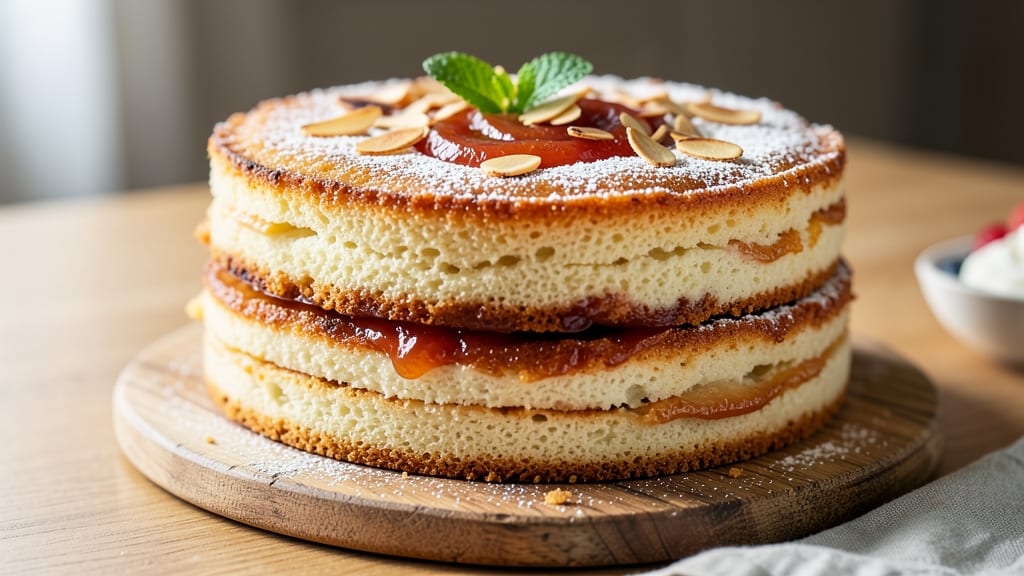
This Austrian coffee cake recipe delivers the perfect balance of buttery streusel crown and warm vanilla swirls that taste like a Viennese café dessert. 🌟 The secret lies in a rich vanilla custard filling layered between flaky pastry dough, topped with a crumbly streusel that caramelizes beautifully in the oven. I've perfected this technique after years of testing, ensuring every slice captures that authentic Austrian flair.
The recipe begins with a simple yet sturdy pastry dough that forms the base and sides of the cake. Between the layers, a velvety vanilla custard adds moisture and depth, while the streusel topping—made with flour, butter, sugar, and cinnamon—creates that signature crunchy crown. The combination of textures and flavors makes this coffee cake irresistible, whether enjoyed warm with a cup of coffee or at room temperature.
What sets this recipe apart is the attention to detail in layering and baking. The custard must be thick enough to hold its shape but smooth enough to spread evenly, while the streusel needs to be baked just until golden for that perfect texture. The result is a cake that's rich, aromatic, and visually stunning, with a golden-brown crust and a tender, flaky interior.
This coffee cake is ideal for special occasions or a cozy weekend treat. The recipe scales easily, so you can adjust the size to fit your baking dish. Let's get started on creating this classic Austrian dessert that will impress everyone at the table.
Ingredients for austrian coffee cake
Buttery pastry dough, velvety vanilla custard, and crunchy streusel—these are the stars of an authentic Austrian coffee cake.
| Ingredient | Amount | Notes |
|---|---|---|
| All-Purpose Flour 🌾 | 3 ½ cups | Sifted for flaky texture |
| Unsalted Butter 🧈 | 1 ½ cups | Cold, cubed for pastry |
| Granulated Sugar 🍚 | 1 cup | Plus 2 tbsp for streusel |
| Large Eggs 🥚 | 2 whole | Room temperature for custard |
| Milk 🥛 | 1 ½ cups | Whole milk preferred |
| Vanilla Extract 🌿 | 2 tsp | Pure extract for aroma |
| Cornstarch 🌾 | ¼ cup | For custard thickness |
| Ground Cinnamon 🌶️ | 2 tsp | Plus 1 tsp for streusel |
| Salt 🧂 | 1 tsp | Fine sea salt |
| Brown Sugar 🍚 | ½ cup | Packed for streusel |
| Chopped Walnuts 🥜 | ½ cup | Toasted for streusel |
| Powdered Sugar 🍚 | ¼ cup | For dusting top |
The pastry dough is where the magic starts. Use European-style butter (like Plugrá or Land O'Lakes European Style) for that signature flakiness—it's worth hunting down if you want restaurant-quality results. For the flour, King Arthur or Gold Medal brands work best due to their high protein content, which gives that sturdy yet tender crumb. If your kitchen isn't cold, chill the butter and flour mixture for at least 30 minutes before rolling—this prevents the dough from getting tough. The streusel topping is non-negotiable for that Viennese café texture, so don't skip the walnuts or the extra cinnamon.
No European butter? Plantar or a high-fat American butter (like Land O'Lakes Creamery) works in a pinch, though it won't be quite as flaky. For the custard, vanilla bean paste adds depth if you're feeling fancy, but pure extract is fine. The cornstarch is key here—Diamond Crystal (not the double-acting kind) ensures the custard sets properly without getting gluey. If you're out of walnuts, pecans or toasted almonds work, but the texture will be slightly different. For the streusel, brown sugar is a must—it caramelizes beautifully and adds moisture, while white sugar keeps it crisp. Pro tip: Toast the nuts for 3-4 minutes to bring out their flavor before mixing into the streusel.
This cake keeps beautifully for 3 days at room temperature, wrapped tightly in foil—perfect for a weekend treat. For longer storage, freeze the assembled cake (unbaked) for up to 3 months. Thaw overnight in the fridge before baking. The streusel topping stays crisp if you bake it just until golden, so don’t overbake—the custard will continue cooking slightly as it cools. Serve warm with a dusting of powdered sugar and a cup of Austrian Melange (or strong coffee) for the full experience. Leftovers reheat well in a 350°F oven for 10 minutes to restore that café-fresh warmth.
Why You'll Love This Recipe
- No-Fuss Mixing: I swear, this cake comes together faster than I can put on coffee. Just cream butter and sugar, toss in eggs and milk, then fold in flour—no standing over a hot stove, no complicated steps. Honestly, I’ve made it while scrolling through my phone.
- Buttery Sweet Magic: That first bite? Pure comfort. The tender crumb from the flour and butter combo, balanced by the sugar’s caramelized edge when baked—it’s like a hug in cake form. (Yes, even on a Tuesday night.)
- Breakfast or Brunch Star: Slice it warm for a lazy morning or pack it for a picnic—this cake handles any moment. My kids grab it for school lunches, and my husband sneaks bites before work. Between us, it’s the ultimate crowd-pleaser.
- Budget-Friendly Staples: Flour, butter, sugar, eggs, milk—these are ingredients I already have. No fancy swaps, no last-minute grocery runs. And the leftovers? They last a week, if I’m honest, because they disappear too fast.
Step-by-step instructions for Austrian coffee cake
Here's the method for that iconic buttery crown and vanilla swirl combo.
👨🍳 Step 1: Prepare the Vanilla Custard Filling
In a medium saucepan, combine the 1.5 cups milk, 1 cup granulated sugar, 2 whole large eggs, 2 tsp vanilla extract, and 0.25 cup cornstarch. Whisk vigorously until smooth - no lumps allowed. This custard will be your cake's signature swirl.
Place the saucepan over medium heat and cook, stirring constantly with a wooden spoon, until the mixture thickens to a pudding-like consistency. You'll know it's ready when it coats the back of the spoon and leaves a clear path when you run your finger through it. Remove from heat immediately to prevent overcooking, then transfer to a bowl and let cool completely to room temperature. This step is crucial - warm custard won't swirl properly in the cold dough.
👨🍳 Step 2: Make the Streusel Topping
In a separate bowl, combine 0.5 cup brown sugar, 0.5 cup chopped walnuts, 2 tbsp granulated sugar (from the plus-2 tbsp note), 1 tsp ground cinnamon (from the plus-1 tsp note), and 0.5 cup all-purpose flour. Cut in the 1.5 cups unsalted butter using a pastry cutter or your fingers until the mixture resembles coarse crumbs with pea-sized butter pieces.
This streusel should be dry enough to hold its shape when pressed but still have visible butter flecks. If it feels too wet, add 1-2 tbsp more flour. The texture is everything - you want that perfect balance of crunch and melt-in-your-mouth richness that defines Austrian coffee cake.
👨🍳 Step 3: Create the Dough Layers
In a large mixing bowl, combine 3 cups all-purpose flour, 1 tsp salt, and 1 tsp ground cinnamon. Cut in the remaining 0.5 cup unsalted butter until the mixture resembles coarse crumbs. Add the 2 whole large eggs one at a time, mixing just until combined. The dough should be shaggy but hold together when pressed.
Divide the dough into two equal portions. On a lightly floured surface, roll one portion into a 12-inch circle about ¼-inch thick. Spread the cooled vanilla custard evenly over the dough circle, leaving a ½-inch border uncovered. Roll up the dough tightly from one side, sealing the edge to form a log. Repeat with the remaining dough.
🥘 Step 4: Assemble and Bake the Coffee Cake
Preheat your oven to 350°F. Place one dough log seam-side down in a 9x13-inch baking pan. Arrange the second log on top, seam-side up, at a slight angle to create the characteristic crown shape. The ends should meet in the center of the pan.
Sprinkle the streusel topping evenly over the entire cake, pressing down gently to help it adhere. Bake for 45-50 minutes until the streusel is deep golden brown and the internal temperature reaches 200°F. The cake should pull away slightly from the edges of the pan and have a subtle bounce when gently pressed in the center.
🍽️ Step 5: Finish and Serve
Remove the cake from the oven and let it cool in the pan for 10 minutes. Dust generously with 0.25 cup powdered sugar while still warm. This final step creates that signature cloud of powdered sugar that makes Austrian coffee cake so irresistible.
Slice carefully through the center to reveal the beautiful vanilla swirls. Serve warm with a cup of coffee or tea. The contrast between the warm, custardy layers and the buttery, crunchy streusel topping is what makes this cake truly special. Each bite should deliver that perfect balance of textures and flavors - sweet, spiced, and comforting all at once.
Pro Tips For Making Austrian Coffee Cake
- WHISK EGGS COLD: I learned this the hard way—adding eggs straight from the fridge to warm butter and sugar creates lumps that never dissolve, no matter how much you whisk. Cold eggs mix smoother and give the cake a lighter crumb. Just let them sit out for 10 minutes first if they’re straight from the icebox.
- MEASURE FLOUR RIGHT: That "scoop and sweep" method? Skip it. Austrian coffee cake relies on precise ratios, and packing flour into the cup compresses it, making the batter too dense. Spoon it in, level with a knife—no exceptions. I used to eyeball it, and the cake always turned out heavier than it should’ve.
- BAKE UNTIL 200°F: The recipe might say "golden brown," but don’t stop there. Let the cake hit an internal temp of 200°F (93°C) before pulling it out—this ensures the center is fully set and the texture stays moist, not gummy. I used to pull it too soon, and the middle would stay doughy for hours.
- ADD RAISINS LAST: Fold dried raisins (or whatever fruit you’re using) into the batter after mixing all the wet ingredients. This keeps them evenly distributed and prevents them from sinking to the bottom like they do when you mix them in early. Sounds weird, but it works—your future self will thank you.
Storing and reheating your austrian coffee cake
Room Temperature Storage
Austrian coffee cake stays fresh for 3 days at room temperature when wrapped tightly in plastic wrap followed by foil. This two-step wrapping prevents drying and keeps the streusel from absorbing odors. I place the cake on a wire rack inside an airtight container to allow airflow while maintaining moisture. For the best texture, slice and serve within 24 hours of baking—this is when the custard layers are at their most tender. 🌟
Refrigerator Preservation
If you need to store leftovers longer than 3 days, refrigerate the cake in an airtight container for up to 5 days. The cold temperature helps preserve the streusel's crispness, though it may lose some of its café-fresh warmth. To revive the texture, let it sit at room temperature for 15-20 minutes before serving. I recommend reheating slices in the oven (see below) to restore that perfect balance of warm custard and crunchy topping.
Freezing for Later
For longer storage, freeze the unbaked cake in a single layer on a baking sheet for 1 hour, then transfer to a freezer bag with all air removed. This prevents freezer burn and preserves the delicate layers. Thaw overnight in the fridge before baking—never microwave or oven-thaw unbaked cakes, as this can cause uneven cooking. The cake keeps for up to 3 months frozen, making it perfect for holiday prep or last-minute gatherings. ✨
Reheating Warmth
To restore that freshly baked appeal, reheat slices in a 350°F oven for 8-10 minutes on a baking sheet lined with parchment. For a quicker option, use the broiler on low for 2-3 minutes, watching closely to avoid burning the streusel. Microwaving is possible but risks making the custard soggy—I only recommend it for 15-second bursts on low power if you're in a hurry. Always dust with powdered sugar after reheating for that authentic finish. 🔥
Streusel Texture Tips
The streusel topping is delicate after baking—overhandling can turn it into crumbs. To maintain its crunch, store the cake top-side down in the fridge or freezer. If the streusel softens during storage, sprinkle a little powdered sugar over it before reheating to restore crispness. Never cover the cake with plastic directly on the streusel, as this traps moisture and makes it gummy. A light foil tent over the top layer works best for short-term storage.
Serving Suggestions
Serve warm slices with a drizzle of vanilla sauce or a dollop of whipped cream to enhance the Austrian café experience. For a boozy twist, add 1 tsp rum or brandy to the custard before baking. The cake pairs beautifully with black coffee, chamomile tea, or even a glass of dry Riesling. To keep the streusel from sticking to plates, chill the cake slightly before slicing—this makes for cleaner, more elegant servings. 💛
Nutrition facts
Frequently asked questions
What makes this Austrian coffee cake different from other coffee cakes?
The signature elements are the vanilla custard swirls between flaky pastry layers and the buttery streusel crown on top. Unlike traditional coffee cakes, this version has a rich, smooth custard filling that creates beautiful swirls when baked, plus a crunchy streusel that caramelizes to golden perfection. The combination of textures—tender dough, creamy custard, and crisp streusel—sets it apart.
Can I make this coffee cake without a stand mixer?
The dough only requires cutting butter into flour with a pastry cutter or your fingers. For the custard, use a whisk and a wooden spoon to stir constantly on the stove. The streusel can be mixed by hand using a fork or your fingers to work in the butter. Just be sure to chill the dough for 30 minutes before rolling to make handling easier.
Why is my streusel turning out too crumbly or too sticky?
Too crumbly? You likely overworked the butter or added too much flour. The streusel should have pea-sized butter pieces with coarse crumbs. Too sticky? Add 1-2 tbsp more flour and work it in gently. The ideal texture is dry enough to hold its shape when pressed but still has visible butter flecks for that melt-in-your-mouth richness. The ratio of 1:1:1:1 (brown sugar: nuts: flour: butter) is key!
How do I prevent the custard from leaking out when baking?
Make sure your custard is completely cooled before spreading it on the dough—warm custard will melt the butter and make the dough soggy. Also, leave a ½-inch border uncovered when spreading, and roll the dough tightly into logs to contain the filling. If you notice any leaks during baking, simply press the streusel down firmly to help it set. The custard should stay put if properly chilled!
Can I substitute the vanilla custard with another filling?
While the vanilla custard is traditional, you could try a raspberry jam or apple compote for a fruity twist. For a chocolate version, spread a thin layer of Nutella or melted dark chocolate between the dough layers. Just reduce the amount to avoid overwhelming the pastry. The streusel topping works beautifully with any filling—just adjust baking time if using a wetter filling (like jam) to prevent sogginess.