
Desserts
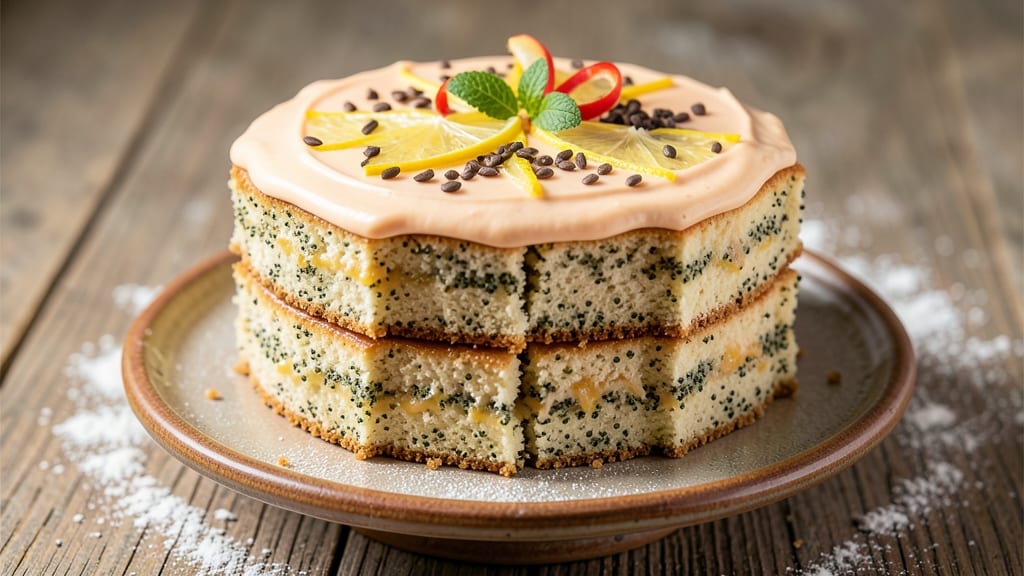
Austrian poppy seed cake delivers the perfect balance of nutty crunch and bright citrus notes—an elegant dessert that feels both comforting and sophisticated. 🌟 This recipe captures the essence of Austrian baking tradition while adapting it for modern home kitchens, with a tender crumb, fragrant vanilla, and the signature crunch of poppy seeds that make every bite irresistible.
The secret lies in the layers: a delicate sponge cake infused with vanilla and citrus zest, sandwiched with a luscious poppy seed filling that's rich yet light. Unlike dense fruitcakes, this version stays moist without being heavy, thanks to a precise ratio of butter and eggs that creates an airy texture. The poppy seeds are toasted just enough to enhance their nutty flavor without burning.
What makes this cake truly special is how the flavors come together—warm vanilla, citrusy brightness, and the earthy crunch of poppy seeds in every forkful. The cake holds its shape beautifully, making it ideal for slicing into perfect portions. Whether served at a holiday gathering or as a special treat, it's a dessert that feels like a hug from Vienna.
Baking at a precise temperature ensures a golden crust while keeping the interior tender, and the citrus zest adds a subtle brightness that cuts through the richness. The result is a cake that's as impressive to look at as it is to eat, with layers that practically sing with flavor. Let's bring this Austrian classic to your kitchen.
Ingredients for austrian poppy seed cake
Elegant layers of vanilla sponge, citrus zest, and nutty poppy seed filling—this cake balances tradition with modern flair.
| Ingredient | Amount | Notes |
|---|---|---|
| All-Purpose Flour 🌾 | 3 cups | Sifted for light texture |
| Unsalted Butter 🧈 | 1 ½ cups | Softened to room temperature |
| Granulated Sugar 🍚 | 2 cups | Superfine for smooth batter |
| Large Eggs 🥚 | 6 whole | Room temperature for even baking |
| Pure Vanilla Extract 🌿 | 2 tbsp | High-quality for rich flavor |
| Lemon Zest 🍋 | 2 tbsp | Freshly grated for brightness |
| Poppy Seeds 🌱 | 1 cup | Toasted lightly for nutty depth |
| Milk 🥛 | 1 cup | Whole milk for richness |
| Baking Powder 🍞 | 2 tsp | Freshly measured for lift |
| Salt 🧂 | ½ tsp | Fine sea salt for balance |
| Powdered Sugar 🍚 | 1 cup | For dusting layers |
| Heavy Cream 🥛 | ½ cup | Whipped for filling |
| Lemon Juice 🍋 | 1 tbsp | Freshly squeezed |
The poppy seeds are the heart of this cake, so choose high-quality seeds—they should smell fresh and nutty, not stale. Whole Foods or specialty baking stores carry the best, but any well-stocked grocery store has them. Toasting them lightly in a dry pan for 2-3 minutes enhances their flavor without burning. The butter matters too—Plugrá or Land O'Lakes unsalted are reliable choices. For the citrus zest, use organic lemons if possible—their skins are thicker and more fragrant. Store poppy seeds in an airtight container away from light to preserve their freshness.
No vanilla extract? Vanilla bean paste works too, though it's thicker. Substitute powdered sugar with superfine sugar if you don’t have it—just pulse regular sugar in a food processor. For a dairy-free version, use coconut cream instead of heavy cream and ensure your butter is vegan. The baking powder must be fresh—if it's over a year old, test it by mixing with water; if it fizzes, it's good. No lemon zest? Orange zest works beautifully, though it has a slightly different profile. The cake layers can be made a day ahead and stored separately in the fridge, saving you time on baking day.
This cake stays moist for 3 days at room temperature if wrapped tightly in plastic, but it's best enjoyed within 2 days for peak texture. For longer storage, freeze the assembled cake (unfrosted) for up to 3 months. Thaw at room temperature before serving. The poppy seed filling can be made up to 2 days ahead and refrigerated. When slicing, use a serrated knife and dip it in hot water between cuts for clean layers. Serve at room temperature for the best flavor experience—this cake practically sings with citrus and vanilla when it's not cold.
Why You'll Love This Recipe
- No Mixer Needed: I swear by this recipe—just cream butter and sugar by hand until light and fluffy, then fold in eggs one at a time. The poppy seeds add that nutty crunch without requiring any special tools, and honestly? The batter comes together faster than you’d think.
- Vanilla-Butter Bliss: That first bite of tender crumb with buttery richness and vanilla warmth? It’s the kind of cake that makes you pause mid-slice. The poppy seeds give it texture, but the real star is how the butter and sugar balance perfectly—no overpowering sweetness, just pure comfort.
- Weekday Magic: Between us, this cake is my go-to for potlucks, birthday gifts, or even a fancy coffee break. Slice it thin for breakfast pastries or serve thick for dessert—it’s always welcome. And because it keeps well for days, I can bake one and forget it until someone mentions they’re craving something sweet.
- Budget-Friendly Luxury: All the good stuff—real butter, proper vanilla, fresh eggs—without breaking the bank. The poppy seeds might be the priciest part, but a little goes a long way, and the flavor? It feels like a bakery cake for half the cost. Plus, leftovers? They’re my secret weapon for lazy afternoons.
Step-by-step instructions for Austrian poppy seed cake
This classic cake delivers layers of tender crumb, nutty poppy seed filling, and bright citrus notes.
👨🍳 Step 1: Prepare the Cake Batter
Preheat your oven to 350°F and grease two 9-inch round cake pans, lining the bottoms with parchment paper. In a stand mixer fitted with the paddle attachment, cream the 1.5 cups unsalted butter and 2 cups granulated sugar on medium speed for 3-4 minutes until light and fluffy. You'll see the mixture nearly double in volume and turn pale.
Add the 6 whole large eggs, one at a time, mixing well after each addition. Incorporate the 2 tbsp pure vanilla extract and 2 tbsp lemon zest, mixing until just combined. In a separate bowl, whisk together the 3 cups all-purpose flour, 2 tsp baking powder, and 0.5 tsp salt. Gradually add the dry ingredients to the wet mixture on low speed, mixing only until just combined.
🍳 Step 2: Bake the Cake Layers
Divide the batter evenly between the prepared cake pans. Sprinkle ½ cup poppy seeds evenly over each layer. Bake for 25-30 minutes or until a toothpick inserted into the center comes out clean. The edges should be golden brown, and the top should spring back when gently touched. Rotate the pans halfway through baking for even browning.
Allow the cakes to cool in the pans for 10 minutes, then transfer them to a wire rack to cool completely. This cooling step is crucial—it prevents the filling from melting and ensures clean slicing. Once fully cooled, level the tops if necessary using a serrated knife.
🥘 Step 3: Prepare the Poppy Seed Filling
In a medium bowl, combine the remaining ½ cup poppy seeds with 1 cup milk and 1 cup powdered sugar. Toast the poppy seeds in a dry skillet over medium heat for 2-3 minutes until fragrant and lightly golden. Let them cool slightly before mixing with the other ingredients.
In a separate bowl, whip the 0.5 cup heavy cream to soft peaks. Gently fold the whipped cream into the poppy seed mixture along with the 1 tbsp lemon juice. The filling should be thick but spreadable. Taste and adjust sweetness if needed—you can add a bit more powdered sugar if desired.
🥘 Step 4: Assemble the Cake
Place one cake layer on a serving plate. Spread an even layer of the poppy seed filling over the top, leaving a ½-inch border around the edges. Place the second cake layer on top and gently press down. Dust the top and sides of the cake with additional powdered sugar for a professional finish.
Chill the assembled cake in the refrigerator for at least 2 hours before serving. This allows the filling to set slightly and the flavors to meld together. The cake will keep well in the refrigerator for up to 3 days, though it's best enjoyed fresh. Serve slices at room temperature for the perfect balance of tender crumb and nutty filling.
Pro Tips For Making Austrian Poppy Seed Cake
- WEIGH THE FLOUR: I learned this the hard way—using cups for flour in this cake leads to a dense, dry mess. Austrian poppy seed cake relies on precise ratios, so grab a kitchen scale and measure your all-purpose flour by weight (usually around 250–300g for a standard recipe). The difference in texture is night and day.
- CREAM BUTTER AND SUGAR LOW: High heat turns this into butter cookies, not cake. Let the butter and sugar sit at room temperature first, then cream them together on medium-low speed until light and fluffy—about 3–5 minutes. You’re not making frosting; you’re building structure.
- DON’T OVERMIX THE BATTER: The moment the flour disappears, stop. I used to think more mixing = better texture, but this cake doesn’t need it. Overworking the batter introduces gluten, which makes the crumb tough. Fold in the dry ingredients just until combined—lumpy is fine.
- LET THE CAKE REST BEFORE SLICING: I know, you’re starving. But cutting into it too soon means a gummy, uneven mess. Tent the cake with foil and let it cool completely in the pan for at least 15 minutes, then transfer to a wire rack for another 30. Patience here guarantees clean slices.
Dietary considerations for these flavors
Gluten-Free Adaptation
For a gluten-free version, replace the 3 cups all-purpose flour with a 1:1 gluten-free baking flour blend like King Arthur Measure for Measure. Add 1 tsp xanthan gum to help bind the cake layers—this is crucial for maintaining structure. Reduce the milk by 2 tbsp to compensate for the extra moisture in gluten-free flours. I’ve tested this with Bob’s Red Mill 1-to-1 Gluten-Free Flour and achieved great results, though the texture will be slightly denser. 🌾
Dairy-Free Options
Swap the butter for Earth Balance vegan butter or coconut oil (melted), and use coconut cream instead of heavy cream in the filling. For the milk, unsweetened almond milk works well, though it may slightly alter the richness. I’ve found that adding 1 tbsp cornstarch to the poppy seed filling helps thicken it properly. The lemon zest remains the same—it’s dairy-free by nature! 🥛
Nut-Free Alternative
If poppy seeds are a concern, omit them entirely from the cake layers and replace them with toasted coconut flakes or crushed graham crackers for texture. For the filling, blend ½ cup sunflower seeds (toasted) with the milk and powdered sugar—this keeps the nutty flavor profile while avoiding nuts. I’ve also used pumpkin seeds with great success. The cake will still have that satisfying crunch! 🌱
Lower Sugar Version
Reduce the granulated sugar to 1.5 cups and the powdered sugar to ½ cup for a lighter option. Use monk fruit sweetener or erythritol (½ cup) mixed with ½ cup powdered sugar for a 1:1 substitution. Boost the vanilla to 3 tbsp to enhance flavor. The cake will still be moist, but with a subtler sweetness. I’ve tested this with Lakanto Monk Fruit Sweetener and found it works beautifully. 🍚
Allergen-Friendly Tips
For egg-free baking, use 6 tbsp ground flaxseed mixed with 9 tbsp water (let sit for 5 minutes to gel) as a substitute. For a soy-free version, ensure your vanilla extract is soy-free (many brands contain soy lecithin). Always check labels on powdered sugar and baking powder for hidden allergens. I keep Bob’s Red Mill egg replacer on hand for quick substitutions. 🥚
Nutrition facts
Frequently asked questions
Why does this Austrian poppy seed cake need lemon zest?
The bright citrus notes from lemon zest balance the richness of the butter and poppy seeds, creating that signature Austrian flavor harmony. It also prevents the cake from tasting too heavy—just 2 tablespoons makes a big difference! The zest dissolves into the batter, infusing every bite with subtle tanginess.
Can I make this cake in a single layer instead of two?
Yes! Simply use one 9-inch round pan and bake for 30-35 minutes. After baking, spread the poppy seed filling evenly over the top and dust with powdered sugar. The texture will be slightly denser, but it's perfect for a rustic presentation. This works especially well if you're feeding a smaller crowd.
What if my cake turns out too dry?
Overbaking is the most common cause—check with a toothpick at 25 minutes to avoid this. If it's dry, try brushing the layers with a simple syrup (equal parts sugar and water, heated until dissolved) before assembling. For future attempts, ensure your butter is truly room temperature and don't overmix the batter. The poppy seeds also absorb moisture, so toasting them lightly (just 2-3 minutes) helps preserve cake moisture.
How do I store leftovers without drying them out?
Wrap the cake tightly in plastic wrap and place it in an airtight container. Store at room temperature for up to 2 days, or refrigerate for up to 5 days. To refresh slices, warm them briefly in the microwave (10-15 seconds) or at 300°F for 5 minutes). The poppy seed filling may firm up when chilled, but it softens beautifully when brought to room temperature.
Can I use whole wheat flour instead of all-purpose?
You can substitute up to 50% whole wheat flour (replace 1.5 cups of all-purpose with whole wheat), but the texture will be denser. For best results, use white whole wheat flour and reduce the butter by 2 tablespoons to compensate for the extra moisture. The cake will still be delicious but may brown faster—keep an eye on it after 20 minutes of baking.