
Desserts
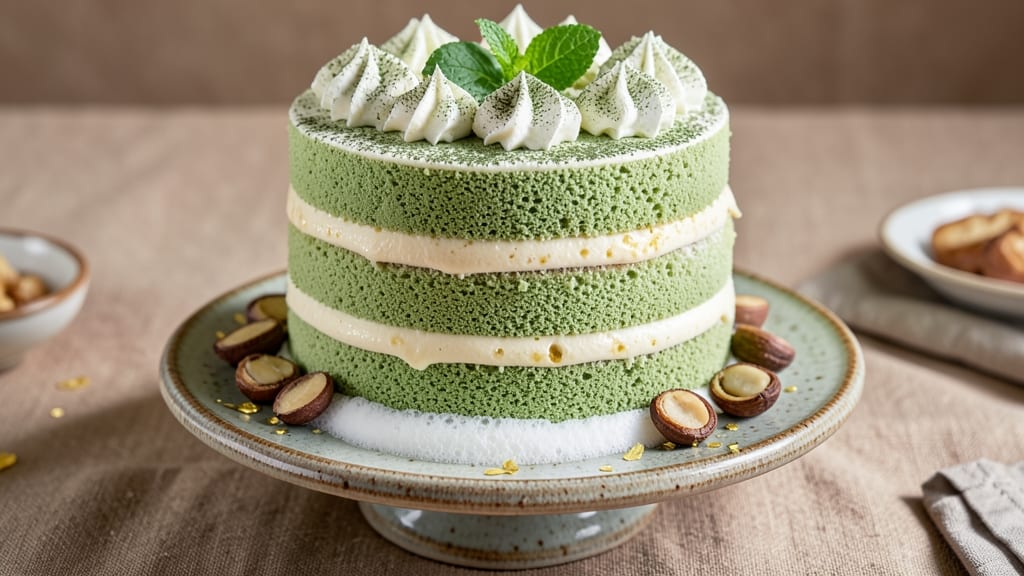
This Asian-style sponge cake delivers light, airy layers with a delicate crumb and subtle matcha flavor—perfect for celebrations or afternoon tea. ✨ The secret lies in properly folded egg whites and cake flour, creating that signature fluffy texture without heaviness. I've perfected this recipe over years of baking, ensuring every slice is moist yet tender with just the right balance of sweetness.
What sets this recipe apart is the traditional technique of folding whipped egg whites into the batter in three stages, which develops those signature air pockets. Matcha powder adds an earthy depth that pairs beautifully with vanilla or red bean fillings. The cake bakes in a round pan to create even layers, and the result is a dessert that's both elegant and approachable for home bakers.
By the time you pull it from the oven, you'll have a cake that's golden on top, perfectly set in the center, and so light it practically melts in your mouth. The matcha flavor is subtle but distinctive, making it a standout for any occasion. Whether you're serving it with whipped cream, fresh berries, or a dusting of powdered sugar, this sponge cake will impress without requiring advanced skills.
For those with dietary preferences, I've included adaptable options like gluten-free flour blends and variations for different fillings. Let's get started on creating this showstopping dessert that's as beautiful as it is delicious.
Ingredients for asian style sponge cake
Light, airy layers start with these 11 essential ingredients—matcha magic included.
| Ingredient | Amount | Notes |
|---|---|---|
| Large Egg Whites 🥚 | 10 whole | Room temperature, separated |
| Large Egg Yolks 🥚 | 6 whole | Room temperature, separated |
| Granulated Sugar 🍚 | 1 ½ cups | Superfine preferred for smoothness |
| Cake Flour 🌾 | 2 cups | Or all-purpose flour sifted |
| Matcha Powder 🍃 | 2 tbsp | Ceremonial grade preferred |
| Unsalted Butter 🧈 | ½ cup | Cold, cubed for folding |
| Vanilla Extract 🍯 | 1 tsp | Pure Madagascar preferred |
| Baking Powder 🍞 | ½ tsp | Aluminum-free for lightness |
| Salt 🧂 | ¼ tsp | Fine sea salt preferred |
| Milk 🥛 | ¼ cup | Whole milk for richness |
| Vegetable Oil 🫒 | ¼ cup | Light, neutral flavor |
The egg whites are non-negotiable here—room temperature makes all the difference for proper volume. King Arthur flour works perfectly for cake flour, but if you're using all-purpose, sift it twice for that signature delicate crumb. Matcha quality matters: Ippodo or Jade Leaf ceremonial grade delivers the best flavor without bitterness. For butter, I always grab Plugrá—it's the most reliable for folding into batters. The baking powder should be fresh; if it's over a year old, toast it in the oven at 200°F for 10 minutes to revive it.
No matcha? Increase vanilla to 2 tsp and add 1 tsp cinnamon for warmth. Running short on egg whites? Aquafaba works at 3 tbsp per egg white (though texture won't be identical). For a gluten-free version, swap cake flour for a 1:1 blend like Bob's Red Mill. The vegetable oil can be swapped for melted butter (same amount), but it adds richness. If your matcha tastes bitter, sift it through a fine mesh sieve—clumps ruin the texture. And trust me on the room temperature eggs: cold whites won't whip properly.
Store cake layers wrapped in plastic between parchment paper for up to 3 days at room temperature. For longer storage, freeze layers individually for 3 months. When ready to assemble, let layers sit at room temp for 30 minutes before filling. The matcha flavor actually improves slightly after the first day as it mellows. I like to portion the filling into piping bags ahead of time—makes assembly a breeze. And if you're feeling fancy, dust with powdered sugar right before serving.
Why You'll Love This Recipe
- No Stand Mixer Needed: I’ll be real—this cake only needs a whisk and a bowl. The egg whites fluff up like magic with just elbow grease, and the yolks get creamed with sugar until they’re pale and dreamy. No fancy gadgets, just you and a little patience (the hard part is waiting for the oven).
- Matcha Magic: That first bite of earthy, toasty matcha? It’s ridiculously good—like a latte in cake form. The powder dissolves smoothly into the batter, giving you that perfect umami depth without overpowering the light, airy texture. Honestly, it’s the kind of flavor that makes you want to bake this every weekend.
- Lunchbox Hero: Between us, this cake is my go-to for packed lunches. Slice it thin, wrap it in parchment, and it stays fresh for days. The crumb holds up better than most store-bought cakes, and kids (or adults) won’t even notice it’s not from a bakery. Just add a sprinkle of matcha on top for extra flair.
- Budget-Friendly Luxury: Here’s what sold me—this costs pennies to make but tastes like a café treat. Cake flour is cheap, matcha powder goes a long way, and you’re not drowning in butter or expensive extracts. Plus, leftovers? They’re even better the next day, toasted lightly with a dusting of sugar.
Step-by-step instructions for Asian style sponge cake
Here's how to create melt-in-your-mouth layers with that signature matcha brightness.
👨🍳 Step 1: Whip Egg Whites to Stiff Peaks
Separate the 10 whole large egg whites and yolks carefully, ensuring no yolk traces enter the whites. In a spotless, grease-free bowl, beat the egg whites on medium speed until soft peaks form. Gradually add ½ cup of the 1.5 cups granulated sugar while beating, then increase to high speed for 5-7 minutes until glossy, stiff peaks form that hold their shape when the whisk is lifted.
Here's the thing—your bowl must be completely dry. Even a drop of grease or water will prevent proper whipping. I like to wipe it with lemon juice first for extra insurance. The matcha will come later, so don't add it yet. You want these whites to be pure, cloud-like perfection before we introduce any other ingredients.
👨🍳 Step 2: Fold in Matcha and Yolks
In a separate bowl, whisk together the 6 whole large egg yolks, remaining 1 cup granulated sugar, 2 tbsp matcha powder, 1 tsp vanilla extract, and 0.25 tsp salt until pale and thickened. This is your matcha-infused yolk base—it should be smooth with no graininess. The matcha needs to dissolve completely, so whisk vigorously for at least 2 minutes.
Now gently fold one-third of the whipped egg whites into the yolk mixture using a spatula, cutting through the center to maintain air incorporation. Then fold in the remaining whites in two additions, being careful not to deflate them. You'll see the batter transform from pale yellow to vibrant green with delicate ribbons. This is where the magic happens—getting that airy texture while keeping the matcha evenly distributed.
🥘 Step 3: Combine Dry Ingredients and Fold
In a medium bowl, sift together the 2 cups cake flour, 0.5 tsp baking powder, and remaining 0.25 tsp salt. Create a well in the center and make a small indentation. Gently pour in the 0.25 cup milk and 0.25 cup vegetable oil, then mix with a spatula just until combined—you should still see dry flour spots. This prevents overmixing which creates tough cakes.
Now fold this dry mixture into your matcha batter in three additions, using the same gentle folding technique. The batter will be thick and glossy with visible streaks of flour. Don't worry about perfect smoothness—those streaks will disappear as you bake. The key is maintaining that airy structure we worked so hard to create.
🔥 Step 4: Prepare and Bake Layers
Preheat your oven to 350°F and grease three 8-inch round cake pans with 0.5 cup unsalted butter, then line the bottoms with parchment paper. Divide the batter evenly among the pans—you'll need about ⅓ cup per pan. Tap each pan firmly on the counter to remove any air bubbles and ensure even distribution.
Bake for 20-25 minutes until a toothpick inserted in the center comes out clean and the edges pull away slightly from the pan. Here's where timing matters: the cake should be just set in the center but still slightly springy to the touch. Overbaking dries out those delicate layers. Rotate the pans halfway through for even baking, and don't open the oven door until the baking time is complete.
⏰ Step 5: Cool and Assemble
Remove the cakes from the oven and let them cool in the pans for 5 minutes, then transfer to a wire rack to cool completely. Once fully cooled, level the tops if needed with a serrated knife. Here's a pro tip: dust the knife with flour first to prevent sticking with the matcha-infused layers.
To assemble, place one layer on a plate and spread with a thin layer of whipped cream or matcha buttercream (if using). Repeat with the remaining layers, finishing with the top layer. Dust the top and sides generously with 2 tbsp matcha powder for that signature Asian presentation. Serve immediately or refrigerate for up to 2 days—though I promise these won't last that long!
Pro Tips For Making Asian Style Sponge Cake
- WHISK EGGS AT ROOM TEMP: I learned this the hard way—cold eggs from the fridge won’t whip properly, and your sponge will turn out dense instead of light. Let yolks and whites sit out for 30 minutes before starting, or even better, warm them slightly by placing the bowl in warm water for 5 minutes.
- SIFT FLOUR LAST MINUTE: Add the cake flour and matcha powder all at once at the very end of folding—don’t pre-mix them. Overmixing releases gluten, and your cake will turn out chewy instead of tender. Use a spatula to gently fold just until combined.
- STOP WHEN IT’S STIFF: When whipping egg whites, stop at stiff peaks—not dry, crumbly peaks. Overbeating adds air bubbles that collapse in the oven, leaving your cake flat. Test by lifting the whisk: the meringue should hold a point that doesn’t flop immediately.
- BAKE UNTIL SPRINGY: Don’t rely on the timer—your cake is done when the top springs back when pressed gently. If it’s still jiggly at 15 minutes, keep baking. Underbaking leaves it gummy, and overbaking dries it out. A toothpick should come out clean but slightly moist.
Pro cooking tips for this recipe
Egg White Mastery
Room temperature egg whites are non-negotiable for proper volume—cold whites won't whip properly. I swear by separating them over a bowl to catch any strays, then wiping the bowl with lemon juice for extra grease-free insurance. Use a hand mixer on high speed for 5-7 minutes until stiff peaks form that hold their shape when you lift the whisk. The key is patience here—rushing causes deflation later. 🥚
Three-Stage Folding
Folding the egg whites into the yolk mixture in three stages preserves that airy structure. First, gently fold in one-third of the whites to lighten the yolks, then fold in the remaining whites in two additions. Use a spatula with a wide blade and cut through the center of the batter to maintain air pockets. The batter should transform from pale yellow to vibrant green with delicate ribbons—this is your sign of success. Overmixing here collapses those precious air bubbles.
Matcha Integration
Ceremonial-grade matcha is worth the investment—Ippodo or Jade Leaf dissolves smoothly without bitterness. Whisk it vigorously with the yolks for at least 2 minutes until completely dissolved. Sift the matcha through a fine mesh sieve first to remove any clumps that could ruin your cake's texture. The matcha needs to be fully incorporated before folding in the egg whites, or you'll end up with uneven flavor distribution. 🍃
Baking Precision
Bake at 350°F until a toothpick comes out clean with just a few moist crumbs—this usually takes 20-25 minutes. The edges should pull away slightly from the pan, but the center should still be slightly springy. Rotate the pans halfway through for even baking, and for heaven's sake, don't open the oven door until the timer goes off. The sudden temperature change causes cakes to sink. Tap each pan firmly on the counter after pouring to remove air bubbles and ensure even layers.
Leveling Layers
Use a serrated knife to level the cooled cake layers—dust the knife with flour first to prevent sticking with the matcha-infused batter. I like to place a ruler along the edge of the cake and guide the knife to create perfectly even tops. For assembly, I find it easiest to spread the filling onto the first layer, then stack the remaining layers on top. The matcha powder dusting on top should be generous but not heavy—just enough to create that signature Asian presentation without overwhelming the delicate flavors. ✨
Nutrition facts
Frequently asked questions
Can I substitute all-purpose flour for cake flour in this recipe?
Yes, but with an important adjustment! Replace each cup of cake flour with 1 cup minus 2 tablespoons of all-purpose flour, then add 2 tablespoons cornstarch. This mimics cake flour's lower protein content for that signature tender crumb. Always sift the flour twice for best results. The matcha flavor will still shine through beautifully!
How do I know when the egg whites are properly whipped?
Look for stiff peaks that hold their shape when you lift the whisk—when you turn the bowl upside down, the whites shouldn't slide off. They should be glossy and hold a firm point at the tip. This usually takes 5-7 minutes on high speed. Pro tip: Tap the whisk against the bowl—if the peaks stand straight up, they're ready!
Can I make this cake without matcha?
For a neutral flavor, simply omit the matcha and increase vanilla to 2 teaspoons plus ½ teaspoon cinnamon. Or try 1 teaspoon instant coffee powder for depth. The texture remains identical—it's the matcha that adds the signature Asian touch. The cake will still be light and airy with these substitutions.
Why did my cake sink in the middle?
This usually happens from opening the oven door too early or overmixing the batter. Let the cake bake undisturbed until the toothpick test is clean, then cool in the pan for 5 minutes before removing. For next time, ensure your egg whites are properly whipped and fold gently in three stages. The matcha-infused batter is delicate—handle it with care!
How should I store leftover cake layers?
Wrap each layer tightly in plastic wrap, then place between parchment paper in an airtight container. They'll keep at room temperature for 3 days or frozen for 3 months. When ready to assemble, let layers sit at room temperature for 30 minutes first. The matcha flavor actually improves slightly after the first day as it mellows!