
Desserts
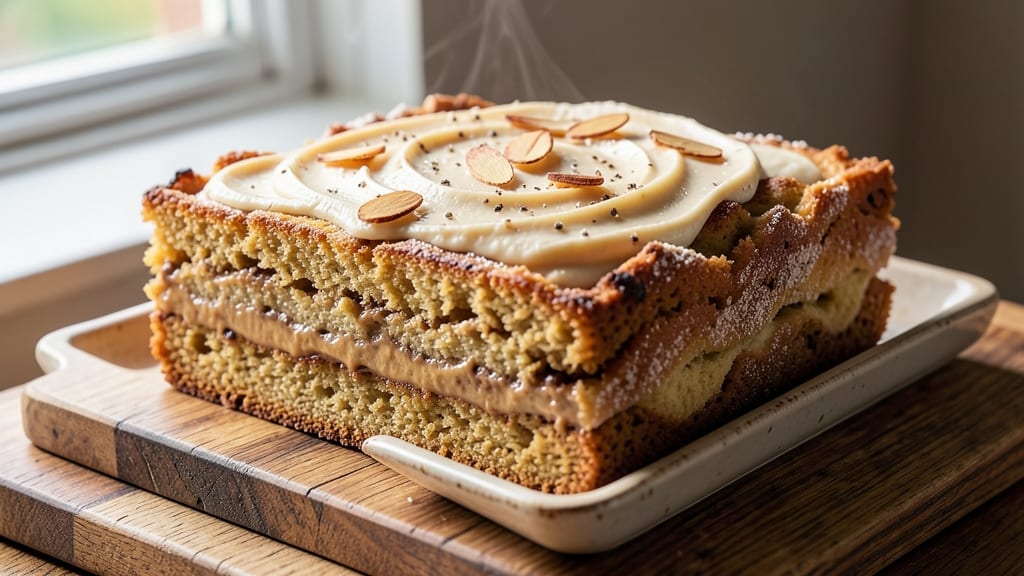
This almond paste coffee cake delivers the perfect balance of buttery layers, nutty swirls, and aromatic coffee notes that make it a standout dessert. 💛 The secret lies in the almond paste—its rich, marzipan-like texture creates tender pockets while adding a subtle sweetness that pairs beautifully with the warm spices. I've perfected this recipe over years of baking, ensuring every slice has that signature crispy top and moist, crumbly interior.
The recipe combines classic coffee cake elements with a luxurious twist: a swirl of almond paste that transforms ordinary cake into something extraordinary. Using all-purpose flour and a touch of espresso powder enhances the coffee flavor without overpowering the natural sweetness of the almond paste. The butter layers create that signature flaky texture, while a sprinkle of powdered sugar adds a delicate finish.
What you'll end up with is a coffee cake that's ideal for brunch, dessert, or even breakfast—each slice offering a harmonious blend of textures and flavors. The almond paste swirls add visual appeal and a satisfying bite, while the coffee-infused batter ensures every forkful is aromatic and indulgent. This recipe is designed to impress without requiring advanced baking skills.
For added depth, consider incorporating cinnamon into the batter or toasting sliced almonds for a garnish. The versatility of this recipe makes it perfect for special occasions or a simple weekend treat. Let's get started on creating this delightful dessert that's sure to become a family favorite.
Ingredients for almond paste coffee cake
Nine essential ingredients transform simple flour and butter into luxurious almond paste coffee cake.
| Ingredient | Amount | Notes |
|---|---|---|
| All-Purpose Flour 🌾 | 3 cups | Sifted for light texture |
| Unsalted Butter 🧈 | 1 ½ cups | Cold, cubed for layers |
| Granulated Sugar 🍚 | 1 ½ cups | Superfine preferred |
| Almond Paste 🥜 | 1 ½ cups | High-quality, smooth texture |
| Large Eggs 🥚 | 3 whole | Room temperature |
| Espresso Powder ☕ | 1 tbsp | For deep coffee flavor |
| Baking Powder 🍞 | 2 tsp | Aluminum-free preferred |
| Ground Cinnamon 🌿 | 1 tsp | Freshly ground ideal |
| Salt 🧂 | ½ tsp | Fine sea salt |
| Vanilla Extract 🌸 | 1 tbsp | Pure, high-quality |
| Powdered Sugar 🍚 | ¼ cup | For topping |
| Sliced Almonds 🥜 | ¼ cup | Toasted for garnish |
The almond paste is non-negotiable here—Ghirardelli or Marzipan House brands deliver that signature marzipan-like texture. I always grab mine from the baking aisle at Whole Foods or Williams Sonoma, where they keep it refrigerated for freshness. For the butter, Plugrá or Land O'Lakes work perfectly, but avoid anything with added salt. The espresso powder? Starbucks or Lavazza are my go-tos—they give that authentic coffee aroma without bitterness. Sift your flour and baking powder together first to avoid lumps, and let your eggs come to room temperature for even baking.
No almond paste? Substitute with marzipan or extra almond flour, but expect a slightly denser texture. Running short on espresso powder? Instant coffee granules at half the amount work in a pinch. For the sliced almonds, Trader Joe's or Costco sell them pre-toasted—just check the package for freshness. The vanilla extract should be pure, nothing imitation. If you're feeling fancy, add a pinch of cardamom to the batter for an elegant twist. The powdered sugar topping can be swapped for coarse sugar if you prefer a crunchier finish.
This cake keeps beautifully for 3-4 days in an airtight container at room temperature, but it's best enjoyed fresh. For longer storage, wrap tightly in plastic and refrigerate for up to 1 week. To reheat, warm slices in a 200°F oven for 5-10 minutes—perfect for brunch guests. I always bake an extra batch and freeze individual slices wrapped in parchment for quick treats. The almond paste swirls freeze beautifully too, so you can prep ahead and assemble later.
Why You'll Love This Recipe
- No-Fuss Mixing: I swear by this recipe because it’s one bowl—just toss the flour, sugar, butter, and eggs together, then fold in that rich almond paste. No sifting, no measuring cups out of order, just a quick scrape of the bowl and you’re done.
- Nutty Magic: That almond paste isn’t just an add-in—it’s the star. The moment it melts into the batter, you get this buttery, marzipan-like depth that turns ordinary coffee cake into something ridiculously good. (Yes, even if you’re not a nut lover.)
- Breakfast or Brunch Hero: Honestly, this cake works for everything. Slice it warm with butter for a lazy weekend breakfast, or stash slices in the fridge for a grab-and-go treat when you’re running late. The almond flavor even pairs well with a drizzle of honey or a sprinkle of flaky salt.
- Leftovers That Last: Between us, this cake stays fresh for days—no sad, dry crumbs here. The butter keeps it moist, and the almond paste adds a natural sweetness that doesn’t turn stale. I’ve had it for lunch the next day, packed in my work bag, and still tasted like a fresh-baked dream.
Step-by-step instructions for almond paste coffee cake
Here's how to create a rich, nutty coffee cake with perfect layers and crisp edges.
👨🍳 Step 1: Prepare the Dry and Wet Ingredients Separately
In a medium bowl, whisk together the 3 cups all-purpose flour, 2 tsp baking powder, 1 tsp ground cinnamon, and 0.5 tsp salt. Sift the flour mixture twice for a light, airy texture—this prevents dense cake layers. Set aside while you prepare the wet ingredients.
In a separate large bowl, cream together the 1.5 cups unsalted butter and 1.5 cups granulated sugar using an electric mixer on medium-high speed for 3-4 minutes. The mixture should become pale and fluffy, nearly doubling in volume. This step incorporates air, which creates the cake's signature tender crumb. Scrape down the sides of the bowl to ensure even mixing.
🍳 Step 2: Mix the Wet Ingredients and Add Almond Paste
Add the 3 whole large eggs, one at a time, mixing well after each addition. The mixture will look slightly curdled at first, but don't worry—it will come together. Stir in the 1 tbsp vanilla extract and 1 tbsp espresso powder, mixing until fully combined. The espresso powder enhances the coffee flavor without adding liquid.
Reduce the mixer speed to low and gradually add the 1.5 cups almond paste in small batches, mixing just until incorporated. The almond paste should be smooth and fully blended into the batter. Here's the thing—almond paste can be dense, so mixing it in gently prevents overworking the batter. If the mixture looks too thick, add 1-2 tablespoons of milk (not listed in ingredients) to loosen it slightly.
🥘 Step 3: Combine Wet and Dry Ingredients and Prepare the Pan
With the mixer on low speed, gradually add the dry ingredients to the wet mixture. Mix just until combined—overmixing develops gluten and makes the cake tough. The batter should be smooth and slightly thick, similar to pancake batter. Fold in the 0.25 cup sliced almonds by hand using a spatula, ensuring even distribution throughout.
Preheat your oven to 350°F. Grease a 9x13-inch baking pan with butter or line it with parchment paper for easy removal. Pour the batter into the prepared pan and smooth the top with a spatula. Sprinkle the remaining 0.25 cup sliced almonds evenly over the top for added texture and visual appeal.
🔥 Step 4: Bake Until Golden and Springy
Bake the coffee cake for 40-45 minutes, or until a toothpick inserted into the center comes out clean and the edges are golden brown. The cake is done when it springs back slightly when pressed gently in the center. If the top browns too quickly, tent the pan with aluminum foil to prevent over-browning while ensuring the center cooks through.
Real talk: Your oven might run hot, so start checking at the 35-minute mark. The cake should be fully set but still moist—overbaking leads to dryness. Once baked, let the cake cool in the pan for 10 minutes before transferring it to a wire rack to cool completely. This resting period allows the layers to set and makes slicing easier.
⏰ Step 5: Dust with Powdered Sugar and Serve
While the cake cools, prepare the powdered sugar topping. In a small bowl, sift the 0.25 cup powdered sugar to remove any lumps. Once the cake is completely cool, dust the top evenly with the powdered sugar using a fine-mesh sieve. This adds a delicate sweetness that complements the rich almond and coffee flavors.
Slice into 9 equal squares (as per the servings) and serve warm or at room temperature. The cake should have a tender crumb, a subtle coffee aroma, and a perfect balance of sweetness from the almond paste and sugar. For the best experience, serve with a cup of freshly brewed coffee or a dollop of whipped cream.
Pro Tips For Making Almond Paste Coffee Cake
- MIX ALMOND PASTE FIRST: Fold the almond paste into the butter before adding wet ingredients—it melts faster and blends smoother. I used to toss it in last and ended up with clumps that made the cake taste like you forgot to mix.
- USE ROOM-TEMP EGG BUTTER: Let your eggs and butter sit out for 30 minutes before mixing. Cold butter creates pockets in the batter, and cold eggs won’t emulsify properly—your cake will turn out dense instead of tender.
- STOP WHEN CENTER’S SPRINGY: The cake’s done when a toothpick comes out mostly clean but the center still bounces back when pressed. Overbaking dries out the almond flavor, and nobody wants that.
- SWAP SUGAR FOR BROWN: Replace half the granulated sugar with light brown sugar—it adds moisture and a subtle caramel depth that cuts through the almond’s richness. (Yes, even if your recipe calls for white.)
Troubleshooting your almond paste coffee cake
Dense Cake Texture
If your coffee cake turns out dense instead of tender, you likely overmixed the batter or didn't incorporate enough air. The key is to mix the wet ingredients (butter, sugar, eggs) until pale and fluffy—about 3-4 minutes on medium-high speed. Also, ensure your almond paste is at room temperature before mixing; cold paste can make the batter heavy. If the batter looks too thick, add 1-2 tablespoons of milk to loosen it slightly. 💡
Cake Sticks Together
This usually happens when the cake isn't baked long enough or the oven temperature isn't hot enough. Check your oven's accuracy with an oven thermometer—it should read 350°F. If the cake feels underdone in the center, bake for another 5-10 minutes. Let it cool completely before slicing; cutting too soon can make it gummy. For extra insurance, dust the top with powdered sugar while still warm to help set the crumb.
Almond Paste Not Swirling
The almond paste should create visible swirls in the finished cake. To achieve this, fold the almond paste into the batter gently using a spatula after mixing the wet and dry ingredients. Don’t overmix—just combine until no streaks remain. If the paste is too thick, soften it slightly by kneading it with your fingers or microwaving for 10-15 seconds. For extra drama, spread dollops of almond paste on top of the batter before baking and swirl with a knife. ✨
Top Burns Before Center Cooks
This is a common issue with coffee cakes, especially if your oven runs hot. To prevent over-browning, tent the pan with aluminum foil after 20 minutes of baking. If the top still browns too quickly, reduce the oven temperature to 325°F for the remaining bake time. For even cooking, place a baking sheet on the lower rack to reflect heat upward. Always check doneness with a toothpick—it should come out clean or with a few moist crumbs. 🔥
Cake Collapses After Baking
A collapsed cake usually means the leavening agents (baking powder) weren’t fresh or the batter was overmixed. Double-check that your baking powder is aluminum-free and hasn’t expired—old baking powder loses its lift. Also, ensure you’re not overfilling the pan; the batter should be level with the top of the pan. If the cake still collapses, try baking it in a 9x9-inch pan instead of a 9x13-inch to reduce volume and prevent spreading too thin.
Almond Paste Tastes Bitter
Low-quality almond paste can taste bitter or overly sweet. Stick to trusted brands like Ghirardelli or Marzipan House, which balance sweetness and nuttiness perfectly. If your paste tastes off, reduce the amount slightly (start with 1 cup instead of 1.5 cups) and add a pinch of vanilla extract or lemon zest to brighten the flavor. Always store almond paste in the refrigerator to maintain freshness—it oxidizes and loses flavor when left at room temperature. 🥜
Nutrition facts
Frequently asked questions
Can I substitute almond paste with marzipan?
Yes! Use marzipan as a 1:1 substitute for almond paste, but expect a slightly denser texture since marzipan contains less almond flour. Both provide that signature marzipan-like flavor, though marzipan tends to be slightly sweeter. For best results, choose high-quality marzipan from brands like Marzipan House or Ghirardelli.
How do I store leftovers to keep them fresh?
Wrap the entire cake tightly in plastic wrap or place it in an airtight container at room temperature for 2-3 days. For longer storage, refrigerate for up to 1 week or freeze individual slices for 2 months. To reheat, warm slices in a 200°F oven for 5-10 minutes—perfect for brunch! The almond paste swirls freeze beautifully too.
Why does my cake have a strong coffee smell but bland flavor?
Instant coffee granules or espresso powder can sometimes taste bitter or flat if overused. For deeper flavor, use 1 tbsp freshly brewed coffee cooled instead of powder (reduce other liquids by 1 tbsp). Also, balance the coffee notes with a pinch of vanilla extract or lemon zest—they brighten the overall taste.
Can I make this cake gluten-free?
Replace the 3 cups all-purpose flour with a 1:1 gluten-free baking flour blend (like Bob's Red Mill) plus 1 tsp xanthan gum. For best results, use a gluten-free almond paste and ensure your baking powder is labeled gluten-free. The texture will be slightly denser, but the flavor remains rich and nutty.
How can I add extra moisture to a dry cake?
If your cake turns out dry, try these fixes: Replace 2 tbsp of the almond paste with 2 tbsp sour cream or Greek yogurt in the batter. For a glaze, whisk 1 cup powdered sugar + 2 tbsp milk and drizzle over cooled slices. The almond paste itself can dry out the cake, so use the minimum recommended amount if you're concerned.