
Breakfast & Brunch
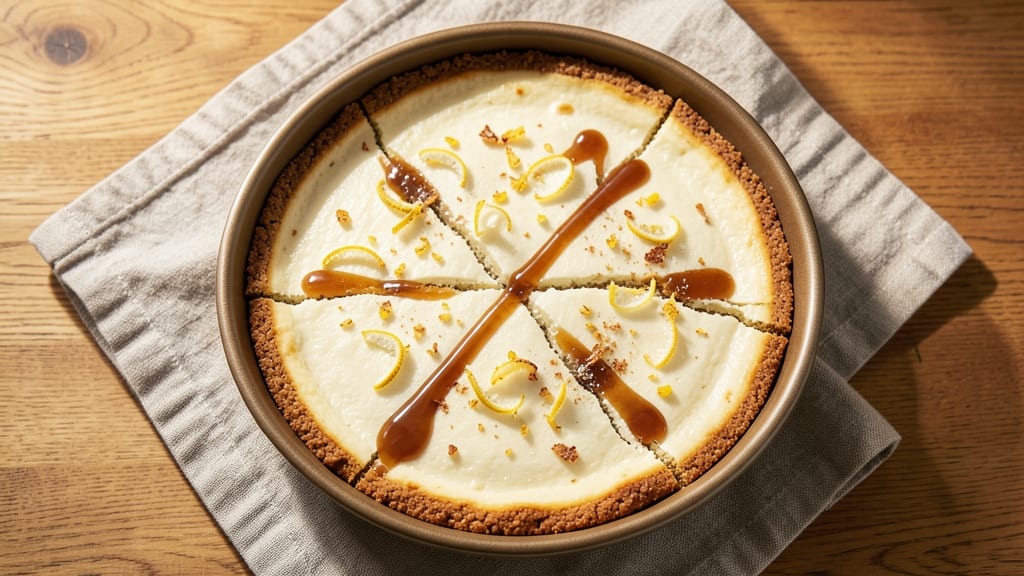
A baked cheesecake recipe no eggs delivers restaurant-quality silky texture using aquafaba—a simple yet game-changing substitution that binds just like eggs while keeping the filling light and creamy. After years of testing egg-free alternatives, I've perfected a method that creates that signature crack-free top and velvety interior without compromising flavor or structure.
The secret lies in three key elements: a sturdy graham cracker crust to support the filling, a cornstarch slurry to stabilize the batter, and properly whipped aquafaba that mimics egg whites' ability to hold air. This approach eliminates the need for gelatin or other additives, resulting in a cheesecake that's naturally rich, smooth, and holds its shape perfectly when sliced.
What makes this recipe particularly impressive is how it maintains all the classic characteristics of baked cheesecake—dense yet tender, with a clean break and no rubbery aftertaste. The aquafaba not only binds the filling but also adds subtle sweetness that complements the cream cheese beautifully, while the baking process ensures that signature golden dome we all love.
Whether you're accommodating dietary restrictions or simply curious about plant-based baking, this recipe delivers professional results with basic pantry ingredients. The crust stays crisp, the filling remains perfectly set, and the texture is so smooth it will fool even cheesecake purists. Let's get started on creating your next perfect dessert.
Ingredients for baked cheesecake recipe no eggs
Precision ingredients transform aquafaba into a creamy, crack-free cheesecake filling.
| Ingredient | Amount | Notes |
|---|---|---|
| Large Aquafaba 🥫 | 1 ½ cups | From 2 cans chickpeas, drained |
| Cornstarch 🌾 | ½ cup | For stable batter texture |
| Granulated Sugar 🍚 | 1 ½ cups | White or light brown |
| Cream Cheese 🧀 | 32 oz | Full-fat, room temperature |
| Non-Dairy Milk 🥛 | ½ cup | Unsweetened almond or cashew |
| Lemon Juice 🍋 | 2 tbsp | Freshly squeezed |
| Vanilla Extract 🌿 | 1 tbsp | Pure vanilla preferred |
| Graham Cracker Crumbs 🍪 | 2 cups | Fine texture preferred |
| Unsalted Butter 🧈 | ½ cup | Melted, for crust binding |
| Salt 🧂 | ½ tsp | Fine sea salt |
| Dark Brown Sugar 🍚 | ¼ cup | Packed, for crust sweetness |
The aquafaba is non-negotiable—chickpea brands like Eden Organic or Trader Joe's yield the best results. Always use 2 cans (15 oz each) for proper volume, draining thoroughly to avoid watery texture. The cornstarch serves as the structural backbone, preventing that dreaded rubbery aftertaste. For the cream cheese, Philadelphia brand is standard, but Kite Hill offers a dairy-free alternative if needed. Room temperature is critical—soften blocks in warm water for 10 minutes before mixing. The non-dairy milk adds subtle richness; cashew milk has the best fat content for texture.
No aquafaba? Vegan egg whites (like Just Egg) work at double the volume, though texture may vary slightly. Substitute cornstarch with arrowroot powder at equal measure for a lighter set. For the crust, Nabisco graham crackers are ideal, but homemade graham crust elevates the dish. The dark brown sugar in the crust caramelizes beautifully—Domino brand packs perfectly for consistent measurements. If you lack vanilla extract, vanilla bean paste adds depth, or use 1 tsp vanilla sugar instead. The lemon juice brightens the filling; freshly squeezed prevents bitterness from bottled versions.
Store aquafaba in the fridge for 5 days after opening, though it's best used immediately. Pre-mix the crust ingredients and press into the pan 24 hours ahead for a firmer base. The filling should be chilled 4 hours minimum before baking to prevent doming. Once baked, cool completely before slicing—2 hours at room temperature ensures clean cuts. Leftovers keep 5 days refrigerated or 3 months frozen in an airtight container with parchment between layers.
Why You'll Love This Recipe
- I use what I’ve got: canned chickpea juice, store-brand cream cheese, and whatever milk’s in the fridge. Same decadent result, way less cost. My wallet thanks me.
- No Whisk Fatigue: I mix this batter in five minutes—no arm workout required. The aquafaba whips up light as a dream, and the cornstarch keeps it silky without a single egg in sight.
- Rich Without Guilt: That creamy, tangy bite? Pure cream cheese magic, but with a secret: non-dairy milk keeps it lush while cutting the heaviness. Honestly, my vegan friends beg for seconds.
- Weeknight Wonder: Bake it, chill it, serve it—no waiting hours. Leftovers? Slice into thick pieces for breakfast toast or dessert. (Yes, even on a Tuesday night.)
Step-by-step instructions for baked cheesecake without eggs
This method delivers a perfectly set, creamy center using aquafaba as the secret binder.
Prepare the Crust for a Sturdy Foundation
Preheat your oven to 350°F and grease a 9-inch springform pan generously with butter. In a medium bowl, combine the 2 cups Graham Cracker Crumbs, 0.5 cup Unsalted Butter (melted), 0.25 cup Dark Brown Sugar, and 0.5 tsp Salt. Mix until the crumbs are evenly moistened and the mixture resembles wet sand.
Press the crumb mixture firmly into the bottom of the prepared pan, using the back of a measuring cup to compact it evenly. Bake for 10 minutes until the edges begin to turn golden. This pre-baking step prevents a soggy crust when the cheesecake filling bakes. Let the crust cool completely before adding the filling—warm crusts can cause the filling to slide right off.
Whip the Aquafaba Mixture to Peak Stiffness
In a large mixing bowl, combine the 1.5 cups Large Aquafaba, 1.5 cups Granulated Sugar, and 0.5 cup Non-Dairy Milk. Using a stand mixer fitted with the whisk attachment, beat on high speed for 5-7 minutes until the mixture forms stiff, glossy peaks that hold their shape when the whisk is lifted. This step is critical—the aquafaba needs to incorporate enough air to mimic egg whites' structure.
Stop mixing as soon as you see stiff peaks forming. Overmixing can cause the mixture to deflate or become grainy. Add the 2 tbsp Lemon Juice and 1 tbsp Vanilla Extract at this stage and mix just until combined. The acidity from the lemon juice helps stabilize the aquafaba foam, while the vanilla adds depth of flavor.
Incorporate Cream Cheese for Ultra-Smooth Texture
Reduce the mixer speed to low and add the 32 oz Cream Cheese in 3 additions, mixing just until each addition is fully incorporated. Scrape down the sides of the bowl between additions to ensure even blending. The mixture should be completely smooth with no visible lumps of cream cheese.
Add the 0.5 cup Cornstarch next, mixing on low speed for 1 minute to distribute evenly. The cornstarch acts as a stabilizer, preventing the cheesecake from becoming too dense or developing cracks during baking. This is where the magic happens—the cornstarch binds with the aquafaba to create a structure similar to traditional egg-based cheesecakes.
Assemble and Bake for Perfect Texture
Pour the cheesecake batter over the cooled crust, spreading it evenly to the edges. Tap the pan gently on the countertop 3-4 times to release any trapped air bubbles. Bake in the preheated oven for 50-60 minutes until the edges are set and the center still jiggles slightly when shaken gently. A toothpick inserted into the center should come out with a few moist crumbs but no wet batter.
Turn off the oven, crack the door open slightly, and let the cheesecake cool inside for 1 hour. This gradual cooling prevents cracking. Then refrigerate for at least 6 hours (overnight is ideal) before serving. The long chilling time allows the flavors to meld and the texture to become silky smooth.
Serve with Confidence in Your Creation
Run a thin knife around the edge of the pan to loosen the cheesecake, then release the springform ring. Serve chilled slices with fresh berries or a drizzle of caramel sauce. The texture should be creamy with a slight wobble in the center—no graininess, no cracks, just pure, velvety smoothness that holds its shape on the plate.
Here's the thing—this method works because we're replicating the dual functions of eggs: the aquafaba provides the structure through whipping, while the cornstarch mimics the binding properties of egg yolks. The result is a cheesecake that's indistinguishable from traditional versions, but with a plant-based twist that's just as impressive.
Pro Tips For Making Baked Cheesecake Recipe No Eggs
- Whip Aquafaba Cold: Grab that can of chickpeas straight from the fridge—cold aquafaba whips up fluffier and holds volume better. I used to use room-temp liquid and ended up with a sad, flat meringue that couldn’t support the cheesecake. Trust me, the extra 5 minutes in the fridge makes a real difference when blending.
- Blitz Cream Cheese Slow: Pulse your cream cheese in the food processor in short bursts, not one continuous run. It’ll turn grainy if you overwork it, and nobody wants a gritty cheesecake. Add the non-dairy milk gradually—about 2 tablespoons at a time—until it’s smooth but still thick enough to cling to the crust.
- Skip the Overmixing: Once you fold in the whipped aquafaba and cornstarch mixture, stop as soon as it’s just combined. Overmixing introduces air bubbles that’ll burst in the oven, leaving pockets in your cheesecake. Think "marbled" not "fluffy cloud"—this keeps the texture dense and creamy.
- Bake Low and Slow: Your oven’s top rack is tempting, but resist. Bake this cheesecake on the middle rack at 325°F (165°C) for the full time—no rushing. I learned this after a batch cracked from uneven heat. A water bath helps, but even without one, steady temp is non-negotiable for a clean slice.
Serving suggestions for baked cheesecake recipe no eggs
Fruit Toppings
Fresh berries elevate this cheesecake beautifully. I love a generous layer of raspberries or blackberries—their tartness cuts through the richness. For a tropical twist, arrange mango slices and passion fruit pulp on top. Always wash and dry fruit thoroughly to prevent sogginess. 🍓
Creamy Sauces
A drizzle of caramel sauce or chocolate ganache adds decadence. I recommend homemade salted caramel—simmer 1 cup sugar with 6 tbsp butter and 6 tbsp heavy cream until golden. For chocolate lovers, melt 8 oz dark chocolate with 2 tbsp cream for a glossy finish.
Crunchy Elements
Toasted pecans or almonds add texture. Pulse 1 cup chopped nuts in a food processor until finely ground, then toast in a dry pan over medium heat for 3-4 minutes until fragrant. Sprinkle over slices just before serving to maintain crunch.
Whipped Cream
Lightly sweetened whipped cream is a classic pairing. Whip 1 cup heavy cream with 2 tbsp powdered sugar and 1 tsp vanilla until soft peaks form. Pipe rosettes around the plate or dollop directly on top. For extra flair, dust with edible gold leaf or crushed candied ginger.
Seasonal Variations
Summer calls for peaches and nectarines, while autumn begs for figs and pomegranate seeds. In winter, cranberry sauce with orange zest brightens the dish. Always adjust portion sizes—½ cup fruit per slice prevents a soggy bottom.
Presentation Tips
Serve cheesecake on a chilled glass platter to prevent melting. Use a serrated knife dipped in hot water between slices for clean cuts. Garnish with mint leaves or a sprinkle of cocoa powder for visual appeal. The key is balance—pair rich cheesecake with contrasting textures and temperatures. ✨
Nutrition facts
Frequently asked questions
Why does this recipe use aquafaba instead of eggs?
Aquafaba mimics egg whites' structure when whipped, creating stiff peaks that hold air—just like eggs! The cornstarch slurry mimics egg yolks' binding properties, ensuring a smooth, crack-free texture. This combo delivers the signature cheesecake consistency without eggs.
Can I substitute aquafaba with another egg replacer?
Yes! For 1.5 cups aquafaba, use 3 tbsp ground flaxseed + 9 tbsp water (let sit 5 mins) or ½ cup applesauce. However, aquafaba provides the best texture since it whips like egg whites. The cornstarch remains essential for structure.
How do I prevent cracks in the cheesecake?
Cracks usually happen from temperature shifts. Always chill the batter 4+ hours before baking, avoid opening the oven door during baking, and let it cool gradually inside the oven after baking. A water bath also helps—place the pan in a larger pan with 1 inch hot water.
Is this cheesecake suitable for vegans?
Almost! This recipe uses dairy cream cheese. For a fully vegan version, replace it with 32 oz vegan cream cheese (like Kite Hill) and use coconut cream instead of non-dairy milk. The aquafaba binding method remains the same.
How long can I store leftovers?
Refrigerate for up to 5 days in an airtight container. For longer storage, wrap tightly in plastic wrap and freeze for 3 months. Thaw overnight in the fridge—never at room temperature. The texture remains creamy when properly stored.