
Desserts
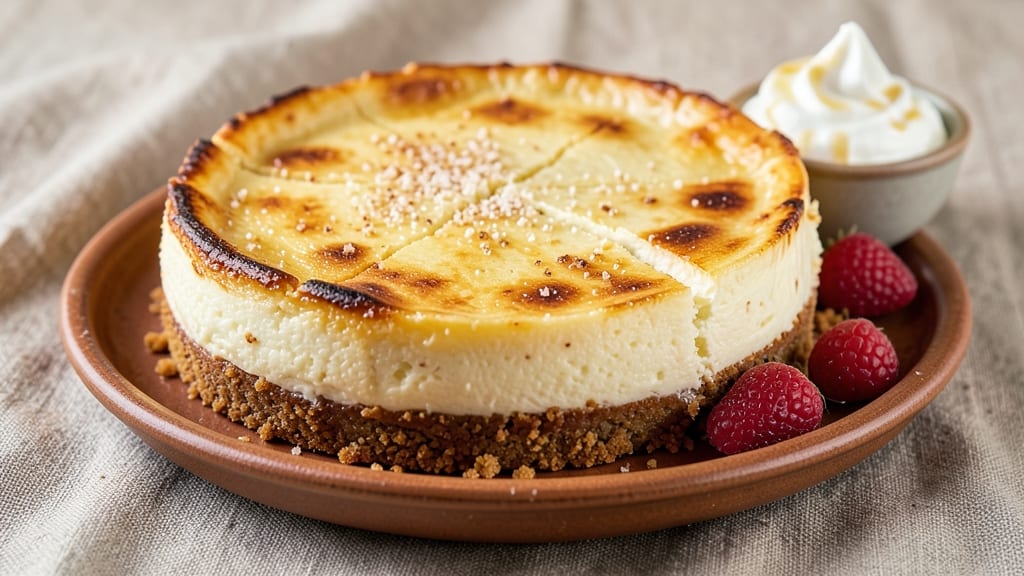
This baked Basque cheesecake recipe delivers the perfect marriage of crispy caramelized crust and velvety cheesecake filling—just like the legendary pastries from the Basque Country. 💛 The secret lies in a delicate balance: a buttery graham cracker crust baked until golden, topped with a rich, tangy cheesecake that stays silky smooth while developing a subtle caramelized crust of its own.
What sets this recipe apart is the traditional Basque technique of baking the cheesecake in a water bath, ensuring even heat distribution and that signature tender center. The recipe uses a blend of cream cheese and farmer's cheese for depth of flavor, while a touch of brandy adds warmth and complexity. The crust isn't just sweet—it's infused with caramelized onions for a savory-sweet contrast that elevates every bite.
By the time it emerges from the oven, you'll have a cheesecake with a perfectly crisp top, a creamy interior that melts in your mouth, and a crust that's both sturdy and delicate. The brandy-infused filling develops a subtle caramelized crust on top, creating that coveted contrast between textures. This is dessert that feels special enough for company but simple enough for a weeknight treat.
The best part? This cheesecake improves with time, developing even more depth of flavor as it sits. Serve it chilled with fresh berries or a drizzle of caramel for the full Basque experience. Let's get baking!
Ingredients for baked basque cheesecake
Buttery crust, caramelized onions, and brandy-infused filling—this cheesecake delivers Basque perfection.
| Ingredient | Amount | Notes |
|---|---|---|
| Graham Cracker Crumbs 🍪 | 2 cups | Finely crushed, for crust |
| Unsalted Butter 🧈 | ¾ cup | Melted, full-fat preferred |
| Granulated Sugar 🍚 | ½ cup | For crust sweetness |
| Large Eggs 🥚 | 3 whole | Room temperature, for filling |
| Cream Cheese 🧀 | 16 oz | Full-fat, room temperature |
| Farmer's Cheese 🧀 | 8 oz | Substitute ricotta if needed |
| Granulated Sugar 🍚 | 1 cup | For filling sweetness |
| Brandy 🍷 | ¼ cup | Or substitute vanilla extract |
| Vanilla Extract 🥄 | 1 tbsp | Pure, high-quality preferred |
| Yellow Onion 🧅 | 1 whole | Caramelized, finely chopped |
| Salt 🧂 | ½ tsp | Fine sea salt preferred |
| Ground Black Pepper 🌶️ | ¼ tsp | Freshly ground for flavor |
| All-Purpose Flour 🌾 | 1 tbsp | For crust texture |
The farmer's cheese is non-negotiable for that authentic Basque texture—Whole Foods or specialty dairy counters carry it, but ricotta works in a pinch. For the caramelized onions, patience is key: slow-cook them in butter until deep amber (about 20 minutes). The brandy adds depth, but vanilla extract keeps the same sweetness if you're avoiding alcohol. Grab full-fat cream cheese—the fat content ensures that silky center. Pre-crush your graham crackers for a finer texture in the crust, or pulse them in a food processor for extra efficiency.
No brandy? Double the vanilla extract—it won’t mimic the warmth, but it’ll keep the flavor profile intact. Swap the farmer’s cheese for ricotta or mascarpone if needed, though the texture will shift slightly. For the crust, melted butter is essential—don’t substitute oil, or the crunch will suffer. The onions? Yellow or red both work, but yellow has a slightly sweeter finish. If your graham crackers are stale, toast them first to revive the flavor. And for the crust’s extra crunch, sprinkle a pinch of salt over the melted butter before mixing.
Store the assembled (unbaked) cheesecake in the fridge for up to 2 days before baking—this helps the flavors meld. Once baked, it’s best served chilled for 6-8 hours (overnight is ideal). The crust stays crisp for 3 days at room temperature, but the filling is at its peak 4-5 days in the fridge. For longer storage, freeze the baked cheesecake (without the crust) for up to 3 months—thaw overnight in the fridge. The brandy-infused filling actually improves with time, so make it ahead if you can.
Why You'll Love This Recipe
- No-Fuss Bake: I swear by this recipe because it’s actually foolproof—just mix, pour, and bake. No water bath, no fancy equipment, just a simple springform pan and 45 minutes in the oven. Honestly, the only tricky part is resisting seconds while it cools.
- Creamy Crunch Magic: That buttery graham crust meets the silky-smooth cream cheese filling—it’s the kind of texture combo that makes you close your eyes. The sugar caramelizes just enough to give it a subtle depth, but it’s still light enough to eat for breakfast (yes, I’ve done it).
- Weeknight or Wow Factor: Make it for a lazy Sunday brunch or pull it out for a dinner party—no one will guess how little effort it took. Between us, I’ve served it to skeptical in-laws and had them asking for the recipe before dessert even hit the table.
- Leftovers That Last: One pan yields 8 perfect slices, and they stay fresh for days. Freeze half the batch for when you’re too tired to bake, then reheat in the microwave for a warm, gooey treat. Budget-friendly? Absolutely—cream cheese and graham crackers stretch far, and this recipe never feels wasteful.
Step-by-step instructions for baked Basque cheesecake
Master this classic with a crispy graham cracker crust and velvety filling—every layer matters.
👨🍳 Step 1: Prepare the Crust with Perfect Texture
Preheat your oven to 350°F and melt the 0.75 cup unsalted butter in a small saucepan over low heat. Once fully melted and smooth, remove from heat and stir in the 0.5 cup granulated sugar and 1 tbsp all-purpose flour until combined.
In a large bowl, mix the melted butter mixture with the 2 cups graham cracker crumbs until evenly moistened. Press this mixture firmly into a 9-inch springform pan, using the back of a spoon to create an even, compact layer. Bake the crust for 10 minutes—this pre-baking prevents a soggy bottom. Let it cool slightly while you prepare the filling.
🍳 Step 2: Caramelize the Onion for Deep Flavor
While the crust bakes, finely chop the 1 whole yellow onion and place it in a cold skillet. Cook over medium-low heat for 20-25 minutes, stirring occasionally, until the onions turn deep golden brown and sweet-smelling. This slow caramelization develops rich, complex flavors that elevate the entire dessert.
Remove the onions from the heat and let them cool slightly. They'll be sticky—this is normal and adds moisture to the filling. Once cooled, transfer them to a bowl and set aside.
🥘 Step 3: Mix the Cheese Filling to Silky Perfection
In a large mixing bowl, beat the 16 oz cream cheese and 8 oz farmer's cheese together until completely smooth and lump-free. This step is crucial—any lumps will translate to a grainy texture in your cheesecake. Gradually add the 1 cup granulated sugar while continuing to mix until fully incorporated.
Add the 3 whole large eggs, one at a time, mixing just until each is fully combined. Stir in the 0.25 cup brandy, 1 tbsp vanilla extract, 0.5 tsp salt, and 0.25 tsp ground black pepper. Finally, fold in the caramelized onions, reserving any excess liquid from the onions in the bowl. This filling should be thick but pourable.
🔥 Step 4: Bake the Cheesecake with Precision
Pour the cheesecake filling over the pre-baked crust, spreading it evenly. Place the springform pan in a large roasting pan and carefully pour hot water into the roasting pan until it reaches halfway up the sides of the springform pan. This water bath ensures gentle, even baking.
Bake at 350°F for 50-60 minutes, until the edges are set but the center still jiggles slightly when shaken. The cheesecake should be puffed and golden around the edges. Remove from the water bath and let it cool completely at room temperature before refrigerating for at least 4 hours—this resting period allows the flavors to meld and the texture to set properly.
⏰ Step 5: Chill and Serve for Maximum Enjoyment
Once fully cooled, run a knife around the edges of the cheesecake to loosen it from the pan. Remove the springform ring and slice into 8 equal portions. Serve chilled, allowing each slice to sit for a moment before cutting into the center—this prevents a messy crumble.
The finished cheesecake should have a crispy graham cracker crust, a velvety cheese filling with caramelized onion threads, and a subtle brandy aroma that enhances every bite. Store leftovers covered in the refrigerator for up to 3 days, though I doubt they'll last that long!
Pro Tips For Making Baked Basque Cheesecake
- Preheat Pan First: Pop your springform pan into the oven alongside the preheating rack—even for 5 minutes. I learned this after watching my crust turn soggy because the cold pan stole heat from the filling. The crust needs that initial burst of warmth to set properly before the filling goes in.
- Soften Cream Cheese Right: Let the cream cheese sit in a warm (not hot) water bath for 10 minutes—just until it’s pliable, not melted. I used to microwave it, and the texture always ended up grainy. Room temperature works, but speed it up this way if you’re in a hurry.
- Don’t Overmix the Filling: Mix the cream cheese and sugar until just combined, then fold in the eggs one at a time—no need to beat them into oblivion. Overmixing traps air, which causes cracks. I’ve seen this ruin a perfectly good cheesecake every time.
- Bake Low and Slow: Start at 325°F (160°C) for the first 20 minutes, then drop to 275°F (135°C) for the rest. I used to blast it at 350°F, and the top always browned too fast while the center stayed gooey. Patience here makes all the difference.
Essential equipment for perfect results
Springform Pan
A 9-inch springform pan is essential for this recipe—it allows for easy removal of the cheesecake once baked and chilled. I recommend using a high-quality pan like Nordic Ware or USA Pan for even heat distribution and durability. Avoid non-stick pans for this recipe, as the high heat and water bath can cause warping. 🔥
Water Bath Setup
For the water bath, you'll need a large roasting pan that can comfortably fit your springform pan. I use a Vitamix roasting pan for its sturdy construction and even heat retention. Fill the roasting pan with hot water (not boiling) to halfway up the sides of the springform pan. This creates a gentle steam environment that prevents cracking and ensures a perfectly set center.
Mixing Bowls
Invest in a large stainless steel mixing bowl for combining the cheese filling—it's non-reactive and won't absorb flavors. I prefer OXO Good Grips bowls for their ergonomic handles and even mixing surface. For the crust mixture, use a medium-sized bowl to combine the graham cracker crumbs and melted butter. A food processor with a pulse function can also help crush graham crackers more efficiently if you prefer.
Skillet for Caramelizing
A 10-inch stainless steel skillet is ideal for caramelizing the onions—it provides enough surface area for even cooking. I use a All-Clad skillet for its superior heat control and even browning. Avoid non-stick skillets for this step, as they can't achieve the deep caramelization needed for that rich, sweet flavor. A wooden spoon helps prevent sticking while stirring the onions.
Measuring Tools
Precision is key when measuring ingredients like cream cheese and farmer's cheese. Use a digital kitchen scale for accurate measurements—especially for the cheeses. I recommend the OXO Good Grips scale for its readability and durability. For dry ingredients, a stainless steel measuring cups set ensures consistent portions. Don't forget a fine-mesh strainer to drain any excess liquid from the caramelized onions before folding them into the filling.
Optional Tools
For extra convenience, consider a stand mixer with the paddle attachment to blend the cheese filling smoothly. I use my KitchenAid Artisan for this step—it eliminates the risk of overmixing by hand. A spatula with a flexible head helps spread the filling evenly over the crust. And finally, a long serrated knife makes clean slices through the chilled cheesecake without crumbling the edges. 💫
Nutrition facts
Frequently asked questions
Why does this Basque cheesecake need a water bath?
The water bath creates gentle steam that helps the cheesecake bake evenly without cracking. This traditional Basque technique prevents the top from drying out while ensuring the center stays perfectly creamy. Without it, you risk a dry crust or uneven texture.
Can I substitute farmer's cheese if I can't find it?
Yes! Use ricotta or mascarpone in equal amounts, though the texture will be slightly lighter. For a closer match, blend ricotta with 1 tbsp heavy cream per cup to mimic the denser Basque version. The flavor won't be identical, but it'll work in a pinch.
How do I prevent the crust from getting soggy?
Pre-bake the crust for 10 minutes before adding the filling, and chill the assembled cheesecake for at least 4 hours before baking. The cold filling helps set the crust faster. For extra insurance, sprinkle a thin layer of crushed graham crackers on top before baking.
What's the best way to serve this cheesecake?
Serve chilled with fresh berries, caramel drizzle, or a dusting of powdered sugar. For a Basque touch, add a spoonful of spiced plum jam or a sprinkle of toasted almonds. Let each slice sit for 2 minutes before cutting to prevent crumbling.
Can I make this cheesecake ahead of time?
Assemble the unbaked cheesecake and refrigerate for up to 2 days before baking. The flavors meld beautifully overnight. Once baked, it keeps well in the fridge for 5 days, though the texture is best within 3 days. Freeze the baked cheesecake (without crust) for up to 3 months.