
Desserts
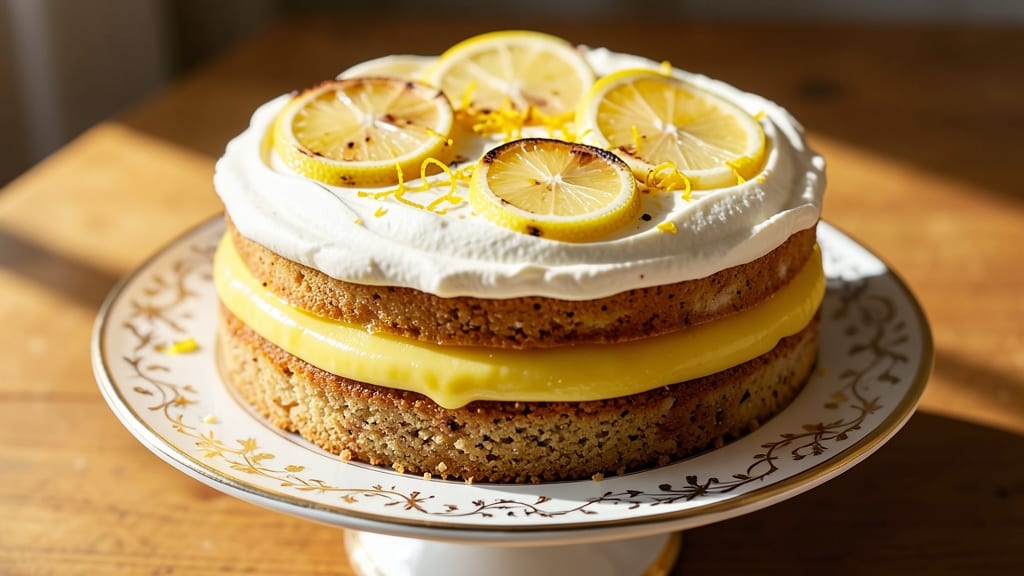
This authentic Italian lemon cream cake captures the bright citrus notes and creamy textures of traditional Italian pastries—just like Nonna used to make. The secret lies in layers of tender almond flour crust, zesty lemon curd, and silky mascarpone frosting that balances sweetness with tang. I’ve perfected this recipe over years of testing, ensuring every slice delivers that perfect harmony of flavors you’d find in a Roman café.
The cake’s foundation begins with an almond flour crust that stays crisp yet tender, a nod to classic Italian techniques. Between the layers, homemade lemon curd infuses bright, citrusy depth, while the mascarpone frosting adds a velvety richness that melts in your mouth. What sets this apart is the balance—no overpowering sweetness, just a delicate equilibrium of flavors that feels both nostalgic and refined.
By the time you slice into this cake, you’ll experience a symphony of textures: the slight crunch of the crust, the moist yet tender cake layers, and the luxurious cream that ties everything together. The frosting isn’t just decoration—it’s a key player, ensuring every bite is creamy and bursting with lemon zest. This is the kind of dessert that feels like a hug, perfect for celebrations or a cozy afternoon treat.
Whether you’re baking for a special occasion or simply craving a taste of Italy, this recipe delivers restaurant-quality results with minimal fuss. The layers are foolproof, the frosting is silky, and the lemon curd is the star—just like in the best Italian patisseries. Let’s get started on creating this timeless classic.
Ingredients for authentic italian lemon cream cake
These vibrant ingredients bring Nonna’s lemon cream cake to life with zesty brightness and velvety layers.
| Ingredient | Amount | Notes |
|---|---|---|
| Almond Flour 🌰 | 2 cups | Finely ground, high-quality |
| Unsalted Butter 🧈 | 1 cup | Cold, cubed for crust |
| Granulated Sugar 🍚 | 1 ½ cups | Superfine preferred for smoothness |
| Large Eggs 🥚 | 3 whole | Room temperature for best mixing |
| Lemon Zest 🍋 | 2 tbsp | Fresh, finely grated |
| Lemon Juice 🍋 | ½ cup | Freshly squeezed, strained |
| Lemon Slices 🍋 | 1 cup | Thin, for lemon curd |
| Mascarpone Cheese 🧀 | 16 oz | Room temperature for blending |
| Heavy Cream 🥛 | 1 cup | Cold for whipping |
| Powdered Sugar 🍚 | 1 cup | Sifted for smooth frosting |
| Vanilla Extract 🌿 | 1 tsp | Pure, high-quality |
| All-Purpose Flour 🌾 | ½ cup | For crust texture |
| Salt 🧂 | ½ tsp | Fine sea salt preferred |
| Cornstarch 🌾 | 2 tbsp | For lemon curd thickening |
The almond flour is non-negotiable—Bob’s Red Mill or Anthony’s Goods are my go-tos for that fine, buttery texture. If you can’t find almond flour, blend raw almonds into a super-fine powder (food processor, 2 minutes)—just don’t pulse too much or it’ll get oily. The mascarpone? Galbani is the gold standard, but any Italian brand works. The key here is room temperature—take it out of the fridge 30 minutes before mixing so it blends smoothly. For the lemon zest, organic lemons have thicker skins, so you’ll get more flavor without the bitter pith. If you’re using conventional lemons, just scrape carefully.
No almond flour? Substitute with 1 cup all-purpose flour plus 1/4 cup cornstarch, but the texture won’t be as tender. Short on mascarpone? Mix 1/2 cup cream cheese with 1/2 cup heavy cream—it’s not identical, but close. The lemon curd needs those thin slices (about 1/8-inch thick) for the best infusion. If you’re in a pinch, zest 2 extra lemons and add 1 tbsp to the curd. The powdered sugar in the frosting is crucial—sift it to avoid lumps, or your frosting will look grainy. And for the love of all things Italian, don’t skip the vanilla—it rounds out the tartness beautifully.
The almond flour crust keeps best in an airtight container for 3 days—it’s delicate, so handle it like glass. The lemon curd and frosting? 1 week in the fridge, sealed tightly. Assemble the cake 2 hours before serving—this gives the layers time to meld and the flavors to marry. If you’re prepping ahead, bake the crust and curd 1 day in advance, then assemble the day of. The mascarpone frosting is best used within 4 days—it doesn’t freeze well, so plan accordingly. And if you’ve got leftovers? Toasted almonds on top make them feel like a café treat.
Why You'll Love This Recipe
- No Mixer Needed: I swear by this recipe because it’s all about the creaming—just butter, sugar, and eggs, beaten by hand until light and fluffy. The almond flour keeps it rich without needing gluten, and honestly? My stand mixer gets a break for once.
- Zesty Italian Magic: That lemon zest—bright, fragrant, and just tart enough—cuts through the richness of the butter and almonds like a perfect balance. It’s the kind of flavor that makes you want to bake this again in a week, no matter what.
- Weekday or Celebration: Between us, this cake is my go-to for both lazy Sundays and last-minute birthday surprises. The texture is light enough for brunch but sturdy enough to slice for a crowd—no one will guess it’s not from a fancy bakery.
- Leftovers That Last: The almond flour base keeps it moist for days, so I often bake two pans. Slice it for breakfast, pack it for lunches, or save a piece for midnight cravings—it’s that good. And because it’s not overly sweet, it won’t cloy after sitting around.
Step-by-step instructions for authentic Italian lemon cream cake
Here's how to create layers of zesty lemon cake with velvety mascarpone frosting - just like Nonna used to make.
Prepare the Lemon Curd Filling
In a medium saucepan, combine the 1 cup lemon slices, 0.5 cup lemon juice, 2 tbsp lemon zest, 1.5 cups granulated sugar, and 2 tbsp cornstarch. Stir well to dissolve the sugar completely. Cook over medium heat, stirring constantly, until the mixture thickens to a pudding-like consistency - about 8-10 minutes. You'll know it's ready when it coats the back of a spoon and leaves a clear path when you run your finger through it.
Remove from heat and let cool slightly. While still warm, whisk in the 3 whole large eggs one at a time, ensuring each is fully incorporated before adding the next. This step requires patience - the eggs should be at room temperature to blend smoothly. Strain the curd through a fine-mesh sieve to remove any lemon pulp, then transfer to a clean bowl. Cover with plastic wrap, pressing it directly onto the surface to prevent a skin from forming. Refrigerate until completely chilled - at least 2 hours or overnight.
Bake the Lemon Almond Cake Layers
Preheat your oven to 350°F. Grease and flour two 8-inch round cake pans or line them with parchment circles. In a large mixing bowl, cream together the 1 cup unsalted butter and 1.5 cups granulated sugar until light and fluffy - about 3-4 minutes. Add the 3 whole large eggs one at a time, mixing well after each addition.
In a separate bowl, whisk together the 2 cups almond flour, 0.5 cup all-purpose flour, and 0.5 tsp salt. Gradually add the dry ingredients to the butter mixture, alternating with 0.5 cup lemon juice and 2 tbsp lemon zest, beginning and ending with the dry ingredients. Mix just until combined - don't overmix. Divide the batter evenly between the prepared pans and bake for 25-30 minutes, or until a toothpick inserted in the center comes out clean. Allow the cakes to cool in the pans for 10 minutes, then transfer to a wire rack to cool completely.
Create the Mascarpone Frosting
In a large mixing bowl, beat the 16 oz mascarpone cheese until smooth and creamy. In a separate bowl, whip the 1 cup heavy cream to stiff peaks. Gently fold the whipped cream into the mascarpone, then add the 1 cup powdered sugar and 1 tsp vanilla extract, mixing until fully combined and smooth. This frosting should be light and airy - if it's too thick, add 1-2 tablespoons of lemon juice to achieve the perfect consistency.
Once your cake layers are completely cool, level the tops if needed. Place one layer on a serving plate and spread with about 1 cup of the mascarpone frosting. Add the lemon curd from the refrigerator, spreading it evenly. Top with the second cake layer and spread the remaining frosting over the top and sides. Use a spatula to create decorative swirls if desired. Chill in the refrigerator for at least 1 hour before serving to allow the flavors to meld.
Pro Tips For Making Authentic Italian Lemon Cream Cake
- Whisk Eggs Until Ribbon Stage: Don’t just "beat" the eggs—whisk them until the mixture holds a slow ribbon when the whisk is lifted. I learned this the hard way when my cake turned dense and rubbery; the extra air lightens the texture without needing extra flour. Room-temperature eggs work best here, too.
- Sift Almond Flour Twice: Almond flour clumps like a stubborn teenager. Sift it once before mixing, then sift again after combining with dry ingredients to guarantee a smooth batter. Skimp here, and you’ll get pockets of dry flour in your cake—trust me, you’ll taste them.
- Bake at 325°F, Not Higher: This isn’t a race. Bake at 325°F (163°C) for even heat distribution—any hotter, and the almond flour burns before the center sets. I used to crank it to 350°F and ended up with a charred crust and a gooey middle. Patience here means a perfectly set cake every time.
- Zest Only the Outer Peel: Lemon zest from the pith is bitter and ruins the delicate balance. Use a fine grater and scrape only the bright yellow layer, avoiding the white underneath. I once grabbed the whole peel in a rush—my cake tasted like soap. A little extra zest is better than one bad bite.
Serving suggestions for authentic italian lemon cream cake
Classic Italian Presentation
Serve this cake on a white marble slab or elegant cake stand for that authentic Italian café feel. Dust the top with powdered sugar through a fine sieve for a snowy finish, then garnish with thin lemon slices and a sprinkle of toasted almond slivers. The contrast of colors makes it visually stunning while keeping the focus on the vibrant lemon flavor. 🍋
Warm Espresso Pairing
A shot of Italian espresso or a glass of dry Prosecco complements the cake beautifully. The bitterness of espresso cuts through the sweetness, while Prosecco’s bubbles cleanse your palate between bites. For a non-alcoholic option, try sparkling lemonade made with fresh lemon juice and chilled sparkling water. I often serve this with a small cup of cappuccino for a true Italian experience.
Seasonal Fruit Toppings
In summer, top slices with fresh berries like raspberries or blackberries to add a tart contrast. For autumn, try roasted figs or pear slices with a drizzle of honey. Winter calls for candied citrus peel or pomegranate seeds for a festive touch. These toppings elevate the cake while keeping the focus on its bright lemon flavor.
Mini Cake for Parties
For gatherings, bake the recipe in 6-inch pans and stack three layers instead of two. Serve on a tiered stand with individual slices on small plates. Add a lemon zest garnish to each slice for a pop of color. This presentation feels special without requiring advanced skills—just a little extra baking time and patience. 🌟
Coffee & Cake Service
Follow the Italian tradition of serving cake with coffee by offering a small espresso cup alongside each slice. The ritual of sipping coffee after dessert enhances the experience. For a modern twist, serve the cake with affogato-style vanilla gelato and a shot of espresso poured over it. The contrast of hot and cold is pure Italian indulgence.
Gift-Worthy Packaging
Wrap individual slices in parchment paper and tie with a lemon twist ribbon for a charming gift. Place them in a wooden cake box or a clear cellophane bag with a handwritten note. This presentation makes it perfect for birthdays, anniversaries, or just because—like a little taste of Italy delivered to someone’s door. ✨
Nutrition facts
Frequently asked questions
Can I make this cake without almond flour?
Yes, but the texture will differ. Substitute with 1 cup all-purpose flour plus 1/4 cup cornstarch for the crust. The cake will still be delicious, though less tender. For the lemon curd and frosting, no substitutions are needed—they’ll remain perfectly authentic.
How do I store leftovers to keep them fresh?
Store the cake in an airtight container at room temperature for up to 2 days. For longer storage, refrigerate for 3-4 days. The frosting stays best when chilled, so bring it to room temperature before serving. Avoid freezing—it can alter the texture of the mascarpone.
Why is my lemon curd grainy?
Graininess usually means the eggs weren’t fully incorporated or the curd cooled too quickly. Whisk the eggs into the warm curd slowly, one at a time, and strain it through a fine-mesh sieve. If it’s already set, blend it briefly with a hand mixer to smooth it out. Always temper the eggs by whisking them into a bit of the hot curd first.
Can I use store-bought lemon curd instead?
You can, but homemade curd delivers that authentic Italian brightness. If using store-bought, choose one with no added sugar—this cake balances sweetness perfectly. For extra zing, add 1 tbsp fresh lemon zest to the frosting. The homemade version also stays fresher longer in the fridge.
What’s the best way to level the cake layers?
Use a serrated knife or a cake leveler for clean edges. Place the cake on a wire rack, press firmly, and level in one smooth motion. For extra precision, sprinkle powdered sugar on the top before cutting—it helps reduce crumbs. Always level after the cakes have cooled completely to avoid tearing.