
Desserts
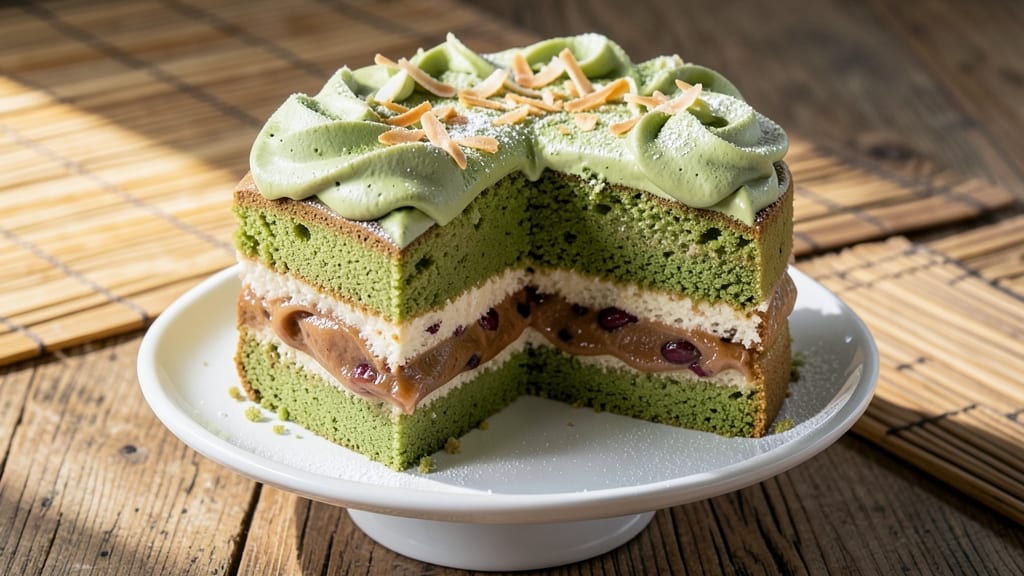
This Asian-style cake recipe combines earthy matcha and sweet red bean paste for a dessert that’s both nostalgic and refined. The secret lies in its silky layers—moist matcha cake infused with vanilla, sandwiched between velvety red bean filling that’s been simmered to perfection. I developed this recipe after years of experimenting with traditional Japanese mochi techniques, blending them with modern baking precision for a cake that’s easy to make but feels like a special occasion.
The cake’s magic starts with the batter: a delicate balance of matcha powder and cake flour creates tender layers, while the red bean filling—made from azuki beans simmered with sugar until thick and glossy—adds a luxurious texture. Baking at a precise temperature ensures the cake rises evenly without drying out, and the final touch of powdered sugar dusting elevates it from homemade to bakery-worthy. This isn’t just dessert; it’s a celebration in every bite.
What sets this apart is the harmony of flavors: the bitterness of matcha contrasts beautifully with the sweetness of the red bean, while the vanilla in the batter ties everything together. The result is a cake that’s light yet rich, with a texture that’s almost too good to cut into. Perfect for birthdays, tea gatherings, or simply indulging in something special, this recipe delivers restaurant-quality results with minimal fuss.
For those who love customization, you can adjust the matcha intensity or swap the red bean filling for black sesame paste or coconut cream. The technique is foolproof, but the variations are endless—let your creativity guide you. Ready to bake something extraordinary? Let’s get started.
Ingredients for asian style cake
Earthy matcha meets velvety red bean in this silky-layered cake—just 14 ingredients for bakery-worthy results.
| Ingredient | Amount | Notes |
|---|---|---|
| Matcha Powder (Ceremonial Grade) 🍵 | 2 tbsp | High-quality, vibrant green color |
| All-Purpose Flour 🌾 | 2 cups | Sifted for light texture |
| Cake Flour 🌾 | 1 cup | For tender layers |
| Granulated Sugar 🍚 | 1 ½ cups | Superfine preferred |
| Vanilla Extract 🌸 | 1 tbsp | Pure, high-quality |
| Unsalted Butter (Room Temperature) 🧈 | 1 cup | European-style preferred |
| Large Eggs 🥚 | 3 whole | Room temperature |
| Azuki Beans (Dried) 🌱 | 1 cup | Rinsed thoroughly |
| Granulated Sugar (For Filling) 🍚 | 1 cup | For sweetening beans |
| Water (For Filling) 💧 | 1 ½ cups | Filtered preferred |
| Powdered Sugar 🍬 | 1 cup | For dusting |
| Baking Powder 🧂 | 1 ½ tsp | Aluminum-free |
| Salt 🧂 | ½ tsp | Fine sea salt |
| Vanilla Bean Paste (Optional) 🌸 | ½ tbsp | For deeper flavor |
Matcha makes or breaks this cake—ceremonial-grade powder from Matcha Kari or Ippodo delivers that vibrant, umami-rich flavor. Look for vibrant green color and a fine, sifted texture (the clumpy stuff won't dissolve properly). Azuki beans? Japanese markets or specialty stores carry the best—avoid pre-cooked canned beans, which lack the right texture. For the flour, King Arthur cake flour is my go-to for that signature tender crumb, but if you're in a pinch, blend all-purpose flour with cornstarch (1 cup minus 2 tbsp all-purpose plus 2 tbsp cornstarch). The vanilla matters too—Madagascar bourbon adds depth, but pure extract works fine if that's all you've got.
No matcha powder? Instant espresso powder at half the amount gives a similar earthy note (though not identical). Running short on azuki beans? Black sesame paste (1/2 cup) or sweetened coconut (1 cup, drained) swaps in beautifully—just adjust the sugar to taste. The butter must be room temperature; if it's cold, microwave it 20 seconds to soften. For the filling, simmer the beans until they're glossy and thick—about 45 minutes. If they're too watery, cook longer; if too thick, add a splash of water. The powdered sugar dusting? Confectioners' sugar is ideal, but if you only have granulated, pulse it in a food processor with a pinch of salt for smoothness.
This cake keeps beautifully—3 days at room temperature covered loosely, or 5 days refrigerated in an airtight container. For longer storage, freeze the layers separately (up to 3 months). The red bean filling can be made 2 days ahead and reheated gently before assembling. Pro tip: Dust the layers with powdered sugar right before serving—it melts slightly from the warmth of the cake, creating that bakery-fresh finish. And if you're feeling fancy, serve with whipped coconut cream instead of regular whipped cream.
Why You'll Love This Recipe
- Foolproof Layers: I swear by this method—just sift the flours, fold in the matcha, and let the mixer do the work. No frosting, no fuss, just a tender crumb that practically falls apart with a whisper.
- Earthy Vanilla Twist: That ceremonial-grade matcha gives it a grassy depth, but the vanilla? It’s the cherry on top—smooth, warm, and just sweet enough to balance the bitterness. Honestly, it’s the kind of flavor that makes you pause mid-bite.
- Party or Picnic: Slice it for a tea party, crumble it into yogurt for a snack, or pack it in layers for a lunchbox treat. The cake flour keeps it light enough to eat all day, and the matcha’s vibrancy makes it feel special—no one will guess it’s this simple.
- Zero-Waste Magic: A single batch yields enough for two cakes or a dozen muffins—I’ve done both. The leftovers? Toast them lightly for a matcha crunch or stash them in the freezer for a quick dessert later. And between us, that jar of matcha lasts forever.
Step-by-step instructions for matcha and red bean delight
This delicate cake marries vibrant matcha with sweet azuki bean filling—here's how to create silky layers that balance earthy and sweet.
Prepare the Azuki Bean Filling
Combine the 1 cup of dried azuki beans with the 1 cup of granulated sugar (for filling) and 1.5 cups of water (for filling) in a saucepan. Bring to a boil over medium-high heat, then reduce to a simmer. Cover and cook for 45-60 minutes until the beans are tender and the mixture thickens to a paste-like consistency.
Here's the thing—you want the filling to be smooth enough to spread but thick enough to hold its shape when sliced. If it's too watery after cooking, simmer uncovered for another 5-10 minutes to reduce. Let it cool completely before using—this prevents steam from affecting your cake layers.
Make the Matcha Cake Layers
Preheat your oven to 350°F and line three 6-inch round cake pans with parchment paper. In a medium bowl, whisk together the 2 cups of all-purpose flour, 1 cup of cake flour, 1.5 teaspoons of baking powder, and 0.5 teaspoon of salt. Sift the mixture to remove any lumps—this ensures a light, airy texture.
In a separate large bowl, cream the 1 cup of unsalted butter (room temperature) with 1.5 cups of granulated sugar until light and fluffy, about 3-4 minutes. Add the 3 whole large eggs one at a time, mixing well after each addition. In a small bowl, whisk the 2 tablespoons of matcha powder (ceremonial grade) with 1 tablespoon of vanilla extract to prevent clumping. Gradually add the dry ingredients to the butter mixture, alternating with the matcha mixture, beginning and ending with the dry ingredients.
Bake the Layers to Perfection
Divide the batter evenly among the three prepared pans. Bake for 25-30 minutes, or until a toothpick inserted into the center comes out clean. The edges should be golden brown, but the tops might look slightly underbaked—this is normal for matcha cakes. Let the layers cool in the pans for 10 minutes, then transfer to a wire rack to cool completely.
I always tap the pans gently on the countertop before removing the cakes—this helps release them cleanly from the parchment. Cooling completely is crucial; warm layers will be too soft to handle when assembling.
Assemble the Silky Layers
Once the layers are completely cool, level the tops if needed using a serrated knife. Place the first layer on a cake stand or plate. Spread a thin, even layer of the cooled azuki bean filling over the top, leaving a ½-inch border. Repeat with the second layer, then top with the third layer.
Here's where it gets fun—brush the outside of the cake with a simple syrup made by dissolving ½ cup of powdered sugar in 2 tablespoons of hot water. This adds moisture and helps the cake stay fresh longer. Dust the top and sides generously with the remaining ½ cup of powdered sugar for that classic Japanese finish.
Chill and Serve
Refrigerate the assembled cake for at least 4 hours, or preferably overnight. This chilling step allows the flavors to meld and the layers to set properly. When ready to serve, slice with a sharp, hot knife for clean cuts—this prevents the cake from crumbling.
The result should be a harmonious blend of vibrant green matcha layers and sweet, creamy azuki bean filling. Each bite delivers a perfect balance of earthy matcha and delicate bean sweetness, with a tender yet slightly chewy texture that's pure comfort.
Pro Tips For Making Asian Style Cake
- SIFT THE MATCHA: Mix matcha into the dry ingredients last—right before adding liquids—or you’ll end up with clumps that ruin the texture. I learned this after scraping lumps out of three batches. Use a fine-mesh sieve if you’re nervous, but even just whisking it into the flour with a fork works if you’re patient.
- WHISK THE EGGS ROOM-TEMP: Cold eggs from the fridge make matcha cakes dense and flat. Let them sit in warm water (about 100°F/38°C) for 5 minutes first, then whisk until they’re pale and tripled in volume. Trust me, your crumb will thank you—it’ll be light, not brick-like.
- STOP WHEN THE CENTER JIGGLES: Matcha cakes are done when the edges pull away but the center still wobbles slightly. Overbaking turns them dry and bitter, and that’s a shame since ceremonial-grade matcha costs a fortune. Test with a skewer—moist crumbs mean it’s perfect.
- SWAP 10% FLOUR FOR CORNSTARCH: Replace 1-2 tablespoons of the all-purpose flour with cornstarch if your cake turns out gummy. This is my go-to fix for matcha’s natural stickiness. It keeps the texture tender without sacrificing structure—just don’t skip it if you want that melt-in-your-mouth feel.
Regional styles of these flavors
Japanese Matcha Red Bean
This classic Japanese variation combines ceremonial-grade matcha with sweet azuki bean filling, creating a delicate balance of earthy and sweet flavors. The cake layers are typically lighter than Western sponge cakes, relying on cake flour for a tender crumb. For an authentic touch, use Japanese-style red bean paste (anko) instead of homemade filling—it’s pre-sweetened and perfectly textured for spreading. 🍵
Chinese Black Sesame
In Chinese baking traditions, black sesame paste replaces the red bean filling, adding a nutty, toasty depth. The cake batter often incorporates black sesame oil (about 1 teaspoon) for extra aroma. For a modern twist, swap matcha for lotus seed paste—a floral, creamy alternative that pairs beautifully with the sesame. Use almond flour in place of cake flour for a gluten-free option.
Korean Yuja (Citron) Cake
Korean-style cakes often feature yuja (citron) extract or zest, which adds a bright, aromatic citrus note. Replace the vanilla in the batter with 1 tablespoon yuja extract (or zest of 1 yuja fruit) and reduce the matcha to 1 tablespoon for a lighter flavor. The filling can be made with sweetened chestnut paste instead of red beans, creating a rich, nutty contrast. Garnish with edible gold leaf for a festive touch.
Thai Mango Sticky Rice
For a Thai-inspired adaptation, replace the matcha with mango puree (about ½ cup) and infuse the batter with 1 teaspoon pandan extract for a fragrant twist. The filling becomes a sticky rice mixture—cook ½ cup glutinous rice with 1 cup coconut milk and ½ cup sugar until thick. Serve the cake warm, drizzled with coconut cream and toasted sesame seeds.
Vietnamese Coffee Cake
Vietnamese bakers often incorporate instant coffee powder (about 1 teaspoon) into the batter alongside matcha for a mocha-like depth. The filling can be made with condensed milk and crushed peanuts for a crunchy texture. Top the cake with whipped coconut cream and a sprinkle of crushed peanuts before serving. This version is perfect for coffee lovers!
Modern Fusion Twist
For a contemporary take, layer the matcha cake with passion fruit curd (made from ½ cup passion fruit pulp, ¼ cup sugar, and 2 egg yolks) for a tangy-sweet contrast. Add white chocolate shavings between layers and dust with edible flowers for an elegant finish. This fusion keeps the traditional flavors while adding a gourmet flair. ✨
Nutrition facts
Frequently asked questions
Can I use instant matcha instead of ceremonial grade?
Instant matcha works in a pinch, but ceremonial grade delivers the best flavor and vibrant green color. Instant matcha has a stronger, more bitter taste and often contains additives. If you must use it, reduce the amount to 1 tablespoon instead of 2 tablespoons to avoid overpowering the cake.
How do I fix cracks in the cake layers?
Cracks usually happen when the cake bakes too long or the oven runs hot. To fix them, level the tops with a serrated knife and fill any gaps with a thin layer of the red bean filling before reassembling. Brush with simple syrup afterward to help blend the textures. For prevention, bake until just set (a toothpick should come out with a few moist crumbs) and avoid opening the oven door during baking.
Can I make this cake gluten-free?
Yes! Replace the all-purpose and cake flours with a 1:1 gluten-free flour blend (like Bob's Red Mill) and add ½ teaspoon xanthan gum to help bind the layers. For the filling, ensure your azuki beans are certified gluten-free. The texture will be slightly denser, but still delicious. Use a gluten-free powdered sugar substitute for dusting.
Why did my cake turn out dense instead of light? Dense cake usually results from overmixing the batter, using cold butter, or overbaking.
How can I make this cake vegan?
For a vegan version, replace the eggs with 3 tablespoons ground flaxseed mixed with 9 tablespoons water (let it sit for 5 minutes to thicken). Use vegan butter and ensure your vanilla extract is alcohol-free. For the filling, simmer azuki beans with coconut milk instead of water. The texture will be slightly different but still delightful. Dust with powdered sugar made from tapioca starch for a vegan-friendly finish.