
Desserts
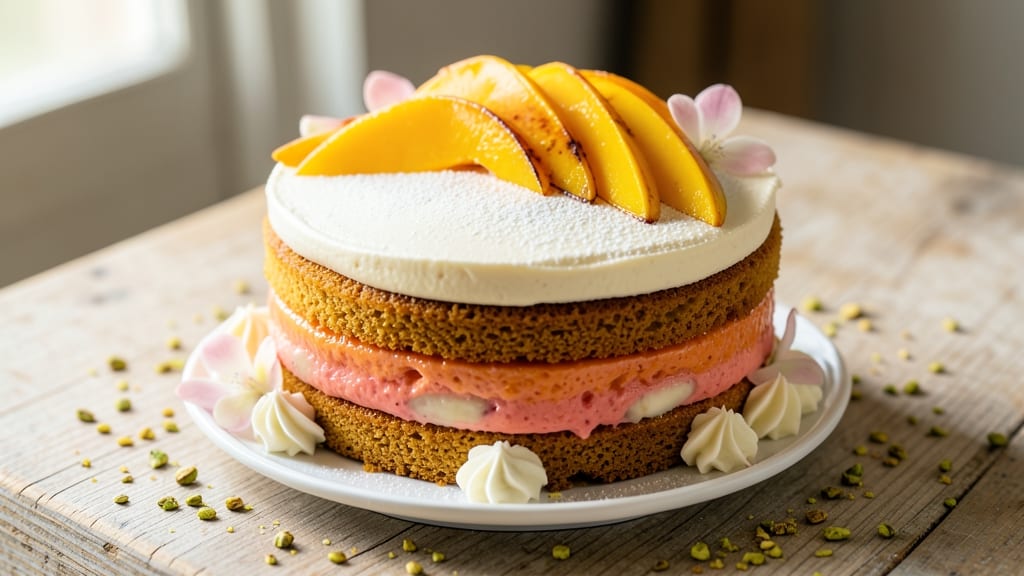
This Asian mango cake recipe transforms ripe mangoes into layers of moist, tropical perfection with a zesty lime glaze that brightens every bite. 🌟 Inspired by Southeast Asian baking traditions, it balances sweetness with tangy acidity for a dessert that feels both indulgent and refreshing. The secret lies in a simple yet effective technique—folding pureed mango into the batter for natural sweetness while keeping the texture light and airy.
What sets this recipe apart is its versatility—you can adapt it with matcha powder for an earthy twist or pandan extract for a fragrant Filipino touch. The cake itself bakes up with a tender crumb, while the lime glaze adds a vibrant finish that makes it perfect for summer gatherings or special occasions. No fancy equipment is needed—just a standard mixing bowl and oven.
The result is a showstopping dessert with layers of mango-infused cake and a glossy lime glaze that ties everything together. Each slice delivers bursts of tropical flavor, making it ideal for potlucks, brunch menus, or a decadent treat after dinner. The best part? It’s foolproof, with clear steps to ensure a perfectly moist texture every time.
Pair it with toasted coconut flakes or a drizzle of caramel for extra flair, or keep it simple with fresh berries on the side. Whether you're baking for a celebration or just craving something sweet, this cake delivers restaurant-quality results at home. Let’s get started!
Ingredients for asian mango cake
Tropical flavors meet tender layers in this showstopping Asian-inspired dessert.
| Ingredient | Amount | Notes |
|---|---|---|
| Ripe Mangoes 🥭 | 2 cups | Pureed, no sugar added |
| All-Purpose Flour 🌾 | 2 cups | Sifted for light texture |
| Granulated Sugar 🍚 | 1 ½ cups | White or light brown |
| Unsalted Butter 🧈 | 1 cup | Room temperature, softened |
| Large Eggs 🥚 | 3 whole | Room temperature |
| Baking Powder 🧂 | 2 tsp | Aluminum-free preferred |
| Salt 🧂 | ½ tsp | Fine sea salt |
| Pure Vanilla Extract 🌿 | 1 tbsp | High-quality preferred |
| Lime Zest 🍋 | 1 tbsp | Freshly grated |
| Lime Juice 🍋 | ½ cup | Freshly squeezed |
| Powdered Sugar 🍚 | 1 ½ cups | For glaze |
| Toasted Coconut Flakes 🥥 | ½ cup | Optional garnish |
The mango is the heart of this cake, so pick perfectly ripe ones—they should yield slightly to gentle pressure but not be mushy. Trader Joe's or local Asian markets often carry the best varieties, like Ataulfo or Nam Dok Mai. For pureeing, I use a food mill or fine-mesh sieve to avoid pulp—this keeps the texture silky smooth. The butter needs to be room temperature for a light crumb; if it's too cold, microwave it for 20 seconds to soften. For extra authenticity, swap half the all-purpose flour with rice flour—it adds a subtle nutty depth.
No ripe mangoes? Frozen mango puree works perfectly—just thaw and drain excess liquid. Running short on powdered sugar? Granulated sugar blended into a fine powder in a food processor does the trick. The lime zest can be substituted with lemon zest if needed, though lime adds that signature brightness. For a matcha twist, add 1-2 teaspoons of culinary-grade matcha powder to the dry ingredients. The coconut flakes? Toast them in a dry pan for 2-3 minutes until golden—Costco's bulk section has the best-priced unsweetened flakes.
Store the cake layers wrapped in plastic at room temperature for 2 days or refrigerate for 5 days. Assemble with the glaze just before serving—it sets quickly. For make-ahead convenience, bake the layers and freeze them for 3 months. The glaze keeps for 1 week in the fridge, so make it fresh when ready to serve. Garnish with toasted coconut or fresh berries for a pop of color—strawberries or raspberries pair beautifully with the lime.
Why You'll Love This Recipe
- No-Fuss Mixing: I swear by this recipe’s simplicity—just blend the mango puree into the batter, fold in the flour, and you’re done. No sifting, no extra bowls, and the eggs keep it light without fuss.
- Tropical Twist: That burst of ripe mango? It’s like dessert hugged a cake. The butter and sugar caramelize just enough to balance the fruit’s tang, so you get sweetness that’s actually refreshing—not cloying.
- Budget-Friendly Luxury: Fresh mango in season? Score. Butter and eggs stretch further than you’d think, and the sugar doesn’t need to be fancy. Leftovers? They vanish faster than you can say “second slice.”
Step-by-step instructions for Asian mango cake
Layer by layer, we'll build this vibrant cake with juicy mango filling and a bright lime glaze.
👨🍳 Step 1: Prepare the Mango Puree and Dry Ingredients
Start by peeling and pureeing the 2 cups of ripe mangoes until completely smooth—no chunks should remain. I like to strain it through a fine-mesh sieve to remove any excess fiber, which keeps the filling silky. Set aside the puree in a bowl.
In a separate medium bowl, whisk together the 2 cups of all-purpose flour, 1.5 cups of granulated sugar, 2 teaspoons of baking powder, and ½ teaspoon of salt. Sift the flour mixture once to aerate it—this prevents dense cake layers. Keep this dry blend ready for the next step.
🍳 Step 2: Cream Butter and Mix Wet Ingredients
In a large mixing bowl, beat the 1 cup of softened unsalted butter with the 3 whole eggs (room temperature) on medium speed for 3-4 minutes until light and fluffy. The mixture should nearly double in volume and turn pale yellow—this incorporates air for a tender crumb.
Gradually add the 1 tablespoon of pure vanilla extract and 1 tablespoon of lime zest while mixing on low speed. Then, slowly pour in the ½ cup of lime juice and mix until fully combined. The citrus brightens the flavor and balances the sweetness of the mango.
🥘 Step 3: Combine Wet and Dry Ingredients
With the mixer on low speed, gradually add the dry ingredient blend to the wet mixture, mixing just until combined—no more than 30 seconds. Overmixing develops gluten, which can make the cake tough. Scrape down the sides of the bowl as needed to ensure even mixing.
Fold in the 2 cups of mango puree using a spatula, mixing gently until just incorporated. The batter will be thick but spreadable. Divide the batter evenly between two 8-inch round cake pans lined with parchment paper and greased lightly with butter.
🔥 Step 4: Bake the Cake Layers
Preheat your oven to 350°F. Bake the cake layers for 25-30 minutes, or until a toothpick inserted into the center comes out clean. The edges should be golden brown, but the top may still look slightly underbaked—this is normal for mango cake.
Let the baked layers cool in the pans for 10 minutes, then transfer them to a wire rack to cool completely. This prevents the layers from becoming soggy when assembling. While they cool, prepare the lime glaze by whisking together 1.5 cups of powdered sugar and 2 tablespoons of lime juice until smooth.
🥘 Step 5: Assemble and Glaze the Cake
Place one cake layer on a serving plate and spread a thin layer of the mango puree (about ½ cup) over the top. Top with the second layer and spread the remaining mango puree evenly. Drizzle the lime glaze over the top and sides of the cake, letting some of it drip down for a decorative effect.
Sprinkle the ½ cup of toasted coconut flakes over the glaze for added texture and a tropical touch. Serve at room temperature for the best texture—this allows the flavors to meld and the glaze to set slightly. Each slice should reveal moist, tender layers with bursts of juicy mango and a tangy citrus finish.
Pro Tips For Making Asian Mango Cake
- Prep Mango Like a Pro: Peel the mango before puréeing—it’s faster and avoids stringy bits in your batter. I used to blend skins and wondered why my cake tasted gritty. Run the flesh under warm water first to loosen the peel effortlessly.
- Whip Eggs Till Ribbon Stage: Beat the eggs until they hold a ribbon when the whisk is lifted—this guarantees a light, airy crumb. Overmixing? No, just make sure they’re thick enough to coat the back of a spoon. (Yes, even if you’re impatient like me.)
- Avoid Overmixing the Batter: Fold in flour just until combined—lumpy is better than dense. I learned this the hard way after kneading the batter like dough. Stop when dry spots disappear, then let the oven do the work.
- Use Room-Temp Butter: Softened butter (not melted) blends smoother and creates a tender crumb. Stick it in a warm spot for 10 minutes—no microwave, no waiting forever. Trust me, your cake’s texture will thank you.
Storing and reheating this recipe
Room Temperature Storage
Store your fully assembled mango cake at room temperature in an airtight container for up to 2 days. The cake maintains its moist texture beautifully this way, and the lime glaze stays glossy. I like using a clear glass cake carrier from Pyrex—it keeps the cake protected while showcasing its vibrant layers. 🌟
Refrigerator Refresh
If you need to store the cake longer, refrigerate it for up to 5 days. The cold temperature actually enhances the flavors, making each bite taste even more vibrant. When ready to serve, let it sit at room temperature for 30 minutes before slicing—this prevents the glaze from becoming too thick. A quick zap in the microwave for 10 seconds warms it up if you're short on time.
Freezer-Friendly Layers
For maximum convenience, bake the cake layers and freeze them individually for up to 3 months. Wrap each layer tightly in plastic wrap followed by aluminum foil to prevent freezer burn. When ready to assemble, thaw the layers overnight in the fridge. The texture remains perfectly moist when properly wrapped—no soggy surprises here!
Glaze Make-Ahead Tip
The lime glaze can be prepared 1 week in advance and stored in an airtight container in the refrigerator. Stir well before using, as the powdered sugar may settle. For extra shine, brush the cake with a tiny bit of neutral oil (like grapeseed) before applying the glaze—this helps it adhere better and gives that professional restaurant finish.
Reheating Slices
If you've sliced the cake and want to reheat individual portions, I recommend using the microwave. Place a slice on a microwave-safe plate and heat for 10-15 seconds on 50% power. This gently warms the cake without drying out the layers. For a stovetop option, warm slices in a dry skillet over low heat for 1-2 minutes—just enough to melt the glaze slightly for a warm, gooey texture. 💫
Garnish Revivals
If your toasted coconut flakes lose their crunch after storage, simply toast them fresh in a dry skillet over medium heat for 2-3 minutes until golden again. For extra flair, garnish with fresh berries or mint leaves right before serving—this adds a pop of color and brightness that makes the cake feel fresh and special every time. The contrast of warm cake with cool berries is pure magic. ✨
Nutrition facts
Frequently asked questions
Can I substitute frozen mango for fresh in this recipe?
Yes! Use 2 cups of thawed frozen mango puree instead of fresh. Drain any excess liquid from the thawed mango to prevent a soggy cake. For best results, strain the puree through a fine-mesh sieve to remove ice crystals and achieve a smooth texture. The flavor will be just as vibrant.
How do I adjust the sweetness if my mangoes aren't ripe enough?
Add 1-2 tablespoons of honey or agave to the mango puree if your fruit tastes tart. Alternatively, increase the granulated sugar in the dry ingredients by 2 tablespoons. For extra tropical depth, mix in 1 teaspoon of coconut milk powder with the flour. Always taste the puree before mixing into the batter.
What's the best way to make this cake gluten-free?
Replace the 2 cups of all-purpose flour with a 1:1 gluten-free baking flour blend (like Bob's Red Mill). Add ½ teaspoon of xanthan gum to improve texture. For extra moisture, reduce the baking powder to 1.5 teaspoons and increase the eggs to 4. Test your blend first to ensure proper rise—some require additional adjustments.
Can I make this cake in a bundt pan instead of round layers?
Use the same batter but reduce baking time to 20-25 minutes (check at 20). For a single-serving version, divide the batter into 4 mini bundt pans and bake for 15-18 minutes. The lime glaze will still work beautifully—just drizzle it over the top. This creates a stunning presentation with intricate patterns.
Why did my cake turn out dense instead of moist?
Overmixing the batter or using cold butter are common culprits. Always cream the butter and eggs until light and fluffy (3-4 minutes), and mix the dry ingredients just until combined. Another tip: don't overfill the pans—fill them ⅔ full for even baking. If the mango puree was too watery, strain it thoroughly or reduce the amount by ¼ cup.