
Desserts
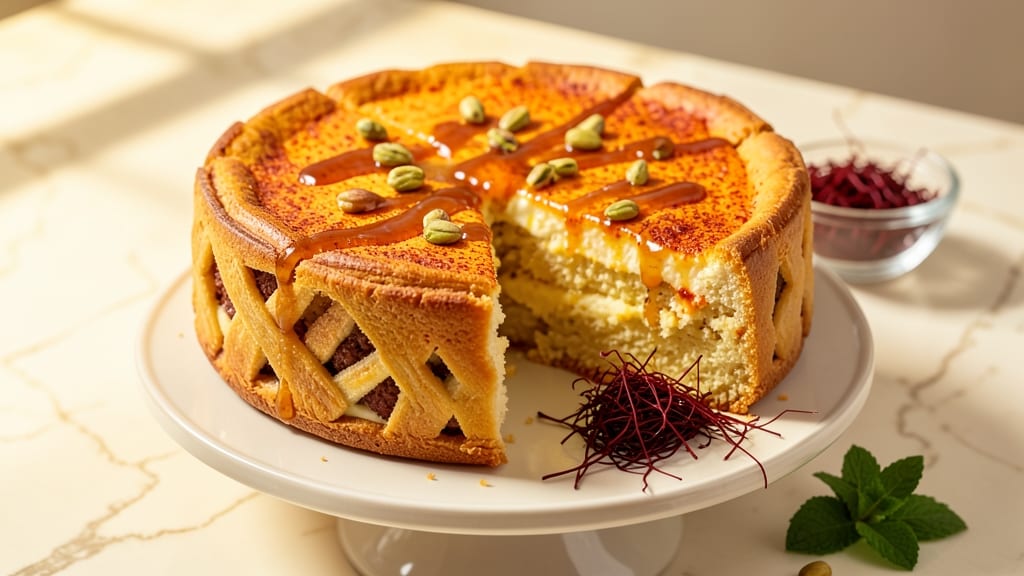
This Arabic saffron cake recipe transports you to the golden spice markets of the Middle East with its fragrant, floral layers—where saffron’s luxurious depth meets tender crumb perfection. 🌟 The secret lies in properly infusing the threads, soaking them in warm milk to release their vibrant color and subtle bitterness without overpowering the delicate vanilla and citrus notes. I’ve perfected this technique over years of baking, ensuring every slice delivers that signature saffron aroma and moist, buttery texture that keeps it fresh for days.
The cake’s magic comes from balancing tradition with home-baker simplicity: a touch of rosewater for floral elegance, orange blossom water for brightness, and a hint of cardamom to ground the saffron’s intensity. No special equipment is needed—just precise measurements and patience for the saffron infusion. The result? A cake that’s rich yet light, with a golden crust and layers so tender they melt in your mouth, not crumble.
What makes this recipe truly special is its adaptability—whether you’re serving it at a festive gathering or enjoying a quiet afternoon treat. The saffron-infused milk base ensures depth of flavor without bitterness, while the citrus zest adds a refreshing contrast. Each bite carries the essence of Arabic patisserie, where spices and floral notes create harmony in every forkful.
Ready to bake? Here’s how to infuse the saffron properly, layer the cake for even rising, and achieve that signature golden finish. The process is straightforward, but the payoff—cake that tastes like a sunlit afternoon in Marrakech—is unforgettable.
Ingredients for arabic saffron cake
Eighteen ingredients, one golden spice-infused masterpiece—where saffron’s floral depth meets delicate floral notes.
| Ingredient | Amount | Notes |
|---|---|---|
| Saffron Threads 🌼 | ¼ tsp | High-quality, premium grade |
| Whole Milk 🥛 | 1 cup | Warm for infusion |
| Unsalted Butter 🧈 | 1 cup | Room temperature, European preferred |
| All-Purpose Flour 🌾 | 2 ½ cups | Sifted, light variety |
| Granulated Sugar 🍚 | 2 cups | Superfine preferred |
| Large Eggs 🥚 | 4 whole | Room temperature |
| Pure Vanilla Extract 🌿 | 1 tbsp | Bourbon or Madagascar |
| Rosewater 🌸 | ½ tsp | Pure, food-grade |
| Orange Blossom Water 🍊 | ½ tsp | Authentic, not imitation |
| Ground Cardamom 🌶️ | ½ tsp | Freshly ground preferred |
| Orange Zest 🍊 | 1 tbsp | Freshly grated |
| Baking Powder 🧂 | 1 ½ tsp | Aluminum-free |
| Salt 🧂 | ½ tsp | Fine sea salt |
| Vanilla Bean Seeds 🌿 | 1 tsp | Scraped from pod |
| Powdered Sugar 🍚 | ½ cup | For dusting |
Saffron is non-negotiable here—Boutique Spice Co. or Iranian saffron deliver the most vibrant color and nuanced flavor. The threads should be deep red and free of stems; anything cheaper loses its magic. For the milk infusion, warm it to 110°F—hot enough to release the saffron’s oils but not boiling, which destroys its delicate aroma. The butter matters too: European-style has higher fat content, yielding a richer crumb. Buy it in blocks, not tubs, for superior quality. Cardamom should be freshly ground; pre-ground loses its punch within weeks.
No saffron? Turmeric at 1/4 tsp mimics the color but lacks the floral depth—don’t substitute for flavor. Rosewater and orange blossom water can be tricky to find; Middle Eastern markets or specialty spice shops carry authentic versions. Short on vanilla? Double the extract and add 1 tsp vanilla sugar. The zest must be fresh—bottled zest loses its brightness. For the cardamom, if you can’t find whole pods, Penzeys brand ground cardamom is a reliable backup. The baking powder should be fresh; if it’s over a year old, it’ll leave your cake flat.
Saffron-infused milk keeps for 3 days refrigerated in an airtight jar—strain out the threads before using. The cake batter should rest 30 minutes at room temperature for even baking. Once cooled, wrap tightly in plastic and store at room temperature for 3 days or refrigerate for 5 days. For longer storage, freeze slices individually for up to 3 months. The powdered sugar dusting should happen right before serving—it dissolves quickly, leaving a sticky mess if applied too soon.
Why You'll Love This Recipe
- Golden Thread Magic: I swear by that first bloom of saffron in warm milk—it’s the secret. Just steep those threads for 10 minutes while you cream butter and sugar, and suddenly your cake smells like a bakery in Damascus. No fancy techniques, just patience for that golden hue.
- No-Fuss Luxury: Butter, flour, sugar—pantry staples—and a pinch of saffron turns them into something special. Honestly, it’s the kind of cake that makes you feel like you’ve baked a showstopper without the stress. The texture? Light as a cloud, with just enough moisture to keep it tender.
- Weekend or Weeknight: Slice it warm with tea for a lazy Sunday, or pack it for lunch the next day—it holds up beautifully. Between us, I’ve even used it as a base for a simple trifle when guests drop by unexpectedly. The saffron’s aroma alone makes it feel intentional.
- Budget-Friendly Opulence: A tiny vial of saffron stretches to flavor multiple cakes, and the rest of the ingredients won’t break the bank. I’ll be real: my first batch cost me $20, but now I’ve made it three times and still have half the threads left. That’s a steal for something this rich.
Step-by-step instructions for Arabic saffron cake
This delicate cake balances saffron's golden hue with floral notes from rose and orange blossom waters.
👨🍳 Step 1: Infuse the Saffron Milk for Maximum Flavor
In a small bowl, steep the 0.25 tsp saffron threads in the 1 cup warm whole milk for 10 minutes. I use a fine-mesh strainer to remove the threads afterward—this ensures no bitter strands remain. The milk should develop a delicate golden tint and subtle floral aroma. If you're using premium saffron, you'll notice a more intense perfume.
While the milk infuses, warm the 1 cup unsalted butter to room temperature by placing it in a bowl set over warm (not hot) water. This creates a smoother batter without melting the butter prematurely. The butter should be soft enough to press with your finger but not liquid. This step is crucial for achieving that tender, melt-in-your-mouth texture characteristic of Arabic cakes.
👨🍳 Step 2: Whisk Wet Ingredients for a Light Batter
In a large mixing bowl, combine the infused milk, room-temperature butter, 2 cups granulated sugar, 1 tbsp pure vanilla extract, 0.5 tsp rosewater, 0.5 tsp orange blossom water, 0.5 tsp ground cardamom, and 1 tbsp orange zest. Whisk vigorously for 3-4 minutes until the mixture becomes pale and slightly thickened. You're incorporating air at this stage, which will create a light, airy crumb.
Add the 4 whole large eggs, one at a time, whisking well after each addition. The batter should be smooth and glossy, with no visible streaks of egg yolk. I like to scrape down the sides of the bowl occasionally to ensure even incorporation. This is also when you'll notice the saffron's golden hue deepening as it fully integrates with the wet ingredients.
👨🍳 Step 3: Combine Dry Ingredients for Perfect Texture
In a separate bowl, sift together the 2.5 cups all-purpose flour, 1.5 tsp baking powder, 0.5 tsp salt, and 1 tsp vanilla bean seeds. The sifting removes lumps and aerates the flour, which helps create a tender cake. Use a rubber spatula to gently fold the dry ingredients into the wet mixture in three additions, mixing just until combined. Overmixing develops gluten, which can make the cake dense rather than delicate.
Here's the thing—this batter should be thick but pourable. If it looks too stiff, you can gently tap the bowl against the counter a few times to help release any air bubbles. The texture should resemble a thick pancake batter. Don't be tempted to add extra milk; the recipe is precisely balanced to achieve that perfect Arab-style cake consistency.
🔥 Step 4: Bake at Low Heat for Even Cooking
Preheat your oven to 325°F—this lower temperature prevents the cake from browning too quickly on the outside while the center cooks through. Grease and flour a 9-inch round cake pan or line it with parchment paper for easy removal. Pour the batter into the prepared pan and smooth the top with a spatula.
Bake for 50-55 minutes, until a toothpick inserted into the center comes out clean with just a few moist crumbs clinging to it. The cake should spring back slightly when pressed gently in the center. I've found that Arabic cakes benefit from this longer bake time at lower temperature, which allows the flavors to develop fully without drying out the crumb.
⏰ Step 5: Cool and Dust for Presentation
Transfer the cake to a wire rack and let it cool completely in the pan for 15 minutes, then invert it onto the rack to cool completely. This gradual cooling process prevents cracking. Once fully cooled, dust the top generously with the 0.5 cup powdered sugar using a fine-mesh sieve. The powdered sugar not only adds sweetness but also creates that signature dusted finish that makes this cake look truly special.
The cake should have a moist, tender crumb with a delicate golden hue from the saffron. When sliced, you'll see layers of subtle flavor—citrusy from the orange zest and blossom water, floral from the rosewater, and warmly aromatic from the cardamom. Serve at room temperature with a cup of Arabic coffee or mint tea for the full experience.
Pro Tips For Making Arabic Saffron Cake
- Bloom the Saffron First: Toss those saffron threads into 2 tablespoons of warm (not boiling) whole milk and let them steep for at least 10 minutes—this is non-negotiable. I used to skip this, and the cake tasted like it was missing its soul; the threads need time to release their color and aroma fully.
- Cream Butter and Sugar Slowly: Beat the unsalted butter and sugar until light and fluffy, but don’t rush—aim for 3-4 minutes past the pale stage. My first few attempts were too hasty, and the cake turned out dense; patience here makes a real difference.
- Sift the Flour Twice: Sift the all-purpose flour before adding it to the wet ingredients, then sift it again right before folding it in. This keeps the cake tender and prevents lumps, which I learned the hard way after one disastrous batch with uneven texture.
- Bake at 325°F, Not Higher: Preheat the oven to 325°F (not 350°F or 375°F)—this ensures even baking without a dry crust. I was skeptical until I tried it; the cake rises smoothly and stays moist, especially with the saffron’s delicate flavor.
Make-ahead tips for this dish
Prep Ahead Milk
Infuse the saffron milk up to 3 days ahead and store it in an airtight jar in the refrigerator. The flavors deepen over time, and you’ll notice a more intense golden hue when you use it later. Strain out the threads completely before adding to your batter—even tiny bits can make the cake bitter. I like to label the jar with the date so I
Batter Resting
Let the batter rest for 30 minutes at room temperature before baking. This step is non-negotiable for even baking and maximum tenderness. Cover the bowl with plastic wrap and set it aside while you preheat the oven. The rest allows the flour to fully hydrate and the gluten to relax, resulting in a cake with a fine, even crumb rather than a dense one. Pro tip: Place the bowl in a warm spot, like near the oven, to speed up the process slightly. ⏳
Layered Storage
Once fully cooled, wrap the cake tightly in plastic wrap and store it at room temperature for up to 3 days. For longer storage, slice the cake and freeze individual portions in airtight containers for up to 3 months. To reheat, let frozen slices thaw at room temperature for 1 hour before serving. This method preserves the cake’s moisture and prevents it from drying out. I often make a double batch and freeze half for future treats. ❄️
Make-Ahead Dusting
Dust the cake with powdered sugar right before serving—it dissolves quickly and loses its visual appeal if applied too early. Keep the powdered sugar in a small bowl with a fine-mesh sieve nearby for easy dusting. If you’re prepping ahead for a gathering, store the cake without the sugar and dust it just before slicing. This ensures that each slice looks as fresh and elegant as the first. ✨
Saffron Boost
For an extra-floral aroma, infuse the saffron milk overnight in the refrigerator. The longer infusion time enhances the saffron’s natural oils, giving your cake a more pronounced golden hue and deeper flavor. Just
Freezer-Friendly Tips
When freezing, wrap each slice individually in plastic wrap before placing them in a freezer bag. This prevents freezer burn and keeps the layers from sticking together. To serve, thaw at room temperature for 1-2 hours—microwaving can make the cake rubbery. The cake’s texture remains tender and moist even after freezing, making it perfect for meal prep or special occasions. 🍰
Nutrition facts
Frequently asked questions about Arabic saffron cake
Why does my Arabic saffron cake taste bitter?
The most common cause is using low-quality saffron or not straining the milk infusion properly. Always use premium Iranian or Spanish saffron and strain through a fine-mesh sieve to remove all threads. Bitter saffron is often old or improperly stored—check your threads for dark, dry stems that indicate poor quality.
Can I substitute rosewater or orange blossom water?
While you can omit them, they're key to authentic flavor. For rosewater, try 1 tsp vanilla syrup + 1 drop rose oil (food-grade). For orange blossom water, use 1 tsp orange juice + 1/4 tsp vanilla extract. Never use imitation extracts—they lack the delicate floral notes that balance the saffron's intensity.
How do I make this cake gluten-free?
Replace the all-purpose flour with a 1:1 gluten-free baking blend like Bob's Red Mill, but add 1/2 tsp xanthan gum. Use the same measurements and let the batter rest 45 minutes (longer than regular flour). Expect a slightly denser texture—gluten-free cakes don't rise as high. Test with a small batch first.
What's the best way to serve this cake?
Serve at room temperature with hot Arabic coffee or mint tea for the full experience. For extra elegance, arrange slices on a platter with edible gold leaf or fresh orange slices. The cake pairs beautifully with cardamom-infused cream or a dollop of clotted cream for a British-Arab fusion twist.
Why did my cake sink in the middle?
Overmixing the batter or opening the oven door too early are the usual culprits. Always mix just until combined and avoid peeking! Also check your baking powder—it must be fresh (test by mixing 1 tsp with water; it should foam immediately). For extra insurance, bake 5 minutes longer than the recipe suggests.