
Desserts
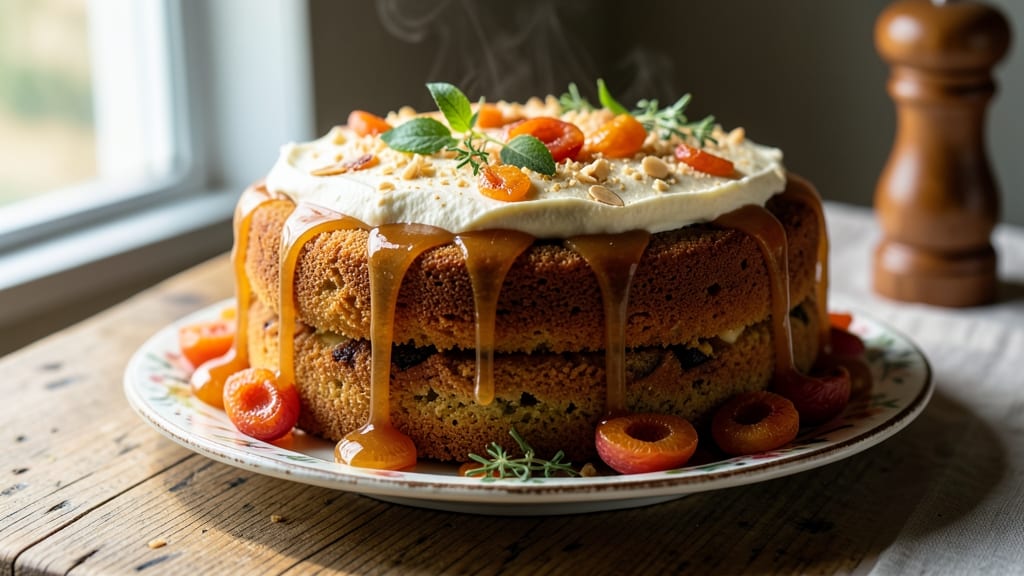
This apricot fruit cake delivers layers of spiced moisture and caramelized apricot magic that keeps slices tender for days. 💛 The secret lies in a simple technique: folding dried apricots into the batter while reserving their syrup to brush between layers, creating that signature marbled effect without overcomplicating the process. What makes this recipe stand out is how it balances traditional fruit cake richness with modern simplicity—no elaborate steaming required, just a single bake that yields perfect texture every time.
The cake's foundation is a buttery, lightly spiced batter that stays moist thanks to a combination of brown sugar and a touch of sour cream. While the cake bakes, the apricots soften and release their natural juices, which get absorbed into the layers for that signature fruity depth. The result is a cake with a golden crust and a tender crumb that holds up beautifully even when sliced a day later—ideal for holidays or special occasions when you want dessert that feels both impressive and comforting.
What truly elevates this recipe is the caramelized apricot glaze that ties everything together. Made with just apricot jam, butter, and a pinch of cinnamon, it adds a glossy finish and extra fruit flavor with minimal effort. Each slice reveals pockets of tender apricot pieces and warm spices, making it a dessert that's as satisfying to make as it is to eat. The best part? This cake improves with age, developing even more complex flavors as it sits.
Whether you're baking for a celebration or treating yourself to a homemade indulgence, this apricot fruit cake delivers restaurant-quality results with just a few simple techniques. The recipe scales easily for gifts or gatherings, and the moist texture ensures every bite is as delicious as the first. Let's get started on creating layers of spiced apricot perfection.
Ingredients for apricot fruit cake
Layered with spiced apricot magic and tender crumb—this cake delivers restaurant-quality richness with simple techniques.
| Ingredient | Amount | Notes |
|---|---|---|
| All-Purpose Flour 🌾 | 3 cups | Sifted for light texture |
| Unsalted Butter 🧈 | 1 cup | Softened to room temperature |
| Light Brown Sugar 🍯 | 1 ½ cups | Packed firmly for sweetness |
| Large Eggs 🥚 | 3 whole | Room temperature for blending |
| Sour Cream 🍶 | ½ cup | Full-fat for moisture |
| Dried Apricots 🍑 | 1 ½ cups | Chopped, plus 2 tbsp syrup |
| Ground Cinnamon 🌿 | 2 tsp | Warm spice for depth |
| Ground Nutmeg 🌶️ | ½ tsp | Freshly grated preferred |
| Ground Cloves 🌶️ | ¼ tsp | Lightly toasted for aroma |
| Salt 🧂 | ½ tsp | Kosher or sea salt |
| Apricot Jam 🍓 | ½ cup | For caramelized glaze |
| Granulated Sugar 🍯 | ¼ cup | For glaze sweetness |
| Vanilla Extract 🌸 | 1 tsp | Pure extract for flavor |
The apricots are the heart of this cake, so look for dried apricots in the baking aisle—not the ones in jars with syrup. Trader Joe's and Whole Foods carry excellent quality, but the regular grocery store dried apricots work fine. The syrup from the apricots is key: save it to brush between layers for that signature marbled effect. For the spices, Penzeys or local spice shops offer freshly ground cinnamon and nutmeg, but the jarred stuff from the supermarket is perfectly fine. Just make sure your spices smell fresh—no musty aromas! The butter should be unsalted and European-style if possible—it adds richness without overpowering the fruit flavors.
No dried apricots? Substitute dried plums or raisins, but you'll lose that signature apricot flavor. Running low on sour cream? Greek yogurt works too, though it adds a slight tang. The glaze can be made with any fruit jam, but apricot keeps it authentic. For a quicker version, skip the glaze and just dust with powdered sugar. The cake's moistness comes from the sour cream and brown sugar combo—don't substitute with buttermilk or regular milk. If you're baking at high altitude, add an extra 1-2 tbsp flour to prevent spreading. And trust me on the vanilla—pure extract is worth the splurge over imitation.
This cake tastes even better the next day as the flavors meld. Wrap it tightly in plastic wrap and store at room temperature for up to 5 days, or freeze for 3 months for gifts. To reheat, warm slices in the oven at 300°F for 5-10 minutes—it revives the moisture beautifully. The glaze sets quickly, so assemble the cake as close to serving as possible. If you're making it ahead, store the layers separately and add the glaze just before serving. The cake keeps well in an airtight container, making it perfect for holiday baking.
Why You'll Love This Recipe
- No Fuss Mixing: I swear by this batter—just cream butter and sugar, toss in eggs one at a time, then fold in the flour and sour cream. The sour cream keeps it moist without extra effort, and the brown sugar caramelizes just enough to give that deep, buttery richness without needing to fuss over it.
- Apricot Magic: That first bite? The tender crumb soaked in apricot jam or compote—it’s like dessert and cake had a lovechild. The jam’s tang cuts through the cake’s sweetness, and the butter keeps it from being too heavy. Honestly, I’ve made fruitcakes before, but this one actually tastes like it’s worth the wait.
- Holiday or Snack: Between us, this cake is my secret weapon for holidays and lazy afternoons. Make a big batch, slice it thin, and serve with tea for company—or grab a single slice straight from the fridge when you’re craving something sweet. The sour cream in the batter means it stays fresh for days without drying out.
- Budget-Friendly Luxury: Flour, butter, sugar, eggs—these are pantry staples, not specialty ingredients. The apricot jam or dried fruit you add can be whatever’s on sale, and the cake keeps well for a week (if it lasts that long). I’ll be real: it’s the kind of treat that feels fancy but won’t break the bank.
Step-by-step instructions for apricot fruit cake
Here's how to create layers of moist cake infused with apricot and caramelized glaze.
👨🍳 Step 1: Prepare the Apricot Filling and Mix Dry Ingredients
Preheat your oven to 350°F. In a small bowl, combine the 1.5 cups chopped dried apricots with the 2 tablespoons apricot syrup from the package. Let this mixture sit while you prepare the cake batter—this ensures the apricots rehydrate and become tender.
In a separate bowl, whisk together the 3 cups sifted all-purpose flour, 2 teaspoons ground cinnamon, 0.5 teaspoon ground nutmeg, 0.25 teaspoon ground cloves, and 0.5 teaspoon salt. Sifting the flour removes lumps and incorporates air, which gives your cake a lighter texture. Set this dry mixture aside for now.
🍳 Step 2: Cream Butter and Sugars for Maximum Moisture
In a stand mixer fitted with the paddle attachment, beat the 1 cup softened unsalted butter and 1.5 cups packed light brown sugar on medium speed for 3-4 minutes until light and fluffy. You're looking for a mixture that's nearly doubled in volume and pale in color—this incorporates air that helps create a tender crumb.
Here's the thing—if your butter isn't fully softened, you'll end up with dense cake. Press the butter between two sheets of wax paper and let it sit at room temperature for 30 minutes before starting. The mixture should be smooth but not greasy when you're done.
👨🍳 Step 3: Incorporate Wet Ingredients and Fold in Apricots
Add the 3 whole room-temperature eggs, one at a time, mixing well after each addition. Then stir in the 0.5 cup sour cream and 1 teaspoon vanilla extract. The sour cream adds moisture and tenderness, while the vanilla enhances the fruit flavors.
Gradually add the dry ingredients to the wet mixture, mixing on low speed just until combined—about 30 seconds. Overmixing develops gluten, which can make your cake tough. Remove the bowl from the mixer and gently fold in the apricot mixture using a spatula. You'll see streaks of apricot throughout the batter, and that's perfect—it ensures even distribution.
🥘 Step 4: Layer and Bake for Perfect Texture
Divide the batter evenly between two 9-inch round cake pans lined with parchment paper. Smooth the tops with a spatula. Bake for 25-30 minutes or until a toothpick inserted in the center comes out clean. The cakes should be golden brown on top and spring back slightly when touched.
I press down gently on the center of each cake during the last 5 minutes of baking—this prevents doming and helps the cakes bake evenly. Let them cool in the pans for 10 minutes before transferring to a wire rack to cool completely. The residual heat will finish setting the cakes while they cool.
🍳 Step 5: Create the Caramelized Apricot Glaze
While the cakes cool, prepare the glaze by combining the 0.5 cup apricot jam and 0.25 cup granulated sugar in a small saucepan. Cook over medium-low heat, stirring constantly, for 5-7 minutes until the mixture thickens and becomes glossy. You're looking for a consistency that coats the back of a spoon.
Once the cakes are completely cool, spread a thin layer of this glaze between them when assembling. Brush the remaining glaze over the top and sides of the cake. Let the glaze set for 30 minutes before slicing—this gives it time to harden slightly and creates that beautiful caramelized finish.
Pro Tips For Making Apricot Fruit Cake
- Weigh the Butter: After measuring butter by volume, I learned the hard way—it’s always more than the recipe says. Use a kitchen scale for the butter and brown sugar; the difference in texture is noticeable. (Yes, even if you’re impatient like me.)
- Soak Apricots Overnight: Skip the last-minute soak—toss dried apricots in warm water or orange juice for at least 6 hours (or overnight). This guarantees they stay juicy and plump, not chewy or dry. No one wants a cake with raisins in it.
- Mix Just Until Combined: Overmixing the batter after adding the flour turns your cake dense and tough. Stop as soon as the dry ingredients disappear—about 10-12 strokes. The sour cream and butter are doing the heavy lifting here; don’t overwork them.
- Test Doneness with a Toothpick: The cake will look underdone when the pan says it’s done. Insert a toothpick into the center—if it comes out clean, wait another 5-10 minutes. Apricot cakes hide moisture; pulling them too soon guarantees a gummy center. (Your future self will thank you.)
Regional styles of this dish
British Classic
In the UK, apricot fruit cake is a holiday staple often called "fruitcake" or "Christmas cake." The British version traditionally includes brandy or rum soaked into the dried apricots and candied peel, giving it a rich, boozy depth. I recommend adding 2 tbsp brandy to the apricot mixture and letting it soak for 1 hour before folding into the batter. The cakes are often steamed for 1-2 hours before baking to create a denser, more moist texture. 🍷
French Éclat
French fruit cakes, or gâteau aux fruits secs, often feature almond flour for a nutty twist. Replace 1 cup of the all-purpose flour with almond flour and add ½ cup toasted sliced almonds to the batter. The French also prefer a darker, denser crumb, so increase the baking time by 5-10 minutes and brush the tops with orange liqueur instead of glaze. This version pairs beautifully with crème fraîche or mascarpone for a luxurious dessert. 🌟
German Spiced Twist
German Pflaumenkuchen (plum/apricot cake) leans into warm spices like cardamom and anise. Add ½ tsp ground cardamom and ½ tsp anise seeds to the dry ingredients, and substitute ½ cup of the brown sugar with honey for a deeper flavor. The Germans also love a crunchy streusel topping—sprinkle ½ cup crushed graham crackers mixed with 2 tbsp melted butter over the batter before baking. Serve with vanilla ice cream for contrast. 🌶️
American Southern Style
Southern bakers often make this cake extra moist by adding ½ cup apple butter to the batter, which complements the apricots beautifully. They also top it with a cinnamon-sugar crust—mix 2 tbsp sugar with 1 tsp cinnamon and sprinkle over the batter before baking. The Southern version is frequently served with whipped cream and a sprinkle of toasted pecans for crunch. This style is perfect for Thanksgiving or Christmas gatherings. 🍯
Scandinavian Lightness
Scandinavian fruit cakes focus on lightness and bright flavors. Replace the sour cream with ½ cup Greek yogurt and add 1 tbsp lemon zest to the batter for freshness. The Scandinavians also prefer a glaze made with apricot jam and a splash of aquavit (a Scandinavian spirit) for a subtle herbal note. Bake in 8-inch pans instead of 9-inch for taller, lighter layers. Serve with lingonberry jam for a tart contrast. ❄️
Modern Fusion Twist
For a contemporary take, try adding 1 tbsp matcha powder to the dry ingredients for a subtle earthy note. Swap the glaze for a dark chocolate ganache—melt 4 oz dark chocolate with 2 tbsp heavy cream and drizzle over the cake. Top with crushed pistachios for a pop of color and texture. This fusion version works beautifully for birthday cakes or dessert menus. 💫
Nutrition facts
Frequently asked questions
Can I use fresh apricots instead of dried?
Fresh apricots won't work the same way in this recipe because they release too much liquid and won't hold their shape during baking. For best results, stick with dried apricots—either chopped from a package or pitted and dried yourself. If you're determined to use fresh, try making a separate apricot compote to layer between the cakes instead.
How do I prevent my fruit cake from drying out?
The secret to keeping this cake moist is the sour cream and brown sugar combination. Wrap the baked layers tightly in plastic wrap while they cool, then store them in an airtight container at room temperature. For extra insurance, brush the top with simple syrup (equal parts sugar and water, heated until dissolved) before serving.
Can I make this cake gluten-free?
Yes, but you'll need to use a 1:1 gluten-free flour blend and add an extra 1 teaspoon xanthan gum to the dry ingredients. Replace the all-purpose flour with 3 cups gluten-free blend and consider reducing the baking time by 2-3 minutes since gluten-free cakes bake faster. The texture will be slightly denser but still delicious.
What's the best way to store leftovers?
Wrap the cake tightly in plastic wrap and store at room temperature for up to 5 days in an airtight container. For longer storage, freeze slices wrapped individually for up to 3 months. To reheat, warm slices in the oven at 300°F for 5-10 minutes—this revives the moisture beautifully.
Why did my cake crack on top?
Cracking usually happens when the cake cools too quickly or if the oven temperature fluctuates. Let the cakes cool in their pans for the full 10 minutes before transferring to a rack, and avoid opening the oven door during the last 10 minutes of baking. For extra insurance, press down gently on the centers during the last 5 minutes of baking to prevent doming.