
Desserts
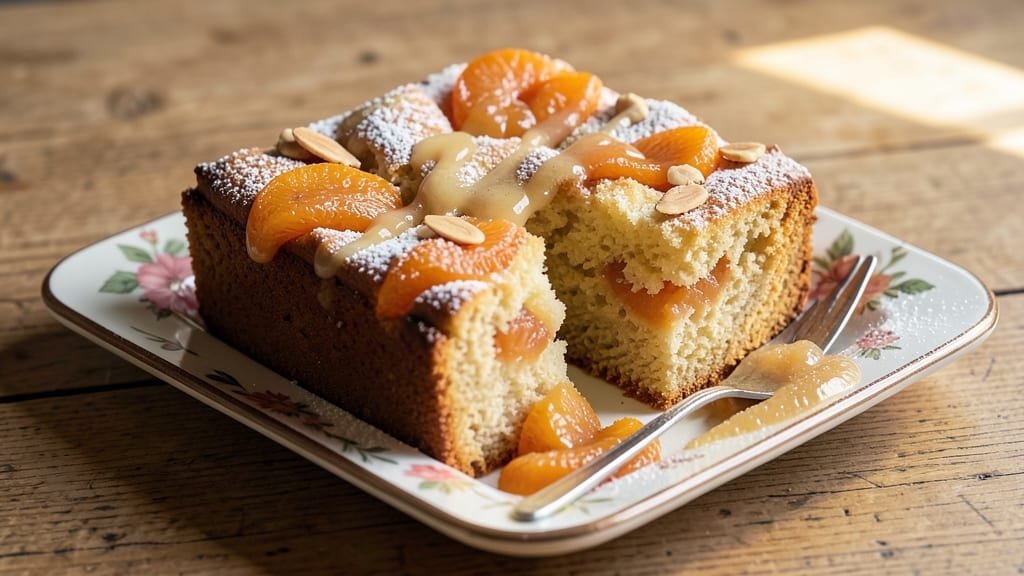
This apricot cake recipe UK delivers the perfect balance of tender vanilla sponge and tangy apricot swirl—just like the ones you’d find in British bakeries. 💛 The secret lies in a simple yet foolproof method that ensures a moist crumb and a rich, buttery frosting that complements the fruit’s natural sweetness without overpowering it.
Inspired by classic UK cake traditions, this recipe transforms dried apricots into a luscious jam that swirls beautifully through the cake batter. The vanilla frosting adds a velvety finish, while a light dusting of icing sugar elevates the presentation. It’s the kind of dessert that feels both nostalgic and modern—ideal for afternoon tea or special occasions.
What makes this recipe stand out is its simplicity: no fancy techniques, just a few key ingredients and a 30-minute prep time before it goes into the oven. The result? A cake with a golden crust, a tender crumb, and pockets of jammy apricot that melt into every bite. The frosting isn’t just decorative—it ties the whole thing together with its buttery richness.
Serve it warm with a dollop of clotted cream or enjoy it at room temperature with a cup of Earl Grey tea. The apricot swirl keeps it interesting, while the vanilla frosting ensures it’s universally loved. Let’s get baking!
Ingredients for apricot cake recipe uk
Tender crumb meets jammy apricot swirl—just eight ingredients transform into a classic British cake.
| Ingredient | Amount | Notes |
|---|---|---|
| All-Purpose Flour 🌾 | 2 ½ cups | Sifted for light texture |
| Granulated Sugar 🍚 | 1 ½ cups | White or light brown |
| Unsalted Butter 🧈 | 1 cup | Softened to room temperature |
| Large Eggs 🥚 | 2 whole | Room temperature for even mixing |
| Vanilla Extract 🌸 | 2 tsp | Pure vanilla for authentic flavor |
| Baking Powder 🧂 | 2 tsp | For proper rise |
| Salt 🧂 | ½ tsp | Fine sea salt preferred |
| Dried Apricots 🍑 | 1 ½ cups | Chopped into small pieces |
| Apricot Jam 🍯 | ½ cup | Homemade or quality store-bought |
| Milk 🥛 | ½ cup | Whole milk for richness |
| Powdered Sugar 🍚 | 2 cups | For smooth frosting |
| Heavy Cream 🥛 | ½ cup | Chilled for whipping |
| Icing Sugar 🍚 | 2 tbsp | For dusting |
The dried apricots are the star here. Look for plump, moist apricots—the ones packed in syrup rather than oil. Waitrose or M&S often have excellent quality, but any reputable supermarket will do. Chop them finely so they distribute evenly through the batter. The jam? Good quality apricot jam like Branston or Robertson's makes all the difference—avoid the overly sweet, artificial-tasting varieties. The butter should be European-style if possible, with higher fat content for that signature British richness.
No dried apricots? Fresh apricots work in a pinch—simmer them with sugar to make a jam first. Short on jam? Substitute with apricot purée or even a spoonful of marmalade, though the texture will differ slightly. The vanilla extract is non-negotiable—imitation vanilla won’t cut it here. For the frosting, if you can’t find heavy cream, whipping cream with a bit of powdered sugar works, though it won’t be quite as stable. The powdered sugar should be sifted to avoid lumps in the frosting—Doves Farm is a reliable brand for this.
This cake keeps beautifully for 3-4 days in an airtight container at room temperature, though it’s best enjoyed fresh. For longer storage, wrap tightly and refrigerate for up to 1 week. The frosting can be made a day ahead—just whip it again briefly before using. To serve, dust with icing sugar just before cutting. The apricot swirl keeps it interesting, but the vanilla frosting is what makes it truly special—worth the extra few minutes to whip it properly.
Why You'll Love This Recipe
- No Mixer Needed: I swear by this recipe because it’s actually mixable by hand—no stand mixer, no fuss. Just creaming butter and sugar until light, then folding in flour and eggs. Even if you’re not a baker, the dough comes together smoother than a Sunday morning.
- Sunshine in a Slice: That buttery vanilla base with tender flour gives it a melt-in-your-mouth texture, but the real magic? The apricots—whether fresh, dried, or jam—add a sweet-tart punch that feels like summer in every bite. (Honestly, I’ve made it with all three, and each version wins.)
- Tea Time or Dessert Table: This cake is my go-to for afternoon tea and weekend brunch—slice it thin for delicate finger sandwiches or serve it warm with clotted cream. It’s the kind of dish that works just as well for a quiet afternoon as it does for a gathering. (Yes, even on a Tuesday night.)
- Leftovers That Don’t Suffer: Unlike some cakes that dry out in days, this one stays moist for at least five days if stored properly. I’ve even reheated slices in the oven with a drizzle of honey—because nothing says “I care” like a cake that improves with time. Budget-friendly? Absolutely. Waste-free? Even better.
Step-by-step instructions for apricot cake with vanilla frosting
This classic British apricot cake delivers a moist, fruity crumb and buttery vanilla frosting every time.
👨🍳 Step 1: Prepare the Apricot Filling
In a small saucepan, combine the 0.5 cup apricot jam and 0.5 cup milk. Bring to a gentle simmer over medium heat, stirring occasionally for 3-4 minutes until the mixture thickens slightly and becomes smooth. Remove from heat and stir in the 1.5 cups dried apricots, ensuring they're well coated. Let this filling cool completely before using—this prevents the cake from becoming soggy.
While the filling cools, chop the dried apricots into small pieces if they aren't already. This ensures even distribution throughout the cake layers. I like to use a sharp knife for this step—it gives you more control than your hands. The apricots should be roughly ¼-inch pieces for that perfect burst of fruit in every bite.
👨🍳 Step 2: Mix the Cake Batter
Preheat your oven to 350°F and grease two 8-inch round cake pans, lining the bottoms with parchment paper. In a large mixing bowl, cream together the 1 cup softened unsalted butter and 1.5 cups granulated sugar using an electric mixer on medium speed for 3-4 minutes until light and fluffy. This step is crucial—it incorporates air that helps create that tender crumb.
Add the 2 whole large eggs, one at a time, mixing well after each addition. Then stir in the 2 tsp vanilla extract and 0.5 tsp salt. In a separate bowl, whisk together the 2.5 cups sifted all-purpose flour and 2 tsp baking powder. Gradually add the dry ingredients to the wet mixture, alternating with ¼ cup milk at a time, beginning and ending with the flour. Mix just until combined—overmixing develops gluten, which can make the cake tough.
🥘 Step 3: Layer and Bake the Cake
Divide the batter evenly between the prepared cake pans. Using a spoon or small ladle, spread the cooled apricot filling evenly over the first layer in each pan. Pour the remaining batter over the filling, gently swirling the pans in a circular motion to create those beautiful marbled patterns. This technique ensures each slice has that signature apricot swirl.
Bake for 25-30 minutes or until a toothpick inserted into the center comes out clean. The cakes should spring back slightly when pressed in the center. Here's the thing—don't open the oven during baking. The temperature fluctuation can cause the cakes to sink. Let them bake undisturbed until they're golden brown and perfectly set.
🍳 Step 4: Make the Vanilla Frosting
While the cakes cool, prepare the frosting by whipping the 2 cups powdered sugar and 0.5 cup chilled heavy cream together in a chilled mixing bowl. Use the whisk attachment and beat on high speed for 3-4 minutes until the frosting is light, fluffy, and holds soft peaks. This is where patience pays off—the colder the bowl and cream, the better the texture.
Once the cakes have cooled completely, level the tops if necessary. Spread a thin layer of frosting between the layers to act as a glue. Then spread the remaining frosting over the top and sides of the cake, creating a smooth finish. I like to use an offset spatula for this—it gives me that professional-looking finish every time.
🎂 Step 5: Decorate and Serve
Sift the 2 tbsp icing sugar over the top of the cake for a delicate finish. For extra flair, you can arrange a few whole dried apricots around the sides. Let the cake sit at room temperature for 30 minutes before slicing—this allows the frosting to set slightly and makes for cleaner cuts.
Slice into 8 equal wedges and serve. Each bite should deliver that perfect balance of moist, tender cake, sweet apricot filling, and creamy vanilla frosting. The contrast between the tart apricots and sweet frosting makes this cake truly special. Store any leftovers in an airtight container in the refrigerator for up to 3 days, though I doubt there will be any leftovers!
Pro Tips For Making Apricot Cake Recipe Uk
- Weigh Your Butter: I learned this the hard way—using scooped butter from the tub gives you way too much fat and throws off the cake’s texture. For a UK-style apricot cake, weigh your butter (225g for most recipes) and let it sit at room temperature for exactly 1 hour before creaming. Cold butter won’t emulsify properly, and you’ll end up with a dense, greasy mess.
- Dry the Apricots Properly: If your apricots are fresh or even slightly sticky, they’ll make the cake soggy. Pat them thoroughly with paper towels after chopping—no shortcuts. For extra insurance, toss them in a sieve and let them air-dry for 10 minutes before folding into the batter. (Yes, even if you’re impatient like me.)
- Don’t Overmix the Batter: The moment your flour mixture turns from streaky to smooth is the moment to stop. Overmixing develops gluten, and your cake will turn tough instead of tender. Use a spatula to gently fold in the apricots and any extra flour—just until combined. I used to rush this, and my cakes always ended up dense.
- Bake at 180°C (Fan 160°C) and Test Early: UK ovens run hotter than US ones, so stick to 180°C (fan-assisted 160°C) and check for doneness at 30 minutes. A skewer should come out with moist crumbs, not wet batter. If the top browns too fast, tent it with foil—your cake needs to be set through, not burnt. I’ve ruined cakes waiting for them to "look done."
Wine and beer pairings for this apricot cake recipe uk
Classic British Wines
For this apricot cake, I always reach for a dry sparkling wine like English sparkling wine—something crisp and refreshing that cuts through the richness of the cake. Nyetimber Classic Cuvée is my go-to; its bright acidity and subtle citrus notes complement the apricot’s natural tartness beautifully. If you prefer something still, a dry Riesling from Germany, such as Dr. Loosen Blue Slate, enhances the apricot’s fruity depth without overpowering it. 🍷
Sweet Dessert Wines
If you love a sweeter pairing, a Moscato d’Asti from Italy brings a lovely effervescence and floral notes that harmonize with the cake’s vanilla frosting. Saracco Moscato d’Asti is a crowd-pleaser—light, slightly sweet, and easy-drinking. For a British twist, try a Sauternes like Château d’Yquem, though it’s a splurge; its honeyed apricot flavors mirror the cake’s filling. Serve slightly chilled for the best experience.
Beer Pairings
A Belgian witbier is my favorite beer match for this cake—its citrusy coriander and spicy pepper notes create a delightful contrast. Stella Artois (a Belgian lager) is a safer bet if you want something more approachable, but Hoegaarden takes the win for its effervescence and subtle fruitiness. For a darker option, a honey ale like Heather Meadows Honey Ale adds a caramel sweetness that pairs surprisingly well with the apricot’s tartness. 🍺
After-Dinner Digests
If you’re serving this cake as a dessert, a port wine like Taylor’s Late Bottled Vintage is a classic choice—its rich, nutty flavors stand up to the cake’s buttery frosting. For something lighter, a dry sherry such as Harvey’s Bristol Cream adds a nutty, slightly bitter note that balances the sweetness. I often save a glass of Earl Grey tea for sipping alongside—its bergamot notes echo the vanilla in the frosting beautifully.
Seasonal Adaptations
In summer, I swap the wine for a rosé—something dry and crisp like M. Chapoutier Côtes du Rhône Rosé to complement the cake’s fresh, fruity notes. During winter, a spiced red wine such as Mulled Shiraz (a British favorite) adds warmth and depth, making the cake feel even more comforting. The key is balancing the cake’s sweetness with a wine or beer that either enhances or contrasts its flavors. 💫
Nutrition facts
Frequently asked questions
Can I use fresh apricots instead of dried?
Yes, but you'll need to prepare them first. Simmer 4-5 fresh apricots with 2 tbsp sugar and 1 tbsp water for 10 minutes until soft, then mash into a jam. Use this instead of the dried apricots and jam in the recipe. The texture will be slightly different but still delicious!
How do I make this cake gluten-free?
Replace the all-purpose flour with a 1:1 gluten-free baking flour blend (like Doves Farm or Bob's Red Mill). You may need to add ½ tsp xanthan gum to help bind the cake. Also, use gluten-free oats if you're making your own jam from scratch. The texture will be slightly denser but still moist.
Why did my cake sink in the middle?
This usually happens when the oven isn't hot enough or the cake pans weren't properly greased. Make sure your oven reaches 350°F (use an oven thermometer to check) and grease the pans thoroughly with butter or baking spray. Also, don't open the oven door during the first 20 minutes of baking.
Can I bake this in a single 9-inch pan instead of two 8-inch pans?
Yes, but you'll need to adjust the baking time. For a single layer in a 9-inch pan, bake for 35-40 minutes instead of 25-30. The cake will be thicker, so you might want to slice it horizontally after baking to create layers. The swirl effect will be less dramatic but still delicious!
What's the best way to store leftovers?
Wrap the cake tightly in plastic wrap, then place it in an airtight container. It will keep at room temperature for 2-3 days or in the fridge for up to 5 days. For longer storage, freeze slices wrapped individually for up to 3 months. Thaw at room temperature before serving.