
Desserts
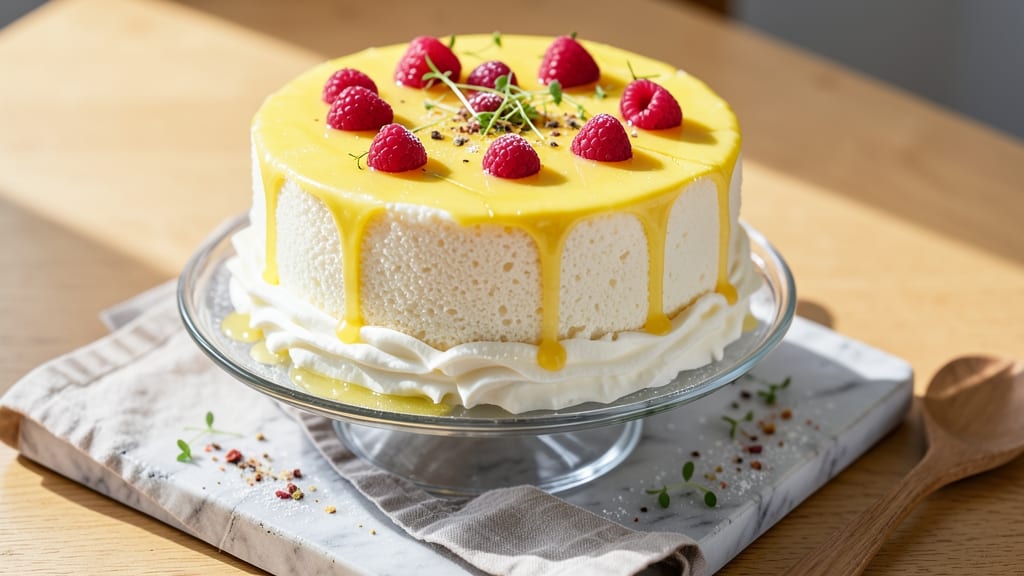
This angel food cake glaze frosting recipe transforms simple powdered sugar into a silky, light-as-air drizzle that enhances every bite. ✨ The secret lies in balancing powdered sugar with meringue powder and corn syrup, creating a stable yet delicate glaze that won’t weigh down the cake’s signature fluffiness. Unlike heavy frostings, this version clings beautifully to layers while adding just the right amount of sweetness and shine.
The recipe relies on a foolproof ratio of powdered sugar, meringue powder, and corn syrup to achieve the perfect consistency—neither too runny nor too thick. A splash of vanilla or citrus zest elevates the flavor, while a touch of lemon juice ensures smoothness. The glaze sets quickly when chilled, making it ideal for decorating cakes with precision without smudging.
What sets this glaze apart is its versatility—it complements angel food cake’s light texture while standing up to toppings like fresh berries, whipped cream, or even a sprinkle of toasted nuts. The result is a cake that looks restaurant-worthy but remains effortlessly elegant. Ready in just 10 minutes, this glaze is the perfect finishing touch for any celebration.
For best results, prepare the glaze ahead of time and store it in an airtight container. The flavors deepen slightly as it sits, making it even more irresistible. Whether you’re serving it at a brunch or a birthday party, this glaze will elevate your cake to new heights.
Ingredients for angel food cake glaze frosting
Eight simple ingredients create this magical glaze that turns any angel food cake into a showstopper.
| Ingredient | Amount | Notes |
|---|---|---|
| Powdered Sugar 🍚 | 2 cups | Sifted for smooth texture |
| Meringue Powder 🍰 | 2 tbsp | Ensures stability and shine |
| Light Corn Syrup 🍯 | 2 tbsp | Prevents crystallization |
| Pure Vanilla Extract 🌿 | 1 tsp | Or vanilla bean paste |
| Fresh Lemon Juice 🍋 | 1 tsp | Brightens flavor and smooths |
| Heavy Cream 🥛 | ½ cup | For extra silkiness (optional) |
| Orange Zest 🍊 | ½ tsp | Or lemon zest for tang |
| Water 💧 | 2 tbsp | Adjusts consistency |
Powdered sugar is the star here—Domino or C&H brands work best since they’re finely sifted out of the box. Meringue powder might be tricky to find at regular grocery stores, but Walmart or Amazon carry it, or you can use 1 tbsp unflavored gelatin dissolved in 2 tbsp hot water as a substitute (though meringue powder gives that signature angel food glaze shine). For corn syrup, Karo is the gold standard—don’t grab the high-fructose kind. Fresh lemon juice is non-negotiable for that bright pop; bottled won’t cut it. If you’re feeling fancy, Trader Joe’s carries organic vanilla extract that’s worth the splurge.
No meringue powder? 1 tbsp unflavored gelatin dissolved in 2 tbsp hot water works in a pinch, but texture won’t be identical. Short on lemon juice? Lime zest at half the amount gives a tangy twist. The heavy cream is optional but adds that ultra-silky finish—skip it if you prefer a lighter glaze. For extra flavor, swap vanilla for almond extract at half the amount. Pro tip: If your glaze turns out too thick, add 1 tsp water at a time until it reaches a drizzling consistency. Too thin? Add 1 tsp more powdered sugar and whisk vigorously.
This glaze sets beautifully when chilled, so prep it ahead of time—it actually tastes better the next day as flavors meld. Store in an airtight container in the fridge for up to 1 week, or freeze for 3 months in ice cube trays for single servings. To use, let it sit at room temperature for 5 minutes before drizzling—it’ll flow like a dream. For extra flair, dust with powdered sugar or sprinkle with toasted coconut or crushed nuts right before serving.
Why You'll Love This Recipe
- No Mixer Needed: I swear by this recipe when my mixer’s on vacation—just whisk, pour, and let the meringue powder do the heavy lifting. That powdered sugar and corn syrup combo dissolves like magic with a quick hand mixer or even a fork if you’re in a rush.
- Bright & Dreamy: The lemon juice cuts through the sweetness just enough to make it feel light, not cloying—like a sunny afternoon in a bowl. Honestly, the vanilla and meringue powder team up to give it that classic angel food vibe without tasting like store-bought frosting.
- Party in a Jar: Between us, this glaze is my go-to for last-minute birthdays, showers, or even a fancy coffee cake for my book club. Store it in the fridge for up to a week, and it’s ready to drizzle whenever—no re-whipping required.
- Pocketbook Perfection: You’re getting a restaurant-worthy finish for pennies. Meringue powder and corn syrup stretch your budget further than pre-made frosting, and the powdered sugar is already in my pantry. It’s the kind of trick that makes me feel like a baking genius without breaking the bank.
Step-by-step instructions for angel food cake glaze frosting
This silky, light-as-air glaze transforms your angel food cake into a showstopper—crisp edges and moist layers every time.
👨🍳 Step 1: Sift the Dry Ingredients for Smooth Perfection
In a medium bowl, sift together the 2 cups powdered sugar and 2 tbsp meringue powder using a fine-mesh sieve. I press the sifter firmly against the bowl to ensure every particle passes through—this eliminates clumps and guarantees a flawless, cloud-like consistency. The meringue powder here is your secret weapon; it stabilizes the glaze and gives that signature glossy finish.
Give the mixture a quick whisk with a balloon whisk to break up any stubborn granules. You're aiming for a texture so fine it almost feels like talcum powder. This step prevents graininess in your final glaze, which would ruin the delicate, airy quality we're after. Think of it as the foundation—get it right, and everything else builds beautifully.
🍳 Step 2: Whisk Wet Ingredients to a Glossy Emulsion
In a separate small bowl, combine the 2 tbsp light corn syrup, 1 tsp pure vanilla extract, 1 tsp fresh lemon juice, 0.5 cup heavy cream, 0.5 tsp orange zest, and 2 tbsp water. Whisk vigorously for about 30 seconds until everything is fully incorporated and the mixture looks uniform. The lemon juice brightens the flavor while preventing any potential bitterness from the corn syrup, and the orange zest adds a subtle citrusy aroma that pairs perfectly with vanilla.
Here's the thing—if you're using the heavy cream, you'll notice the mixture becomes slightly thicker. That's normal, and it actually enhances the glaze's silkiness. If you prefer a lighter consistency (especially for a simple drizzle), you can omit the cream, but I promise you won't regret adding it for that extra velvety touch.
🥘 Step 3: Gradually Combine for a Flawless Glaze
With your mixer on low speed, slowly pour the wet ingredients into the sifted dry ingredients. Start with a slow drizzle to prevent any sudden clumping, and keep mixing for about 1-2 minutes until completely smooth. You'll know it's ready when the glaze clings to the whisk and leaves a shiny trail—almost like liquid silk. If you encounter any lumps, don't panic. Simply press the mixture through a fine-mesh sieve into a clean bowl for a perfectly silky finish.
Taste a small amount at this stage—it should be sweet but balanced with the citrus notes. If it needs more brightness, add a tiny splash of lemon juice. The glaze should be thick enough to coat the back of a spoon but still flow freely when drizzled. This is your perfect consistency: stable enough to hold its shape on the cake but light enough to create that elegant, cascading effect.
⏰ Step 4: Rest and Adjust for Ideal Texture
Let the glaze rest at room temperature for 10-15 minutes. This resting period allows the ingredients to fully meld together, resulting in a more stable and glossy finish. During this time, I like to give it a quick stir to ensure everything is evenly combined. If the glaze thickens too much, thin it with 1 tsp water at a time until it reaches your desired drizzling consistency. Remember, it's better to start slightly thinner—you can always thicken it later if needed.
Here's a pro tip: If you're planning to drizzle the glaze over a warm cake, wait until the cake has cooled completely first. The residual heat from the cake can cause the glaze to melt and slide off, ruining that beautiful, decorative look. Patience here ensures your cake stays perfectly presented and delicious.
🍰 Step 5: Drizzle with Precision for a Showstopper Finish
Transfer the glaze to a piping bag fitted with a small round tip or use a squeeze bottle for an easy drizzle. Hold the bag about 2 inches above the cake and gently squeeze to create an even, wavy pattern. For a more professional look, start from the center and work your way outward, allowing the glaze to cascade naturally down the sides. If you're feeling fancy, you can even create a lattice pattern by crossing the drizzles at slight angles.
Work quickly but carefully—this glaze sets fast once exposed to air. For extra shine, lightly brush the cake with a pastry brush dipped in water after drizzling. This little trick reactivates the powdered sugar, giving your cake that irresistible mirror-like finish. Serve immediately to admire those crisp edges and that perfect, light-as-air texture we worked so hard to achieve.
Pro Tips For Making Angel Food Cake Glaze Frosting
- Sift the Powdered Sugar: I learned this the hard way—lumps in your glaze make it look (and taste) like you rushed. Sift the powdered sugar and meringue powder together over a bowl before measuring, especially if your stash has been sitting in a humid kitchen. No sifter? Use a fine-mesh strainer and press firmly with a spoon. That extra effort keeps the texture silky smooth.
- Warm the Lemon Juice: Cold lemon juice can make your glaze seize up like glue. Warm it to room temperature first—just pop the bottle in a bowl of hot water for 30 seconds. This also brings out the bright citrus flavor without overpowering the vanilla. (Yes, even if you’re impatient like me.)
- Whisk in the Syrup Slowly: Dumping corn syrup into dry powdered sugar is a one-way ticket to clumps. Start with half the syrup and whisk vigorously until fully dissolved, then add the rest gradually. This isn’t just about avoiding lumps—it’s how you get that glossy, professional finish instead of a grainy mess.
- Let It Thicken Naturally: Skimping on resting time turns your glaze into a sticky syrup. After mixing, let it sit for 10–15 minutes at room temperature—it’ll thicken enough to pipe or drizzle without sliding off the cake. (Your future self will thank you when the frosting holds its shape.)
Troubleshooting your angel food cake glaze frosting
Glaze Too Thin
If your glaze turns out too runny, it’s likely because you added too much liquid or didn’t sift the powdered sugar properly. Start by whisking in 1 tsp more powdered sugar at a time until it reaches a thick, drizzling consistency—think of honey’s viscosity. For a quick fix, let it sit uncovered for 5-10 minutes; the moisture will evaporate slightly, thickening it naturally. If you’re in a rush, place the bowl over a pot of barely simmering water (double boiler) for 1 minute, stirring constantly, to reduce excess liquid. 💫
Glaze Too Thick
A glaze that’s too stiff usually means you didn’t incorporate enough liquid or over-mixed the dry ingredients. Thin it gradually with ½ tsp water at a time, whisking vigorously between additions. For stubborn lumps, press the mixture through a fine-mesh sieve into a clean bowl. If it’s still too thick after adding 1 tbsp water, try warming the glaze gently (double boiler method) to help it flow more smoothly. Remember, it’s easier to thin than to thicken later!
Grainy Texture
Graininess happens when powdered sugar isn’t sifted fine enough or clumps form during mixing. To fix it, press the glaze through a fine-mesh sieve into a fresh bowl, using a spatula to push every last bit through. For extra smoothness, add ½ tsp corn syrup and whisk vigorously—it acts as a natural emulsifier. If you’re short on time, blend the glaze with an immersion blender for 10 seconds on low speed. This trick works wonders for instant silkiness.
Glaze Crystallizes
Crystallization occurs when moisture evaporates too quickly or the glaze sits too long before use. To prevent it, store the glaze in an airtight container with a damp paper towel underneath to maintain humidity. If it’s already crystallized, whisk in 1 tsp warm water and gently reheat (double boiler) for 20-30 seconds, stirring constantly. For future batches, add ½ tsp lemon juice—its acidity helps stabilize the sugar and prevent clumping.
Glaze Won’t Set
A glaze that refuses to set is usually too thin or lacks stabilizers. To fix it, chill the glaze in the fridge for 30 minutes before using—cold temperatures help it firm up. If it’s still too runny, whisk in 1 tsp meringue powder (or gelatin substitute) and let it rest for 10 minutes. For a quick test, dip a clean spoon in the glaze and let it drip back into the bowl. If it flows like water, it’s not ready; if it holds a slight peak, it’s perfect for drizzling.
Flavor Imbalance
If your glaze tastes too sweet or lacks brightness, adjust it before drizzling. For extra tang, add ¼ tsp more lemon juice or a pinch of cream of tartar. To mellow sweetness, whisk in ½ tsp vanilla extract or a dash of almond extract. Pro tip: Taste as you go—start with small amounts and adjust gradually. A well-balanced glaze should harmonize with the cake’s natural sweetness, not overpower it. 🍋
Nutrition facts
Frequently asked questions
Can I make this glaze without meringue powder?
Yes! Swap the 2 tbsp meringue powder for 1 tbsp unflavored gelatin dissolved in 2 tbsp hot water. Let it cool before mixing into the glaze—this adds stability but may slightly alter the texture. For a lighter option, use 1 tbsp cornstarch instead, though it won’t be as glossy.
How long does the glaze keep?
Store in an airtight container in the fridge for up to 1 week, or freeze in ice cube trays for 3 months. Thaw overnight in the fridge before using. The flavor actually improves after 24 hours as ingredients meld!
Why does my glaze turn grainy?
Graininess usually means unsifted powdered sugar or insufficient mixing. Fix it by pressing the glaze through a fine-mesh sieve or whisking in ½ tsp corn syrup to dissolve any lumps. For future batches, sift all dry ingredients thoroughly first.
Can I use this glaze on other cakes?
It works beautifully on pound cakes, sponge cakes, or even cupcakes. For denser cakes, reduce the water by 1 tbsp to prevent sogginess. The light citrus notes pair especially well with vanilla or carrot cakes.
What's the best way to drizzle without mess?
Use a piping bag with a small round tip or a squeeze bottle with the corner snipped off. Hold it 2 inches above the cake and work in quick, even strokes. For extra control, chill the glaze for 15 minutes before drizzling—it'll set faster and look more professional.