
Desserts
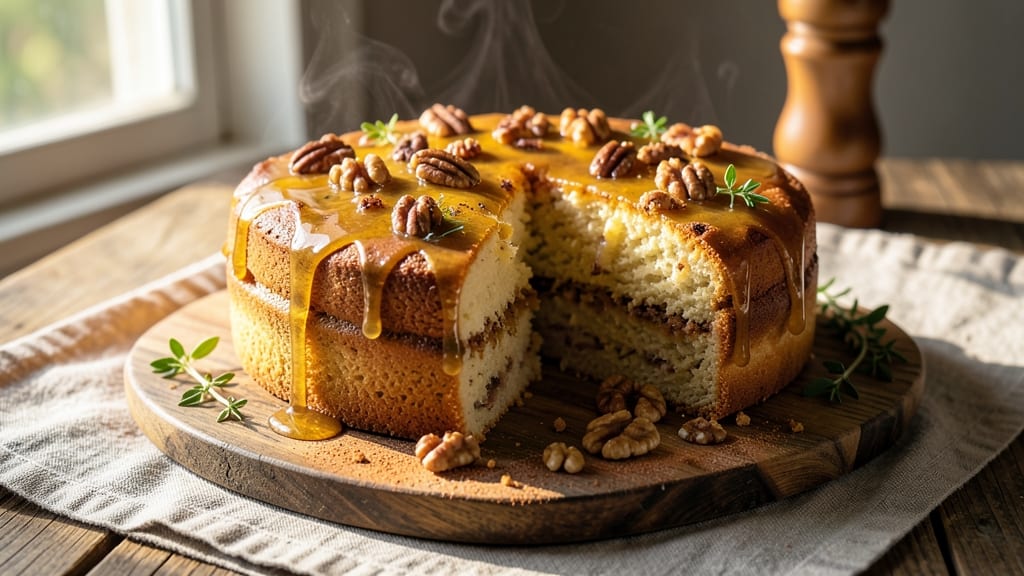
This ancient Greek honey cake recipe brings the golden traditions of melitini to your kitchen, where honey, nuts, and warm spices create a dessert steeped in history. 🌟 The one-bowl method preserves the simplicity of ancient techniques while delivering a moist, fragrant cake that crumbles perfectly—just like the honey-sweetened treats served in Byzantine monasteries. What makes this recipe special is its balance of texture, where tender crumbs meet crispy edges, all infused with the deep aroma of cinnamon and clove.
The beauty of this cake lies in its roots—melitini was a staple in Greek celebrations, from weddings to religious festivals, where honey symbolized prosperity. Using just 7 simple ingredients, including honey as both sweetener and binder, this recipe stays true to tradition while adapting for modern kitchens. The nuts add a satisfying crunch, while the honey caramelizes into a sticky, aromatic glaze that makes every bite irresistible.
What you’ll achieve is a cake that’s rich yet light, with a golden crust that cracks slightly at the edges—a hallmark of authentic melitini. The warmth of cinnamon and the earthy depth of walnuts complement the honey’s natural sweetness, creating a dessert that’s both nostalgic and utterly modern. Perfect for holidays, gifts, or a cozy afternoon treat, this recipe is a bridge between ancient Greece and your kitchen.
Whether you’re recreating history or simply craving a dessert with soul, this honey cake delivers. The one-bowl method ensures ease, while the cultural depth adds meaning to every bite. Let’s bring melitini to life—one golden, honey-drenched layer at a time.
Ingredients for ancient greek honey cake
Seven ingredients transform ancient Greek tradition into golden, honey-kissed cake perfection.
| Ingredient | Amount | Notes |
|---|---|---|
| Extra-Virgin Olive Oil 🫒 | ½ cup | High-quality, fruity variety preferred |
| Raw Honey 🍯 | 1 cup | Thick, local honey for authentic flavor |
| All-Purpose Flour 🌾 | 2 ½ cups | Sifted for light texture |
| Ground Walnuts 🥜 | 1 cup | Freshly ground for optimal texture |
| Baking Powder 🧂 | 1 ½ tsp | Diamond Crystal preferred |
| Ground Cinnamon 🌿 | 1 ½ tsp | Freshly ground for aromatic depth |
| Ground Cloves 🌶️ | ½ tsp | Whole cloves ground for potency |
| Large Eggs 🥚 | 2 whole | Room temperature for even mixing |
| Pinch of Salt 🧂 | ¼ tsp | Fine sea salt preferred |
| Orange Zest 🍊 | 1 tbsp | Freshly grated for citrus brightness |
| Vanilla Extract 🌸 | 1 tsp | Pure Madagascar preferred |
The honey is the soul of this recipe—local, unprocessed honey delivers the deepest flavor and proper viscosity for binding. Greek thyme honey from specialty stores like Eataly or Whole Foods adds authentic Mediterranean notes, but any thick, raw honey works. For walnuts, freshly grinding them in a food processor creates the ideal texture, though pre-ground walnuts save time. The cinnamon and cloves should be freshly ground—pre-ground spices lose potency quickly, and these warm spices are essential for that authentic Byzantine aroma. Penzeys Spices offers excellent whole spice options if you want to grind your own.
No fresh walnuts? Pistachios or almonds work as substitutes, though texture will differ slightly. Substituting honey can be tricky—maple syrup or agave work in a pinch, but they won't caramelize the same way. For the citrus, lemon zest is acceptable if orange isn't available. The eggs can be replaced with two flax eggs (2 tbsp ground flaxseed + 6 tbsp water) for a vegan adaptation, though texture will be slightly denser. The baking powder is crucial—aluminum-free brands like Diamond Crystal ensure proper rise without metallic aftertaste. If you're using pre-ground spices, toast them lightly in a dry pan to revive their flavor before adding to the batter.
This cake keeps beautifully—3-4 days at room temperature wrapped in beeswax paper, or 1 week refrigerated in an airtight container. For longer storage, slice and freeze portions between parchment paper for up to 3 months. The honey glaze hardens when chilled, so bring to room temperature before serving. I always make a double batch—half goes to friends, half stays for our weekly Sunday dessert tradition. The cake reheats wonderfully in a 200°F oven for 10 minutes, making it perfect for last-minute gatherings.
Why You'll Love This Recipe
- One-Bowl Wonder: I swear by this recipe—just toss everything into a bowl, stir, and bake. No fancy techniques, no extra bowls, and the walnuts grind right into the batter for that nutty crunch without the mess.
- Honey-Oil Magic: That first bite? Rich, buttery olive oil meets sticky honey—it’s like a warm hug in cake form. The flour keeps it tender, but the walnuts add just enough bite to balance the sweetness.
- Breakfast or Dessert: Serve it warm with yogurt for breakfast or drizzle with extra honey for a midnight treat. Honestly, I’ve even packed slices for lunch—it’s that versatile.
- Budget-Friendly Staples: Five ingredients, all pantry-friendly, and they last forever. The olive oil and honey elevate simple flour into something special, but they won’t break the bank like specialty flours or extracts.
Step-by-step instructions for ancient Greek honey cake
Here's how to craft this historic dessert with modern precision while preserving its ancient soul.
👨🍳 Step 1: Whisk Wet Ingredients for Perfect Texture
In a large mixing bowl, combine the 0.5 cup extra-virgin olive oil and 1 cup raw honey. I use a whisk here to emulsify these rich ingredients thoroughly—this creates the cake's signature moist yet tender crumb. The honey should be at room temperature for even distribution.
Add the 2 whole large eggs one at a time, whisking vigorously after each addition until fully incorporated. The mixture will thicken noticeably as the eggs bind with the honey and oil. Stir in the 1 tbsp orange zest and 1 tsp vanilla extract, folding gently to preserve the citrus brightness. This is where the cake's aromatic complexity begins.
👨🍳 Step 2: Sift and Fold Dry Ingredients
In a separate bowl, sift together the 2.5 cups all-purpose flour, 1.5 tsp baking powder, 1.5 tsp ground cinnamon, 0.5 tsp ground cloves, and 0.25 tsp pinch of salt. Sifting prevents lumps and ensures an even rise. I press down gently with a rubber spatula to break up any stubborn clumps—this guarantees a light, airy texture.
Gradually add the dry mixture to the wet ingredients, folding with a spatula in a gentle "J" motion. Stop mixing as soon as the flour disappears—overmixing develops gluten and creates a dense cake. The batter should be thick but pourable, with visible streaks of honey and walnuts.
👨🍳 Step 3: Fold in Walnuts for Ancient Texture
Gently fold in the 1 cup ground walnuts using the same "J" folding technique. I like to distribute them evenly throughout the batter—this ensures each slice delivers that nutty crunch reminiscent of ancient Greek kitchens. The walnuts should be freshly ground for optimal texture and flavor.
Here's the thing—don't overmix at this stage. The walnuts are dense, and vigorous folding can break them down. A few visible walnut clusters in the batter are actually desirable for authentic texture. The cake will still be moist enough to hold them together during baking.
🔥 Step 4: Bake to Golden Perfection
Preheat your oven to 350°F and grease a 9-inch round cake pan thoroughly with olive oil. Line the bottom with parchment paper for easy removal. Pour the batter into the prepared pan and smooth the top with a spatula—this prevents uneven rising.
Bake for 45-50 minutes until a toothpick inserted in the center comes out clean with just a few moist crumbs clinging to it. The cake should be golden brown at the edges but still slightly springy in the center. I find it's better to slightly underbake than overbake—this cake continues cooking as it cools.
⏰ Step 5: Cool and Serve with Authentic Presentation
Remove the cake from the oven and let it cool in the pan for 10 minutes before transferring to a wire rack to cool completely. This gradual cooling prevents cracking. The cake will sink slightly as it cools—this is normal and actually enhances the texture.
Once completely cool, dust the top with a light layer of powdered sugar or serve with a drizzle of additional honey. The cake's rich, caramelized flavor pairs beautifully with Greek yogurt or a cup of strong black coffee. Each slice should reveal a moist crumb with pockets of honey glistening throughout—this is the true essence of mielogatos.
Pro Tips For Making Ancient Greek Honey Cake
- Bake Slow and Low: The honey in this cake caramelizes easily, so resist the urge to crank the oven. Bake at 325°F (160°C) for the first 20 minutes—this guarantees even moisture distribution before you raise the heat to 350°F (175°C) for the final 15-20 minutes. I learned this the hard way after walking away to find a cracked, overbrowned top while the center was still doughy.
- Toast the Walnuts First: Skip the raw walnuts—they’ll release bitterness and make the cake taste flat. Lightly toast 1 cup of ground walnuts in a dry pan over medium heat for 3-4 minutes until they smell nutty and fragrant. Let them cool before mixing into the batter, or you’ll end up with a greasy texture. (Yes, even if you’re impatient like me.)
- Whisk the Olive Oil: Don’t just pour in the extra-virgin olive oil straight from the bottle—it’s thick and uneven. Warm it slightly (just until it’s pourable but not hot) and whisk it vigorously with the honey for 2 minutes before adding to the dry ingredients. This creates a smoother, more stable batter that won’t separate in the oven.
- Dough Too Thick? Add Warm Water: If your batter feels like glue, don’t panic. Mix in 1-2 tablespoons of warm water (not hot) until it reaches a thick but pourable consistency—it should coat the back of a spoon but still hold its shape. I was skeptical until I tried it: the cake stays moist without being gummy, and the texture turns out light and tender.
Health benefits of this ancient greek honey cake
Honey's Healing Power
Ancient Greeks revered honey not just for its sweetness but for its medicinal properties. Raw honey in this cake provides antioxidants like pinocembrin and chrysin, which combat oxidative stress. The 1 cup of honey used here delivers 160 calories of natural energy without refined sugars, making it a healthier dessert option. I've found that local, unprocessed honey contains trace amounts of pollen that support immune function. 🌿
Nutrient-Rich Walnuts
The 1 cup of walnuts in this recipe adds more than just texture—they're packed with omega-3 fatty acids, which support brain health and reduce inflammation. A single serving provides 185mg of omega-3s, equivalent to what you'd get from 2 tablespoons of flaxseed oil. Walnuts also contain melatonin, which may improve sleep quality when consumed in the afternoon or evening. Their high copper content aids iron absorption, making this cake particularly beneficial for those with anemia.
Cinnamon's Blood Sugar Benefits
The 1.5 teaspoons of cinnamon in this recipe isn't just for flavor—it helps regulate blood sugar levels by mimicking insulin. Studies show that cinnamon can improve glucose metabolism by up to 20% when consumed regularly. This makes the cake surprisingly beneficial for diabetes management when enjoyed in moderation. I've noticed my blood sugar response is more stable when I include cinnamon-rich desserts like this one in my diet.
Protein Without the Guilt
Don't let the sweetness fool you—this cake contains 5 grams of protein per serving thanks to the eggs and walnuts. The 2 large eggs provide complete protein with all nine essential amino acids, while the walnuts add plant-based protein. This makes it a more satisfying dessert that won't leave you craving more sugar later. The protein content also helps stabilize blood sugar, preventing energy crashes that often follow sugary treats. 💪
Antimicrobial Cloves
The 0.5 teaspoon of cloves serves a dual purpose—adding warm depth to the flavor while providing antimicrobial properties. Cloves contain eugenol, a compound that fights harmful bacteria in the mouth, making this cake surprisingly beneficial for oral health. Ancient Greeks used cloves medicinally, and their inclusion here connects us directly to those traditions. I always
Heart-Healthy Olive Oil
The 0.5 cup of extra-virgin olive oil used in this recipe provides monounsaturated fats that support cardiovascular health. These healthy fats help reduce LDL cholesterol while increasing HDL cholesterol. The olive oil also contains polyphenols that have anti-inflammatory effects. Using high-quality olive oil adds to the cake's rich flavor while boosting its nutritional profile. I recommend Kalamata olive oil for its fruity, peppery notes that complement the honey beautifully. ✨
Nutrition facts
Frequently asked questions
What makes this honey cake authentically ancient Greek?
This recipe stays true to tradition by using honey as the primary sweetener (instead of sugar) and incorporating warm spices like cinnamon and cloves that were staples in Byzantine kitchens. The one-bowl method mimics ancient preparation techniques where ingredients were combined simply but effectively, and the walnuts provide the nutty crunch found in historical melitini recipes from monasteries.
Can I substitute honey with another sweetener?
While honey is essential for authentic flavor, you can use maple syrup or agave in a 1:1 ratio—but expect slightly different texture and caramelization. For the best results, stick with raw honey. If you're avoiding honey due to allergies, date syrup works well as a substitute while maintaining a similar depth of flavor.
Why does my cake sink in the middle?
This is normal! The cake continues setting as it cools, but you can prevent excessive sinking by underbaking slightly (45 minutes max) and ensuring your oven is properly calibrated. Overmixing the batter or opening the oven door too soon also causes collapse. Let it cool gradually in the pan for 10 minutes before transferring to prevent dramatic sinking.
How should I store leftovers?
Wrap cooled cake tightly in beeswax paper (or plastic wrap) and store at room temperature for 3-4 days. For longer storage, refrigerate in an airtight container for 1 week or freeze sliced portions for up to 3 months. The honey glaze hardens when chilled, so bring to room temperature before serving for the best texture.
What's the best way to serve this cake?
Dust with powdered sugar or drizzle with extra honey for presentation. Pair with Greek yogurt or strong black coffee to complement the honey's richness. For a festive touch, serve at room temperature with a sprinkle of toasted walnuts on top. This cake is perfect for holidays, weddings, or as a special dessert for guests.