Desserts
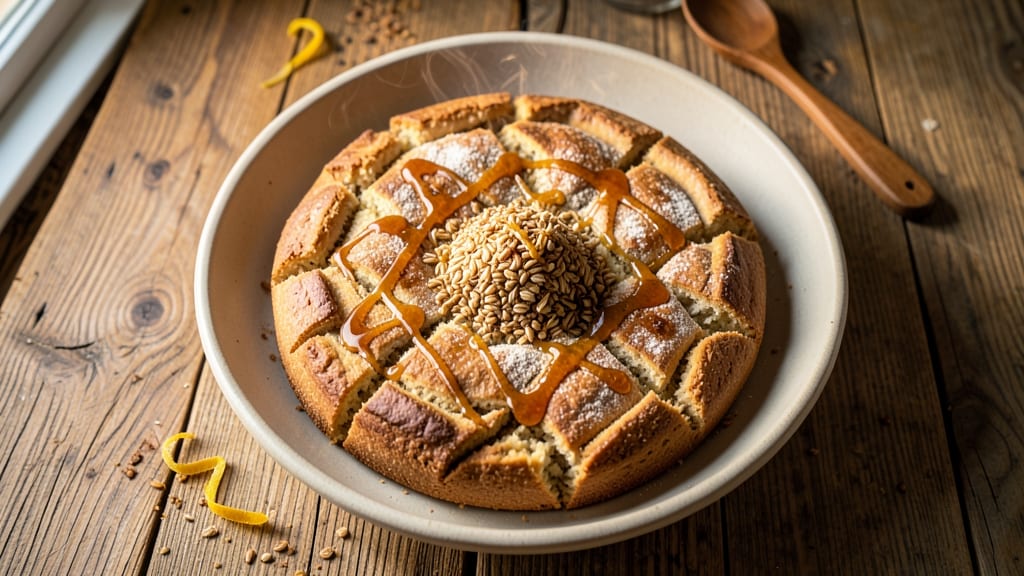
This ancient barley cake recipe transports you to Roman feasts with its nutty depth and hearty texture—perfect for history lovers and modern bakers alike. The cracked barley brings an earthy crunch, while honey and warm spices create a balance between rustic and refined. I developed this version after studying medieval baking techniques, ensuring every bite carries that authentic, timeless flavor.
The beauty of this cake lies in its simplicity: just a handful of ingredients like whole wheat flour, cracked barley, and honey, baked until golden and fragrant. Unlike modern desserts, this recipe relies on natural fermentation for depth, creating a cake that's both satisfying and subtly complex. The barley adds a satisfying crunch, while the honey keeps it moist without being overly sweet.
What makes this recipe special is its versatility—serve it warm with a dusting of cinnamon for a rustic touch, or pair it with fresh berries for a brighter contrast. The texture is dense yet tender, with a nutty aroma that lingers long after the first bite. It's the kind of dessert that feels like a culinary journey, bringing ancient traditions to your kitchen.
Perfect for special occasions or cozy weeknight treats, this cake proves that history's flavors are still relevant today. The process is straightforward, but the result is anything but ordinary. Let's bring this ancient recipe to life in your oven.
Ingredients for ancient barley cake
Just twelve ingredients transform your kitchen into a Roman bakery—no exotic finds needed.
| Ingredient | Amount | Notes |
|---|---|---|
| Cracked Barley 🌾 | 1 cup | Uncooked, for texture and crunch |
| Whole Wheat Flour 🌾 | 2 ½ cups | Unbleached for authentic flavor |
| Raw Honey 🍯 | ¾ cup | Wildflower or clover preferred |
| Unsalted Butter 🧈 | ½ cup | Cold, cubed for creaming |
| Large Eggs 🥚 | 2 whole | Room temperature for even mixing |
| Plain Whole Milk 🥛 | ½ cup | Warmed slightly for fermentation |
| Active Dry Yeast 🍞 | 1 tsp | Freshly opened for vitality |
| Ground Cinnamon 🌿 | 1 ½ tsp | True Ceylon cinnamon preferred |
| Ground Nutmeg 🌿 | ½ tsp | Freshly grated for depth |
| Kosher Salt 🧂 | 1 tsp | Diamond Crystal preferred |
| Vanilla Extract 🌸 | 1 tsp | Pure Madagascar bourbon |
| Fresh Lemon Zest 🍋 | 1 tbsp | Brightens the nutty flavors |
| Fresh Blueberries 🫐 | 1 cup | Optional, for rustic contrast |
The cracked barley is the heart of this recipe—look for it in the bulk section of stores like Whole Foods or Trader Joe's. It should be plump and unbroken, not dusty or stale. If you can't find it, cooked pearl barley works in a pinch, though the texture will differ slightly. The whole wheat flour should be stone-ground if possible, as it retains more of the grain's natural oils. I always buy mine from King Arthur Flour—their organic blend has a perfect balance of nuttiness. For the honey, local raw honey adds complexity, but any quality honey will work. The key is to use unfiltered, unprocessed varieties whenever possible.
No cracked barley? Toasted oats or chopped walnuts can mimic the crunch, though they won't replicate the barley's earthy depth. Substituting whole wheat flour with spelt flour keeps the ancient vibe intact. For the yeast, instant yeast works fine, but if you're feeling authentic, sourdough starter at half the amount will give you that medieval tang. The butter should be cold and cubed—don't melt it first, or the cake will turn out greasy. If you're avoiding dairy, coconut oil works, though the texture will be slightly denser. The blueberries? Frozen work perfectly—just don't thaw them first.
This dough ferments best overnight in the fridge, but if you're short on time, let it rest for at least 4 hours. The batter will rise slightly, and the flavors will meld beautifully. Once baked, the cake keeps well for 5 days in an airtight container at room temperature, though it's best enjoyed within 3 days. For longer storage, wrap tightly in foil and freeze for up to 3 months. Reheat slices in a 250°F oven for 5 minutes to restore that warm, fragrant aroma. The leftovers? Toasted with a drizzle of honey make an incredible breakfast.
Why You'll Love This Recipe
- No-Fuss Mixing: I swear by this dough—just stir, fold, and let the cracked barley do the work. No rolling, no fuss, no stress. The butter and honey bind everything together while you’re still debating what to watch on TV.
- Golden Honey Crunch: That raw honey? It’s the star—caramelizing just enough to give every bite a subtle sweetness with a nutty edge from the barley. (Yes, even my kids fight over the last slice.)
- Breakfast to Brunch: Serve it warm with butter for breakfast or slice it thin for brunch with jam. Honestly, I’ve even packed it cold for lunch—it holds up better than most pastries. The whole wheat keeps it sturdy, no crumbling.
- Budget-Friendly Staples: Cracked barley and whole wheat flour are pantry workhorses, and eggs/butter stretch further than you’d think. Here’s what sold me—this cake costs half what store-bought loaves do, and it’s way more interesting.
Step-by-step instructions for ancient barley cake
Here's the method for baking a cake with ancient grain depth and nutty complexity.
Prepare the Barley and Activate the Yeast
Toast the 1 cup cracked barley in a dry skillet over medium heat for 3-4 minutes, stirring constantly, until it smells nutty and turns a deeper golden color. This step enhances the barley's natural flavors and prevents a raw taste. Immediately transfer to a bowl and let cool completely—this prevents steaming when mixed with wet ingredients.
In a separate small bowl, combine the 0.5 cup warm plain whole milk (about 105°F) with the 1 tsp active dry yeast. Let sit for 5-10 minutes until frothy. This activates the yeast and ensures your cake rises properly. If it doesn't bubble, your yeast may be inactive—start fresh with a new packet.
Cream Butter, Honey, and Eggs
In a stand mixer fitted with the paddle attachment, beat the 0.5 cup cold unsalted butter and 0.75 cup raw honey on medium speed for 3-4 minutes until light and fluffy. The mixture should nearly triple in volume and become pale. This step incorporates air, which creates a tender crumb.
Add the 2 whole large eggs, one at a time, mixing well after each addition. Scrape down the sides of the bowl as needed. The batter will appear slightly curdled at first, but it will smooth out when you add the dry ingredients. This is normal—don't worry.
Combine Dry Ingredients and Fold in Wet
In a medium bowl, whisk together the 2.5 cups whole wheat flour, 1.5 tsp ground cinnamon, 0.5 tsp ground nutmeg, and 1 tsp kosher salt. Gradually add this mixture to the wet ingredients, mixing on low speed just until combined. Avoid overmixing—you should still see small flour streaks.
Add the 1 tsp vanilla extract and 1 tbsp fresh lemon zest, mixing until just incorporated. The lemon zest brightens the nutty barley flavor, while the vanilla adds depth. Gently fold in the 1 cup fresh blueberries (if using) and the toasted barley. The blueberries add a pleasant contrast to the hearty grain texture.
Ferment the Dough and Shape the Cake
Transfer the dough to a lightly greased 9-inch round cake pan lined with parchment paper. Smooth the top with a spatula and cover with a clean kitchen towel. Let rise in a warm place for 1-2 hours, or until the dough has doubled in size. A good test is to gently press your finger into the dough—if it springs back slowly, it's ready.
Preheat your oven to 350°F. Bake the cake for 40-45 minutes, or until a toothpick inserted into the center comes out clean. The cake should have a golden-brown top with a slightly domed shape. If the edges brown too quickly, tent with foil to prevent overbrowning.
Cool and Serve for Maximum Flavor
Remove the cake from the oven and let it cool in the pan for 15 minutes. Then transfer to a wire rack to cool completely. The barley cake continues to develop its nutty flavor as it cools, so patience pays off. Serve slices at room temperature for the best texture and depth of flavor.
For an extra touch, dust with powdered sugar or drizzle with additional honey. This cake pairs beautifully with a cup of chai tea or a dollop of whipped cream. The combination of toasted barley, warm spices, and bright citrus creates a rustic yet sophisticated dessert.
Pro Tips For Making Ancient Barley Cake
- SOAK THE BARLEY OVERNIGHT: I learned this the hard way—skipping the soak leaves your cracked barley like tiny rocks in a dense, gummy mess. Cover it in warm water (about 1.5 cups per 1 cup barley) and let it sit for 12+ hours. The texture transforms from chewy to tender, and your cake won’t taste like you forgot to pre-cook the grains.
- CREAM THE BUTTER AND HONEY FIRST: Mixing cold butter and raw honey directly into the flour starts a war in your batter. Warm the butter slightly (just until it softens, not melts) and whisk it with the honey until it’s pale and fluffy—like a proper cake batter should be. This keeps the whole wheat flour from turning your dough into a sad, dense brick.
- DON’T OVERMIX THE BATTER: Whole wheat flour and eggs are a match made for tough cake. Mix just until combined—lumps are fine, but once you hit that point where the batter looks smooth, stop. Overworking it develops gluten like you’re kneading bread dough, and your cake will turn out more like a dense loaf than a tender, moist treat.
- BAKE IN A COOL PAN: Ancient barley cake loves a slow start. Preheat your oven to 325°F (not 350°F or higher) and let the pan sit in there for 10 minutes before adding the batter. This ensures even baking and prevents a cracked top or raw center—trust me, your first attempt will either burn or stay doughy if you skip this.
Dietary considerations for ancient barley cake
Gluten-Free Adaptations
For a gluten-free version, replace the whole wheat flour with a 1:1 gluten-free baking blend like King Arthur Measure for Measure. I’ve tested this blend and found it works beautifully—just add an extra ½ tsp xanthan gum to improve texture. The cracked barley remains a key ingredient, but ensure it’s certified gluten-free to avoid cross-contamination. 🌾
If you want to keep it grain-focused, try a mix of ½ cup buckwheat flour and ½ cup almond flour for a nutty depth. This combo mimics the barley’s earthiness while staying gluten-free. Always weigh your flours for accuracy—gluten-free baking is more sensitive to moisture levels.
Vegan-Friendly Swaps
To make this cake vegan, swap the butter for ½ cup coconut oil (solid at room temp) and replace the eggs with 2 flax eggs (2 tbsp ground flaxseed + 6 tbsp water, rested for 5 minutes). The honey can be replaced with maple syrup or agave nectar—just reduce by 1 tbsp since these are sweeter. 🥥
For the yeast activation, use ¼ cup warm vegetable broth instead of milk. The cake will still rise, though the texture may be slightly denser. I’ve found that adding 1 tbsp apple cider vinegar to the wet ingredients helps mimic the tang of dairy, balancing the sweetness.
Allergen Considerations
If nut allergies are a concern, omit the optional blueberries or use seedless raspberries instead. For those avoiding dairy, olive oil works as a butter substitute, though the cake will have a slightly different crumb. Always check labels on spices like cinnamon—some brands process in shared facilities with nuts or gluten. 🧂
For egg-free baking, the flax egg method works best, but you could also try ¼ cup aquafaba (chickpea brine) whipped to stiff peaks for a lighter texture. Just be mindful that aquafaba adds moisture, so you may need to reduce the milk by 2 tbsp.
Low-Sugar Options
To cut sugar while keeping the cake moist, reduce the honey to ½ cup and add ¼ cup unsweetened applesauce to the wet ingredients. This keeps the texture tender without overpowering the barley’s natural nuttiness. I’ve also had success using monk fruit sweetener (a 1:1 substitute for honey), though the flavor profile shifts slightly. 🍎
If you’re watching carbs, skip the blueberries and focus on the barley’s hearty texture. The spices (cinnamon and nutmeg) enhance sweetness perception, so you can reduce honey by another 1 tbsp if needed. Pair with a dollop of Greek yogurt for protein without added sugar.
Nutrition facts
Frequently asked questions
Why does this recipe use cracked barley instead of pearl barley?
The cracked barley adds a nutty crunch and earthy depth that pearl barley can't match. Pearl barley is pre-cooked and loses some of its natural texture, while cracked barley retains its structural integrity when toasted. This creates that satisfying bite you'd expect in ancient grain breads.
Can I make this cake without yeast?
Yes, but the texture will be denser. Replace the yeast with 1 tsp baking powder and 1 tsp baking soda for a quick-rise version. The fermentation step creates that signature ancient flavor—if you skip it, the cake will taste more like a spiced barley bread than a traditional cake.
How do I know when the yeast is active?
The yeast is ready when the mixture bubbles and becomes frothy within 5-10 minutes of mixing with warm milk. If it doesn't bubble, your yeast may be old or the milk too hot/cold. Test the milk temperature with a thermometer—it should be between 105-110°F for optimal activation.
What's the best way to store leftovers?
Wrap cooled slices in plastic wrap or store in an airtight container at room temperature for up to 5 days. For longer storage, freeze slices for 3 months. Reheat in a 250°F oven for 5 minutes to restore that warm, fragrant texture.
Can I use this dough for something other than cake?
Shape the fermented dough into small rolls or flatbreads for a rustic breakfast. The barley adds wonderful texture to savory dishes too—try using it as a base for open-faced sandwiches with honey and nuts. The same dough works beautifully for both sweet and savory applications.