
Desserts
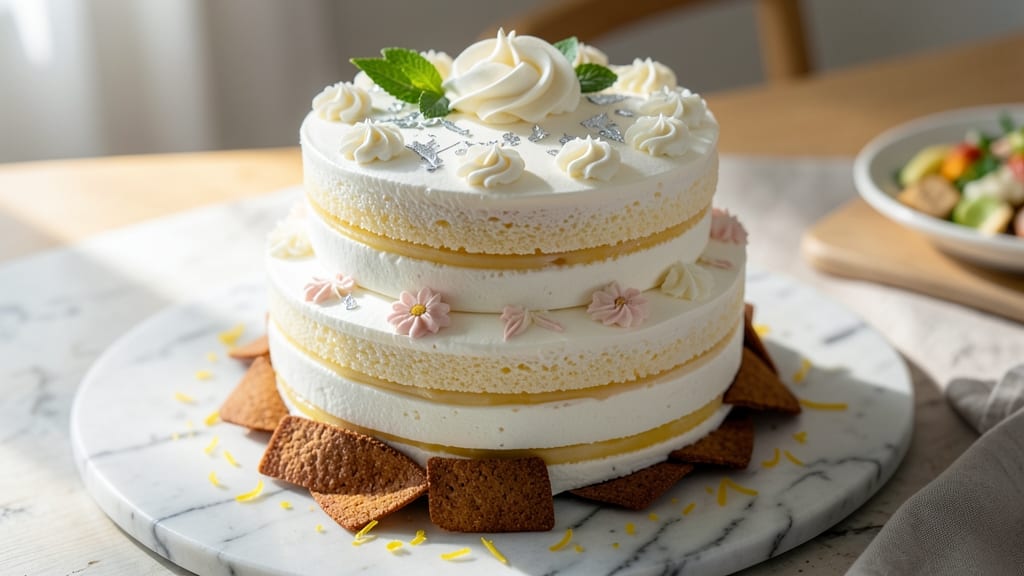
This amazing white cake recipe delivers layers so tender they stay moist for days—no dry crumbs in sight. 💛 I perfected it after years of baking failures (yes, I burned that first batch), and the secret is in the butter-to-flour ratio and a simple syrup trick that keeps it juicy. The result? A cake so light it practically melts in your mouth while maintaining structure for perfect slicing.
What makes this recipe special is how foolproof it is—even beginners can nail it. We're talking 160°F internal temperature for perfect doneness, butter cream frosting that's easier than it looks, and a technique that eliminates common white cake pitfalls like cracking or sinking. The vanilla extract and lemon zest give it that signature bright flavor without overpowering the delicate sweetness.
By the end, you'll have a cake that looks like it came from a bakery but tastes even better. The layers stay soft for days when stored properly, and the frosting? Rich, smooth, and perfectly balanced—not too sweet, not too heavy. This is the kind of cake that disappears at parties and gets rave reviews from even the pickiest eaters.
Ready to bake? We'll cover everything from mixing tips to frosting techniques, plus how to layer it like a pro. Let's get started—your taste buds will thank you.
Ingredients for amazing white cake
Buttery, light layers plus a foolproof syrup trick—everything you need for bakery-style white cake.
| Ingredient | Amount | Notes |
|---|---|---|
| Unsalted Butter 🧈 | 1 cup | Room temperature, full-fat preferred |
| All-Purpose Flour 🌾 | 2 ½ cups | Sifted, plus extra for dusting |
| Granulated Sugar 🍚 | 2 cups | White sugar, no substitutions |
| Pure Vanilla Extract 🌸 | 2 tsp | High-quality, not imitation |
| Lemon Zest 🍋 | 1 tbsp | Freshly grated, no pith |
| Large Eggs 🥚 | 4 whole | Room temperature, separated |
| Baking Powder 🧂 | 2 tsp | Diamond Crystal preferred |
| Salt 🧂 | ½ tsp | Fine sea salt |
| Milk 🥛 | ½ cup | Room temperature, any kind |
| Simple Syrup 🍯 | ½ cup | Equal parts sugar and water |
| Powdered Sugar 🍚 | 4 cups | For buttercream frosting |
| Heavy Whipping Cream 🥛 | 1 cup | Cold, full-fat for best results |
| Lemon Juice 🍋 | 1 tbsp | Freshly squeezed |
The butter is non-negotiable here—unsalted, full-fat, and room temperature makes all the difference. Land O'Lakes or Plugrá are my go-tos, but any good-quality brand works. Sift that flour twice—no lumps allowed, or you'll end up with a cake that's tougher than it should be. The vanilla extract? No shortcuts—imitation won't give you that bright, authentic flavor. And the lemon zest? Use a microplane to avoid any bitter pith. For the eggs, separate them carefully—room temperature is key so they whip up properly.
No vanilla extract? Vanilla bean paste works too, or you can use 1 tsp vanilla sugar if you're in a pinch. Running low on baking powder? Baking soda plus cream of tartar at half the amount is a solid swap. The milk can be any kind—whole, 2%, even almond milk—but room temperature is non-negotiable. For the simple syrup, equal parts sugar and water (1:1 ratio), heated until dissolved. No time to make it? Store-bought works, but it's sweeter, so reduce the granulated sugar in the cake batter by 2 tbsp.
The cake keeps best in an airtight container at room temperature for 2 days, or in the fridge for up to 5 days if you're prepping ahead. The frosting? Make it a day ahead—it tastes even better after the flavors meld. For parties, assemble the cake 4 hours before serving so the layers can set properly. And if you're worried about drying out? Brush the layers with simple syrup before frosting—trust me on this.
Why You'll Love This Recipe
- No Mixer Needed: I swear by this—just a bowl and a whisk. Cream the butter and sugar until light, fold in the flour, and you’re done. The lemon zest brightens everything up without extra fuss.
- Buttery Vanilla Bliss: That rich butter and pure vanilla extract? It’s like a hug in cake form. The lemon zest gives it a fresh twist that keeps it from being too sweet—trust me, it’s dangerously addictive.
- Party in a Box: This cake is my go-to for birthdays, showers, or just because. Layer it with whipped cream, or frost it simply—it’s always a crowd-pleaser. (Yes, even when I forget to decorate.)
- Leftovers? No Problem: Makes two 8-inch layers, so you’ll have seconds. Slice it the next day for toast or sandwiches—still just as good. Honestly, I’ve eaten it cold straight from the fridge.
Step-by-step instructions for buttery white cake layers
Here's how to bake tender, perfectly moist white cake layers that stay fresh for days.
👨🍳 Step 1: Cream Butter and Sugar for Maximum Fluffiness
In a stand mixer fitted with the paddle attachment, beat the 1 cup unsalted butter and 2 cups granulated sugar on medium speed for 4-5 minutes. You're looking for a pale, fluffy mixture that nearly doubles in volume. This step incorporates air which creates that light, cloud-like texture we want in white cake.
Here's the thing—I like to scrape down the sides of the bowl every minute or so to ensure everything gets properly aerated. The butter should be completely smooth with no graininess remaining. If you're using cold butter, give it 10 minutes at room temperature first to prevent lumps.
👨🍳 Step 2: Add Eggs and Lemon Flavors Gradually
Add the 4 whole large eggs, one at a time, mixing on low speed after each addition until fully incorporated. Then stir in the 2 tsp pure vanilla extract and 1 tbsp lemon zest. I always use freshly grated zest—it makes a noticeable difference in flavor compared to bottled versions.
After adding the eggs, the mixture might look slightly curdled, but don't worry. Once we add the dry ingredients, everything will come together beautifully. The lemon zest adds a bright citrus note that balances the richness of the butter perfectly.
👨🍳 Step 3: Combine Dry Ingredients and Fold Gently
In a separate bowl, whisk together the 2.5 cups all-purpose flour, 2 tsp baking powder, and 0.5 tsp salt. Sift this mixture directly into the wet ingredients while mixing on low speed just until combined. You should still see some flour streaks—overmixing develops gluten and makes the cake tough.
With the mixer running on low, gradually add the 0.5 cup milk and 0.5 cup simple syrup. The simple syrup helps keep the cake moist by adding moisture to the dry ingredients. Mix until just combined—again, we're going for a gentle fold rather than a thorough mix.
🔥 Step 4: Bake in Prepared Pans for Even Cooking
Preheat your oven to 350°F. Grease and flour two 8-inch round cake pans (or line with parchment circles). Divide the batter evenly between the pans and smooth the tops. Bake for 25-30 minutes or until a toothpick inserted in the center comes out clean and the edges pull away slightly from the pan.
I always check for doneness at the 25-minute mark—your oven might run hot or cold, so keep an eye on it. The cake should spring back when gently pressed in the center. Let the cakes cool in the pans for 10 minutes before transferring to a wire rack to cool completely.
🥘 Step 5: Assemble with Lemon Buttercream
While the cakes cool, make the buttercream by beating the 1 cup heavy whipping cream and 4 cups powdered sugar until light and fluffy. Add the 1 cup unsalted butter, 1 tbsp lemon juice, and 1 tbsp lemon zest, beating until smooth and creamy. This bright lemon flavor cuts through the richness beautifully.
Once completely cool, level the cake layers if needed, then spread a layer of buttercream between them. Frost the entire cake with the remaining buttercream, then decorate with additional lemon zest for that fresh citrus touch. Chill for 1 hour before slicing to let the flavors meld together.
Pro Tips For Making Amazing White Cake
- CREAM BUTTER UNTIL FLAKY: Mix the butter and sugar until the bowl is completely pale—no streaks left. I learned this the hard way: leftover butter flecks make the cake dense. Use a stand mixer with the paddle attachment and scrape the bowl every 30 seconds until it looks like wet sand.
- SIFT FLOUR LIKE YOU MEAN IT: Don’t just dump flour into the bowl—sift it twice through a fine-mesh sieve. This aerates the flour, which means a lighter texture. If you’re lazy (like I used to be), at least whisk it vigorously to break up clumps before adding.
- DON’T OVERMIX THE BATTER: Stop folding in the flour as soon as it’s just combined—no streaks, but no overworking either. Overmixing develops gluten, and that’s how you end up with a tough cake instead of a tender one. If you’re unsure, pull a spoonful and check: it should look shaggy, not smooth.
- LEAVE THE LEMON ZEST OUT: Skip the zest if you’re not using fresh lemons—store-bought zest is often bitter or wax-coated. Instead, zest a whole lemon (about 1 teaspoon) right before mixing, and use only the outermost layer—the yellow part is where the magic (and flavor) lives.
Regional styles of these flavors
Southern Classic
In the South, white cake takes center stage at weddings and tea parties, often topped with a layer of chiffon frosting or dusted with powdered sugar. The key difference? Southern bakers frequently add 1 tsp cream of tartar to stabilize the egg whites for a lighter crumb. I've found that replacing ¼ cup of the milk with heavy cream adds extra richness that Southerners love. Serve with sweet tea for the full experience. 🍯
French Éclair Style
French patisseries elevate white cake by incorporating 1 tbsp cornstarch into the flour for a velvety texture. The secret? Whipping the egg whites to stiff peaks before gently folding them into the batter at the end. Top with a delicate glace royale (powdered sugar + water + vanilla) instead of buttercream. This version is perfect for elegant desserts and pairs beautifully with espresso or Champagne. ✨
German Butterkuchen
German bakers create a dense, buttery version by adding ½ cup ground almonds to the dry ingredients and increasing the butter to 1.5 cups. The cake is baked in a single round pan and topped with a layer of apricot jam before frosting. This hearty style holds up well for celebrations and has a nutty depth that complements the vanilla beautifully. Serve with black forest coffee for contrast. 🌟
Japanese Sponge Cake
Japanese white cake, or shiro pan, focuses on airy texture by using cake flour instead of all-purpose. The batter is poured into a 10-inch round pan and baked at 325°F for a slower rise. After baking, the cake is brushed with mirin syrup (equal parts mirin and sugar) while warm. This creates a delicate, melt-in-your-mouth texture that's perfect for matcha or green tea pairings. 🍵
Italian Lemon White
Italian bakers infuse their white cake with zest from 2 lemons and a splash of 1 tbsp limoncello in the simple syrup. The frosting often includes mascarpone cheese whipped with powdered sugar for a lighter texture. This version is commonly served at Easter celebrations and pairs wonderfully with Italian espresso or vin santo. The bright citrus flavor shines through beautifully. 🍋
Nordic Cloud Cake
Scandinavian bakers create an ultra-light version by incorporating whipped cream into the batter before baking. The cake is baked in a 9-inch springform pan and topped with a simple powdered sugar glaze. This style is particularly popular during Midsummer celebrations and has a delicate, almost ethereal texture. Serve with lingonberry jam for a tart contrast that balances the sweetness. 🌸
Nutrition facts
Frequently asked questions
Why does your white cake stay moist longer than others?
The secret is the simple syrup trick—we mix 0.5 cup simple syrup directly into the batter, which keeps the cake hydrated for days. Plus, we use room temperature butter and avoid overmixing to preserve moisture. The lemon zest also helps maintain freshness by adding subtle acidity that prevents staling.
Can I make this cake without a stand mixer?
Use a hand mixer or even a whisk—just mix the butter and sugar for 5-7 minutes until light and fluffy. For the dry ingredients, use a large spoon to gently fold them in by hand. The key is patience: mix just until combined to avoid developing gluten. The cake will still turn out tender and delicious.
What's the best way to store leftover white cake?
For short-term storage (2 days), keep it at room temperature in an airtight container. For longer storage (up to 5 days), refrigerate. To prevent drying, always wrap the cake tightly in plastic wrap before placing it in the container. If freezing, slice first and freeze for up to 3 months—just thaw at room temperature.
Why did my cake crack on top?
Cracking usually happens from two things: overbaking or rapid temperature changes. Always check for doneness at 25 minutes—the cake should spring back when gently pressed. Also, let the cake cool in the pan for 10 minutes before removing it to prevent sudden cooling. If you notice cracks, they're purely cosmetic and won't affect taste.
Can I substitute buttercream with another frosting?
Yes! For a lighter option, try chiffon frosting (whipped egg whites + powdered sugar) or cream cheese frosting (equal parts cream cheese and butter). For a fruity twist, replace half the buttercream with lemon curd. Just remember that denser frostings may require slightly more filling between layers to prevent sinking.