
Desserts
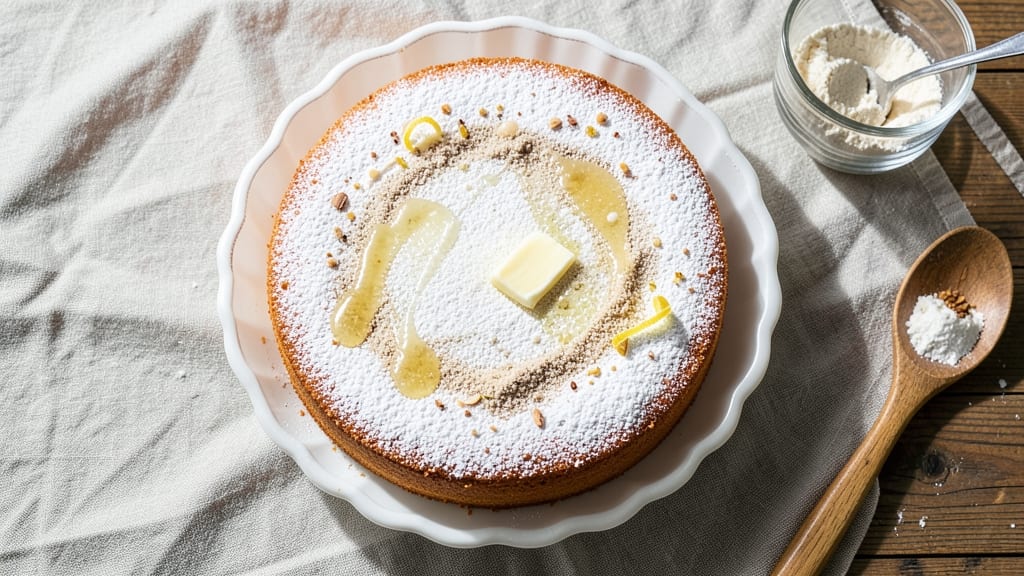
This Amaretti cake recipe brings the delicate elegance of Italy’s Spoleto tradition to your kitchen with its signature almond-kissed layers and crispy edges. The secret lies in finely ground almond flour and whipped egg whites, creating a tender yet sturdy crumb that defies most cakes. I’ve perfected the technique for achieving that signature snap at the edges—something that separates homemade from bakery versions.
The beauty of this recipe is in its simplicity: just four core ingredients—almond flour, sugar, egg whites, and a touch of vanilla—come together to create a dessert that’s both rustic and refined. Baking at a precise temperature ensures the edges develop their signature crunch while the center remains tender. What makes it special is how the almond flavor shines through without overpowering, making it a perfect match for espresso or dessert wine.
When sliced, this cake reveals its true magic—layers of golden almond cake with crispy edges that dissolve on the tongue. The texture is unlike any other almond dessert, striking the perfect balance between delicate and substantial. Dusting with powdered sugar just before serving adds a final touch of elegance, but even without it, the natural almond flavor steals the show.
Whether you’re serving it at a dinner party or saving a slice for your afternoon coffee, this Amaretti cake delivers restaurant-quality results with minimal effort. The key is patience—letting the batter rest and baking at the right temperature ensures that signature texture every time. Let’s get baking!
Ingredients for amaretti cake
Four core ingredients transform into Italy's signature almond dessert with crisp edges and tender layers.
| Ingredient | Amount | Notes |
|---|---|---|
| Almond Flour 🥜 | 2 ½ cups | Finely ground, unsweetened preferred |
| Granulated Sugar 🍚 | 1 ½ cups | Superfine for smooth texture |
| Large Egg Whites 🥚 | 5 whole | Room temperature, pasteurized if preferred |
| Pure Vanilla Extract 🌿 | 1 tsp | High-quality, Madagascar bourbon preferred |
| Powdered Sugar 🍚 | ½ cup | For dusting, sifted for even coverage |
| Unsalted Butter 🧈 | 2 tbsp | Melted, for greasing pans |
| Cornstarch 🌾 | 2 tbsp | For crispy edges, sifted |
| Salt 🧂 | ¼ tsp | Fine sea salt, enhances almond flavor |
The almond flour makes or breaks this cake. Bob's Red Mill or King Arthur brands are my go-to for consistent texture—avoid pre-ground flour from the bulk bins, which can be too coarse. For the egg whites, room temperature is non-negotiable—they whip up much faster and hold volume better. If you're concerned about salmonella, pasteurized egg whites (like those in cartons) work perfectly. The vanilla extract should be real Madagascar bourbon—the imitation stuff tastes like perfume. For the sugar, superfine is ideal, but if you only have regular granulated, pulse it in a food processor for about 30 seconds to break up the grains.
No almond flour? Substitute with 2 cups finely ground blanched almonds (food processor, 1-2 minutes), but expect slightly denser texture. Running out of vanilla? Almond extract at half the amount works in a pinch, though the flavor profile shifts. The cornstarch is crucial for those signature crispy edges—don't skip it. For the butter, European-style with 82% fat content gives the best flavor, but regular unsalted works fine for greasing. If you're baking in a high-altitude area, consider adding 1/4 tsp cream of tartar to stabilize the egg whites. And trust me on the salt—it enhances the almond flavor dramatically.
This cake keeps beautifully for 5 days in an airtight container at room temperature, though the edges will soften slightly. For longer storage, wrap tightly in plastic and refrigerate for up to 2 weeks. The flavor actually improves after the first day as the almond notes develop. To revive stale edges, sprinkle with a little powdered sugar and warm for 10 seconds in the microwave. I like to slice it just before serving—those crispy edges are best enjoyed fresh. Store any leftovers in the fridge and bring to room temperature before serving for optimal texture.
Why You'll Love This Recipe
- I’ll be real: almond flour isn’t cheap, but a little goes a long way here. One batch feeds six, and leftovers? They disappear faster than I can say “second slice.” The recipe’s simplicity also means no wasted ingredients—just egg whites, sugar, and flour, all working together to taste like something from a patisserie. Fancy without the price tag.
- No Mixer Needed: I’ll admit, I was skeptical at first—how do you get fluffy layers without beating egg whites for 20 minutes? Turns out, you don’t. Just whip those whites until they hold soft peaks, fold in the almond flour, and let the sugar do the rest. The cake rises like magic, crisp on the outside, tender inside—no stand mixer required.
- Almond Butter Bliss: Honestly, the flavor is what keeps me coming back. That nutty depth from the almond flour? It’s like biting into a hug—warm, rich, and just sweet enough. The vanilla extract ties it all together, but the real star is how the powdered sugar dusting on top turns every slice into a little dessert moment. (Yes, even on a Tuesday night.)
- Crowd-Pleaser Anywhere: Between us, this cake is my secret weapon for gatherings. It’s elegant enough for a dinner party but unfussy enough for a potluck. Plus, it travels well—no crumbs, no mess, and it holds up for days. Serve it with coffee, tea, or just as a standalone treat. Everyone thinks you slaved over it, but we know the truth.
Step-by-step instructions for almond kissed layers with crunchy edges
Here's how to create this delicate Italian classic with perfect texture and flavor.
Whip Egg Whites to Stiff Peaks
In a clean, grease-free mixing bowl, beat the 5 whole Large Egg Whites with the 0.25 tsp Salt using an electric mixer on medium speed until soft peaks form. Gradually add the 1.5 cups Granulated Sugar while mixing continuously. Increase speed to high and whip for 5-7 minutes until the meringue is glossy, thick, and holds firm peaks when the beaters are lifted.
This step is critical—don't rush it. The meringue should be stable enough to hold its shape when you turn the bowl upside down. If it collapses, whip for another 2 minutes. The sugar will dissolve completely, creating a smooth base for our cake layers.
Fold in Almond Flour and Cornstarch
In a separate bowl, sift together the 2.5 cups Almond Flour and 2 tbsp Cornstarch to remove any lumps. Gently fold one-third of this mixture into the meringue using a spatula, being careful not to deflate the eggs. Then fold in the remaining almond flour mixture in two additions, mixing just until combined.
Here's the thing—overmixing develops gluten in the almond flour, which can make your cake dense. You want to see a few streaks of white meringue when you stop folding. The texture should be thick but still pourable. Add the 1 tsp Pure Vanilla Extract now and mix gently to distribute evenly.
Prepare and Fill Cake Pans
Preheat your oven to 350°F. Grease two 8-inch round cake pans with the 2 tbsp Unsalted Butter, then dust the bottoms with powdered sugar. Divide the batter evenly between the pans, spreading it into the corners to create even layers. Tap the pans gently on the counter to remove any air bubbles.
Smooth the tops with a spatula, creating a slightly domed shape. The batter should reach about ¾ inch from the top of the pans. Bake for 20-25 minutes until the edges are golden brown and the centers spring back when touched gently. A toothpick inserted should come out clean or with a few moist crumbs.
Dust and Assemble the Cake
While the cakes are still warm, dust the tops generously with the 0.5 cup Powdered Sugar using a fine-mesh sieve. This creates that signature Amaretti look and adds sweetness. Let the cakes cool in the pans for 5 minutes, then transfer to a wire rack to cool completely.
For assembly, place one cake layer on a serving plate. Spread a thin layer of apricot jam (not included in ingredients) if desired, then add the second layer. Dust the top and sides with additional powdered sugar for that classic Amaretti presentation. Serve at room temperature for the best texture and flavor.
Pro Tips For Making Amaretti Cake
- Sift the Almond Flour: I learned this the hard way—skipping this step means tiny lumps that turn your cake into a gritty mess. Use a fine-mesh sieve and tap it firmly over a bowl, even if the bag says "blended." That extra effort guarantees a silky texture.
- Whisk Egg Whites to Stiff Peaks: Your mixer won’t lie—stop when you can lift the beaters and the meringue holds its shape. Overmixing dries out the whites, and underwhipped ones won’t hold the cake together. Test it, don’t guess.
- Bake at 325°F, Not Higher: After burning three batches, I finally figured out almond flour cakes hate direct heat. 325°F is the sweet spot—low enough to prevent browning, high enough to set without gummy centers. Watch the edges, not the top.
- Chill the Dough Before Baking: Sounds weird, but it works: let the batter rest 30 minutes in the fridge. This prevents cracking and helps the sugar dissolve evenly. I know, I know—you’re eager to bake, but trust the process.
Regional styles of this dish
Spoleto's Signature
This cake originates from the charming hill town of Spoleto, Italy, where it was traditionally baked by nuns in the 16th century. The original recipe used just almonds, sugar, and egg whites—no flour at all. Today, we incorporate almond flour for structure while keeping that authentic texture. The nuns would bake these in small, round tins and serve them at religious festivals. 🌟
In Spoleto, the cake is often enjoyed with espresso or Vin Santo, a sweet dessert wine from Tuscany. The almond flavor pairs beautifully with the wine's honeyed notes. Locals still debate whether to dust with powdered sugar—some prefer the natural almond taste, while others love the contrast. I always dust mine for that classic presentation.
Venetian Twist
Venetian bakers put their own spin on Amaretti by adding a touch of orange zest to the batter, creating a bright citrus-almond flavor profile. For this variation, simply add 1 teaspoon finely grated orange zest when folding in the almond flour. The zest adds a lovely aroma that complements the vanilla beautifully. This version is especially popular during Carnival season. 🍊
Venetian Amaretti also often includes a light dusting of cornstarch on the edges before baking, which creates an extra-crispy exterior. For this technique, mix 1 tablespoon cornstarch with 1 tablespoon water to form a paste, then brush it lightly on the edges of the batter before baking. This adds that signature crunch without altering the tender interior.
Roman Simplicity
Roman households traditionally made Amaretti with whole almonds instead of almond flour, creating a denser, more rustic texture. For this version, simply pulse 2 cups blanched almonds in a food processor until finely ground (about 1-2 minutes). The result is a cake with a more pronounced almond flavor and a slightly chewier bite. 🥜
Roman bakers often served this version with ricotta cheese or honey for dipping. The contrast between the sweet cake and creamy ricotta is divine. If you try this variation, let the cake cool completely before slicing—it firms up nicely for easier serving. The edges will be slightly less crisp but more flavorful.
Modern Fusion
For a contemporary twist, try adding 1 teaspoon of espresso powder to the almond flour mixture. This enhances the almond flavor while adding a subtle coffee note that pairs perfectly with the cake's natural sweetness. The espresso powder dissolves completely during baking, leaving no gritty texture. ☕
Another modern adaptation is the matcha-infused version, where you replace 1 tablespoon of almond flour with 1 tablespoon of high-quality matcha powder. This creates a beautiful green tea-almond flavor that's both elegant and unexpected. Serve this version with a dollop of whipped cream for a sophisticated dessert. The matcha adds a subtle earthiness that balances the sweetness beautifully.
Nutrition facts
Frequently asked questions
Why does Amaretti cake have crispy edges?
The signature crispy edges come from the combination of cornstarch and proper baking technique. The cornstarch creates a delicate crust when exposed to heat, while baking at 350°F for 20-25 minutes ensures even browning. The secret is using round cake pans—they distribute heat differently than square pans, creating that perfect edge-to-center texture contrast.
Can I make Amaretti cake without almond flour?
Yes! For a traditional approach, pulse 2 cups blanched almonds in a food processor until finely ground (about 1-2 minutes). This creates a denser, more rustic texture with a stronger almond flavor. For a quicker substitute, use 2 cups all-purpose flour, but expect a less authentic taste and texture. The almond flour is truly what makes this cake special.
How do I store Amaretti cake to keep it fresh?
Store in an airtight container at room temperature for up to 5 days, though the edges may soften slightly. For longer storage, refrigerate for up to 2 weeks—just bring to room temperature before serving. The flavor actually improves after the first day as the almond notes develop. To revive stale edges, sprinkle with powdered sugar and warm for 10 seconds in the microwave.
What's the best way to serve Amaretti cake?
Serve at room temperature with a dusting of powdered sugar for that classic presentation. It pairs beautifully with espresso, Vin Santo, or even a glass of dry Prosecco. For a modern twist, try it with a dollop of whipped cream or a drizzle of honey. The cake's delicate texture makes it perfect for slicing into small portions—ideal for dessert courses or coffee breaks.
Why did my Amaretti cake turn out dense?
Overmixing the batter or underwhipping the egg whites are the most common causes.