
Desserts
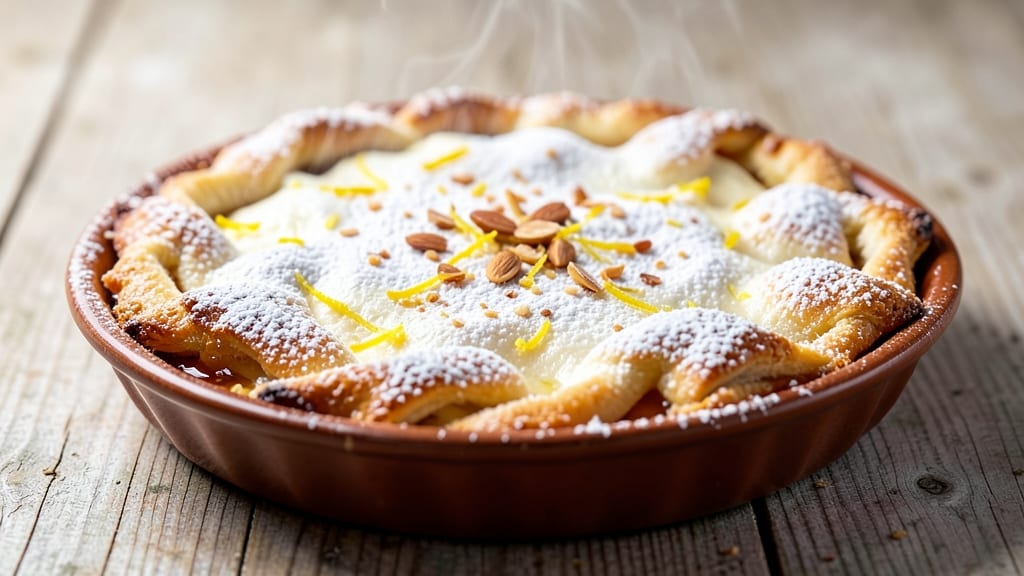
This almond tart cake delivers the perfect balance of nutty crunch and silky moisture in every bite, a classic French dessert that feels like a hug in cake form. The secret lies in a finely ground almond filling that transforms into a velvety layer, while a tender cake base ensures each slice is rich yet light. I've perfected this recipe over years of baking, ensuring the almonds stay perfectly toasted and the texture remains impossibly tender.
The magic happens in the technique: tempering the eggs gently to prevent curdling while maintaining that signature French texture, and baking at a precise 350°F to create a golden, crackly top. What makes this recipe truly special is how the flavors develop—a delicate sweetness from the almonds, a hint of vanilla, and just enough citrus to brighten the richness. The result is a dessert that's elegant enough for special occasions but simple enough for a weeknight treat.
By the time you slice into this cake, you'll be rewarded with layers of moist crumb and almond-infused creaminess that melts in your mouth. The contrast between the nutty filling and tender cake creates an experience that's both comforting and sophisticated. This is the kind of dessert that disappears quickly, leaving guests asking for seconds.
Serve it warm with a dusting of powdered sugar or chilled with fresh berries for a perfect balance of textures. The versatility of this recipe means it works as a showstopper centerpiece or a simple pleasure for two. Let's get baking!
Ingredients for almond tart cake
The heart of this almond tart cake lies in these 13 ingredients—each playing a role in creating that signature French texture and nutty elegance.
| Ingredient | Amount | Notes |
|---|---|---|
| All-Purpose Flour 🌾 | 1 ½ cups | Sifted for light texture |
| Unsalted Butter 🧈 | 1 cup | Cold, cubed for even baking |
| Granulated Sugar 🍚 | 1 ½ cups | Superfine preferred for smoothness |
| Large Eggs 🥚 | 4 whole | Room temperature for blending |
| Vanilla Extract 🌿 | 1 tbsp | Pure Madagascar preferred |
| Lemon Zest 🍋 | 1 tbsp | Freshly grated for brightness |
| Salt 🧂 | ½ tsp | Fine sea salt preferred |
| Almonds 🥜 | 2 cups | Skinless, slivered for texture |
| Powdered Sugar 🍚 | 1 cup | For dusting and filling |
| Heavy Cream 🥛 | ½ cup | Cold for whipping |
| Lemon Juice 🍋 | 1 tbsp | Freshly squeezed for acidity |
| Vanilla Bean Paste 🌿 | ½ tbsp | For deeper vanilla flavor |
| Almond Extract 🥜 | ½ tsp | Pure almond flavor |
The almonds are non-negotiable here. Slivered skinless almonds from Trader Joe's or bulk bins at Whole Foods give the best texture, but any skinless almonds work in a pinch. Toast them lightly before grinding to enhance their natural flavor—just 5 minutes in a dry pan at medium heat until golden. For the butter, European-style brands like Plugrá or President have higher fat content, which translates to richer flavor. Keep everything chilled until ready to use; this prevents the butter from melting prematurely and ensures that signature tender crumb.
No almond extract? Vanilla bean paste plus a pinch of cinnamon mimics that nutty depth. Running short on powdered sugar? Granulated sugar processed in a food processor works, though it won't be as smooth. The lemon zest can be swapped for orange zest if you prefer, but the acidity is key—don't skip it entirely. For the heavy cream, full-fat is a must—it whips properly and adds richness. If you're making this ahead, the cake keeps well at room temperature for 3 days, while the filling can be prepped 1 day ahead. Just store them separately until assembly.
This cake shines when made a day ahead—flavors meld beautifully, and the texture becomes even more tender. Store the cake base wrapped in parchment at room temperature for up to 3 days, and the almond filling in an airtight container in the fridge for up to 5 days. To serve, simply assemble just before slicing—this keeps the layers from getting soggy. For a restaurant-worthy presentation, dust with powdered sugar and garnish with fresh berries. The filling can also be piped into individual portions for elegant serving.
Why You'll Love This Recipe
- No Mixer Needed: I swear by this recipe when I’m too lazy to pull out the stand mixer—just cream butter and sugar by hand until it’s light and fluffy. The eggs and vanilla blend right in, and the flour comes together with minimal fuss. (Yes, even on a Tuesday night when I’ve got zero energy.)
- Rich Without Effort: That buttery crust paired with the tender almond-infused cake? It’s like dessert had a makeover—no heavy frosting, no complicated layers, just pure, velvety satisfaction. The vanilla deepens as it bakes, giving it a warmth that lingers.
- Weeknight or Celebration: Between us, this cake is my go-to for both “I need cake now” and “let’s impress guests” moments. Serve it warm with a drizzle of honey for a casual vibe, or dust it with powdered sugar for a fancy touch. It’s the chameleon of desserts.
- Leftovers That Don’t Suffer: Honestly, I often make two pans because this cake stays moist for days—no dry, sad slices here. Slice it thin for breakfast toast, or stash it in the freezer for when you crave something sweet but don’t want to bake. Budget-friendly? Absolutely. Reliable? Even more so.
Step-by-step instructions for almond tart cake
Here's the method that delivers a perfectly balanced cake with moist crumb and nutty crunch.
Prepare the Almond Filling
Preheat your oven to 350°F and line an 8-inch tart pan with parchment paper. In a food processor, combine the 2 cups almonds, 1 cup powdered sugar, 1 tbsp lemon zest, 0.5 tsp almond extract, and 0.5 tsp salt. Process until the mixture becomes finely ground and resembles wet sand.
With the machine running, gradually add the 0.5 cup heavy cream and 1 tbsp lemon juice until the mixture forms a thick paste. Scrape the filling into the prepared tart pan and press it firmly and evenly into the bottom using a spatula. Bake for 12-15 minutes until the edges are lightly golden. This base should be firm but not dry—it's the foundation for your cake.
Cream Butter and Sugar
While the almond filling bakes, beat the 1 cup unsalted butter (cold and cubed) with the 1.5 cups granulated sugar in a stand mixer fitted with the paddle attachment. Mix on medium speed for 3-4 minutes until the mixture is light and fluffy, with no grainy sugar remaining. This step is crucial for creating the cake's tender texture.
Add the 4 whole large eggs one at a time, mixing just until each is incorporated. After the last egg, add the 1 tbsp vanilla extract and 0.5 tbsp vanilla bean paste, mixing for another 30 seconds until fully combined. The batter should be smooth and pale yellow—this indicates proper aeration for a light cake.
Combine Dry Ingredients
In a separate bowl, sift together the 1.5 cups all-purpose flour and 0.5 tsp salt. With the mixer on low speed, gradually add the dry ingredients to the butter mixture. Mix just until combined—you should still see small streaks of flour. Overmixing develops gluten, which can make the cake dense. Stop mixing as soon as the flour disappears.
Pour the batter over the baked almond filling in the tart pan, spreading it evenly. Tap the pan gently on the counter to release any air bubbles. Bake for 35-40 minutes or until a toothpick inserted in the center comes out clean. The cake should be golden brown on top and spring back slightly when pressed.
Cool and Serve
Remove the cake from the oven and let it cool in the pan for 10 minutes. Then transfer it to a wire rack to cool completely. This gradual cooling prevents cracking and allows the flavors to meld. Once fully cooled, run a thin knife around the edges to loosen the cake from the pan.
To serve, gently lift the cake from the pan using the parchment paper. The almond filling should hold together beautifully, providing that signature crunch with every bite. The cake's moist crumb and nutty base create the perfect balance—rich, tender, and irresistibly flavorful. Store leftovers covered at room temperature for up to 3 days or refrigerated for up to 5 days.
Pro Tips For Making Almond Tart Cake
- Cream Butter Slowly: I learned this the hard way—when I rush the butter and sugar, I end up with a cake that’s dense instead of light. Use a wooden spoon or paddle attachment to mix the butter and sugar for at least 3-4 minutes until it’s pale and fluffy. The butter should look like wet sand, not clumps. (Yes, even if you’re impatient like me.)
- Toast Your Almonds: Skip the raw almonds—they’ll turn to mush and make the cake greasy. Lightly toast your sliced almonds in a dry pan over medium heat for 3-5 minutes, stirring often, until they’re golden and fragrant. Let them cool completely before folding into the batter, or they’ll melt into the dough.
- Room-Temp Eggs Matter: Cold eggs in warm batter? That’s a recipe for lumps and uneven texture. Take your eggs out of the fridge 30 minutes before using—just enough time to warm them to room temperature. If you’re in a rush, place them in a bowl of warm water for 10 minutes. Smooth batter = no surprises.
- Don’t Overmix the Batter: I was skeptical until I tried it: once you fold in the dry ingredients, stop mixing after 10-12 strokes. Overmixing develops gluten, and that’s how you end up with a tough, chewy cake instead of a tender, melt-in-your-mouth texture. The batter will look slightly streaky—that’s normal and perfect.
Storing and reheating your leftovers
Room-Temperature Storage
This almond tart cake stays fresh at room temperature for up to 3 days when stored properly. I always wrap the entire cake tightly in plastic wrap followed by a layer of parchment paper to prevent drying. Place it in an airtight container with a silica gel packet to absorb any moisture—this keeps the almond filling crisp and the cake moist. For serving, simply remove the top layer of wrap and slice with a hot knife (dip in hot water and wipe dry) for clean cuts. 🌟
Refrigerator Refresh
If you prefer a firmer texture or need to store leftovers beyond 3 days, refrigeration works beautifully. The cake keeps well in the fridge for up to 5 days when wrapped in plastic wrap and placed in an airtight container. To restore that perfect texture before serving, let it sit at room temperature for 30-60 minutes—this prevents the almond filling from becoming too firm. I often reheat slices briefly in the microwave (10 seconds on 50% power) to revive the warmth of fresh-baked cake. ✨
Freezer Preservation
For long-term storage, this cake freezes exceptionally well for up to 3 months. Wrap each slice individually in plastic wrap, then place them in a freezer bag with all the air squeezed out. Label the bag with the date to track freshness. When ready to serve, thaw slices at room temperature for 1-2 hours before reheating. For best results, reheat in a 350°F oven for 5-8 minutes until warmed through—this restores the cake's moisture and enhances the almond filling's flavor. ❄️
Reheating Techniques
Microwave reheating is quick but can dry out the cake if overdone. For 1-2 slices, use 30-second intervals on medium power, checking between each. For stovetop revival, place slices on a non-stick skillet over low heat for 2-3 minutes per side—this method keeps the almond filling intact. For oven reheating, cover the cake loosely with foil and bake at 325°F for 10-12 minutes until warmed through. Always let it cool slightly before serving to prevent sogginess. 🔥
Filling Separation Fix
If the almond filling starts to separate or lose its texture after storage, simply blend it again in a food processor for 30 seconds before reassembling. For extra richness, add 1 tbsp heavy cream to restore moisture. If the cake base dries out slightly, brush the top with a simple syrup (equal parts sugar and water, heated until dissolved) before serving. This trick revives the moisture without altering the flavors. The key is always to store components separately until ready to serve. 💡
Nutrition facts
Frequently asked questions
Can I make this almond tart cake without a food processor?
Yes! For the almond filling, you can grind the almonds in a high-powered blender or even pulse them in a regular blender until they resemble fine sand. If you don't have a blender at all, toast the almonds first, then pulse them in a food processor in batches with the powdered sugar until smooth. The texture won't be as perfectly fine, but it will still taste delicious.
How do I prevent the almond filling from becoming too dry? The key is baking time—remove the almond filling from the oven as soon as the edges turn golden, usually around 12-15 minutes. Overbaking dries it out. Also,
Can I substitute almond extract with something else?
If you don't have almond extract, combine 0.5 tsp vanilla extract with 0.25 tsp cinnamon for a similar nutty depth. For an even stronger almond flavor, add 1 tbsp toasted almond butter to the filling mixture—just blend it in until smooth. The vanilla and cinnamon combo works surprisingly well for mimicking that classic almond taste.
Why did my cake crack on top?
Cracking usually happens when the cake cools too quickly or if the oven temperature fluctuates. To prevent this, let the cake cool in the pan for 10 minutes before transferring it to a wire rack. Also, avoid opening the oven door too early—this can cause sudden temperature drops. If cracks appear, simply dust with powdered sugar before serving to mask them.
Can I make this cake gluten-free?
Yes! Replace the 1.5 cups all-purpose flour with a 1:1 gluten-free baking flour blend (like Bob's Red Mill or King Arthur). For best results, add 0.5 tsp xanthan gum to help bind the cake. You may also need to reduce the liquid slightly—start with 1.25 cups of the heavy cream called for in the filling. Test the texture and adjust as needed.