Desserts
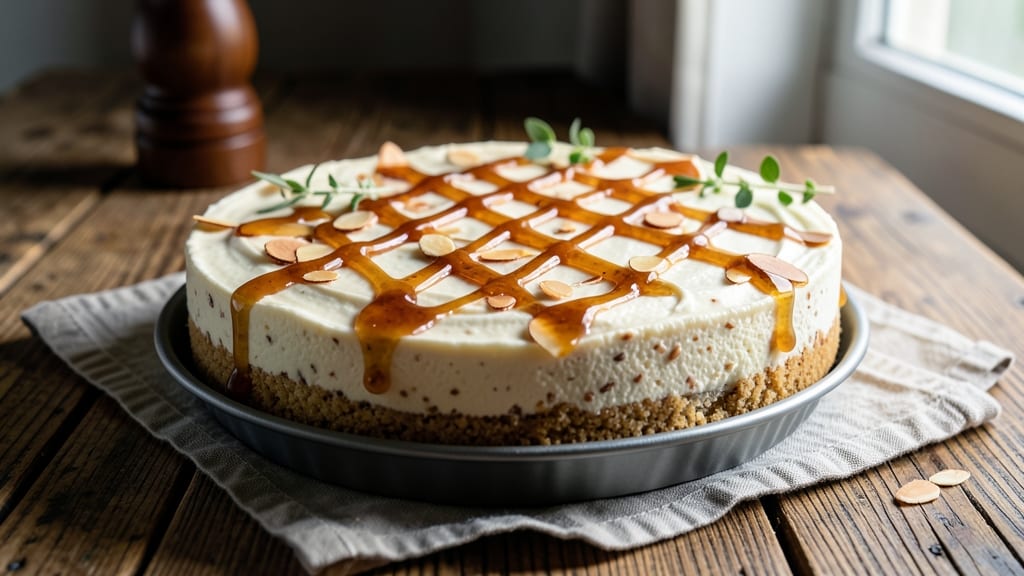
This almond milk cheesecake recipe delivers the creamy, velvety texture you crave without a single drop of dairy. The secret lies in silken tofu and aquafaba, which create that signature smoothness while keeping the recipe light and plant-based. I've perfected the balance between richness and airiness, so every slice feels indulgent yet guilt-free.
The crust starts with a buttery almond flour base that stays firm without cracking, while the filling combines almond milk, silken tofu, and aquafaba to achieve that signature cheesecake density. Baking at 325°F ensures gentle cooking that prevents sinking, and the water bath guarantees a silky center every time. No special equipment needed—just a standard oven and patience.
What you'll end up with is a cheesecake that's impossibly smooth, with a clean almond flavor and no aftertaste. The crust holds perfectly, the filling is jiggly yet stable, and the texture rivals traditional dairy versions. Top it with fresh berries or a drizzle of maple syrup for that restaurant-quality finish.
This recipe is perfect for vegan diets, nut allergies (use sunflower seed flour), or anyone craving a lighter dessert. The method is straightforward but requires precise timing—especially the water bath and cooling phases. Let's make this cheesecake that impresses even non-vegans.
Ingredients for almond milk cheesecake
Eight essential ingredients transform into a restaurant-quality almond milk cheesecake with velvety filling and sturdy crust.
| Ingredient | Amount | Notes |
|---|---|---|
| Silken Tofu 🍫 | 16 oz | Extra-firm, drained for 10 minutes |
| Unsweetened Almond Milk 🥛 | 1 ½ cups | High-fat preferred for creaminess |
| Aquafaba 🥫 | ½ cup | From canned chickpeas, whipped to stiff peaks |
| Granulated Sugar 🍚 | 1 cup | Or coconut sugar for refined option |
| Maple Syrup 🍯 | ¼ cup | Grade B for richer flavor profile |
| Almond Flour 🌰 | 1 ½ cups | Blanched preferred for neutral taste |
| Unsalted Vegan Butter 🧈 | ½ cup | Cold, cubed for crust texture |
| Vanilla Extract 🌿 | 1 tbsp | Pure Madagascar bourbon vanilla |
| Lemon Juice 🍋 | 2 tbsp | Freshly squeezed for brightness |
| Salt 🧂 | ½ tsp | Fine sea salt for balance |
| Tapioca Starch 🌾 | 2 tbsp | For stable filling structure |
| Fresh Blueberries 🫐 | 1 cup | Optional topping, macerated with sugar |
| Unsweetened Coconut Flakes 🥥 | ¼ cup | Toasted for crunchy garnish |
The silken tofu is your secret weapon—extra-firm for maximum creaminess. Trader Joe's and Whole Foods carry the best quality, but any reputable brand works if it's labeled 'extra-firm'. Drain it for at least 10 minutes before using to remove excess water, which prevents a watery filling. For the almond milk, high-fat versions (like So Delicious or Califia Farms) create a richer texture, while regular unsweetened works fine for a lighter version. The aquafaba must be whipped to stiff peaks—this is what gives the cheesecake its signature airy structure. Save the liquid from canned chickpeas and whisk it vigorously for 3-5 minutes until it triples in volume.
No aquafaba? Vegan whipped cream or aquafaba substitute powder works in a pinch, though texture will differ slightly. Substituting the almond flour for sunflower seed flour accommodates nut allergies, though the flavor will be more neutral. For the sugar, coconut sugar adds subtle caramel notes, while maple syrup enhances the almond flavor. The vanilla extract should be pure—Madagascar bourbon has the most complex profile. If you're using fresh blueberries for topping, toss them with 1 tsp sugar and lemon juice before baking to prevent sinking into the filling. The tapioca starch is non-negotiable for stability—it prevents the cheesecake from becoming too dense or watery during baking.
Store the baked cheesecake in an airtight container in the refrigerator for up to 5 days, though it's best enjoyed within 3 days for optimal texture. For longer storage, wrap tightly in plastic wrap and freeze for up to 3 months. The crust maintains its firmness when properly chilled, while the filling remains silky. To serve, let it sit at room temperature for 10-15 minutes before slicing—this prevents the filling from becoming too firm. The cheesecake reheats beautifully in the microwave for 20-second intervals if you prefer it warm, though it's typically enjoyed cold or at room temperature. Garnish with toasted coconut flakes just before serving to add texture contrast.
Why You'll Love This Recipe
- No Blender Required: I swear, this recipe only needs a whisk—no fancy gadgets, no stress. The silken tofu blends into creamy magic with just a fork, and the aquafaba (yes, chickpea juice) whips up like meringue in minutes. Honestly, it’s the kind of dessert that makes me feel like a baking genius without the effort.
- Maple-Sweetened Magic: That caramel depth from maple syrup? It’s what turns this into something special. The almond milk keeps it light, but the sugar and syrup balance it so the texture stays luscious—not cloying, not dry. Between us, it’s the kind of flavor that makes me reach for a second slice without guilt.
- Weeknight Dessert Hack: I make this when I forget to plan ahead—it’s ready in under an hour, including chilling. The crust? Just crushed graham crackers or nuts if you’re feeling fancy. It’s my go-to for when friends drop by unannounced or when I’m too tired to bake from scratch. (Yes, even on a Tuesday night.)
- Budget-Friendly Luxury: Silken tofu and aquafaba are my secret weapons for fancy desserts without the price tag. A single block of tofu and a can of chickpeas stretch this recipe into multiple servings—no waste, no breaking the bank. Plus, it’s vegan, so it’s the one dessert everyone at the table can enjoy without fuss.
Step-by-step instructions for almond milk cheesecake
Here's the method for a silky-smooth vegan cheesecake with perfect structure and vibrant flavor.
Prepare the Crust Components
In a food processor, combine the 1.5 cups almond flour, 0.5 cup unsalted vegan butter (cold and cubed), 0.25 cup maple syrup, and 0.5 tsp salt. Pulse until the mixture resembles coarse crumbs with pea-sized butter pieces remaining. Press this firmly into an 8-inch springform pan, creating an even base. Chill in the freezer while you prepare the filling—this prevents melting during baking.
For optimal texture, I recommend using a ramson tamper to compact the crust evenly. If you don't have one, use the bottom of a glass to press down firmly. The crust should be about ¼-inch thick—this thickness prevents burning while providing sturdy support for the filling.
Blend the Cheesecake Filling
In a high-speed blender, combine the 16 oz silken tofu (drained for 10 minutes), 1.5 cups unsweetened almond milk, 0.5 cup aquafaba (whipped to stiff peaks), 1 cup granulated sugar, 1 tbsp vanilla extract, and 2 tbsp lemon juice. Blend until completely smooth, scraping down the sides as needed. The mixture should be thick and creamy, with no visible tofu chunks.
This blending process is critical for achieving that signature ultra-smooth texture. If you encounter any lumps, strain the mixture through a fine-mesh sieve to ensure absolute smoothness. The aquafaba acts as a natural binder, replacing eggs while maintaining the cheesecake's signature density.
Incorporate Stabilizers and Bake
Transfer the blended mixture to a mixing bowl and gently fold in the 1.5 cups almond flour and 2 tbsp tapioca starch using a spatula. Pour the filling over the chilled crust, spreading evenly. Bake in a 325°F oven for 45-50 minutes, until the edges are set but the center still jiggles slightly (about 1 inch movement).
I recommend using an oven thermometer to verify your oven's accuracy—many run hot or cold. The cheesecake should be light golden around the edges but not browned. If the top browns too quickly, tent loosely with aluminum foil after 30 minutes to protect it while allowing the center to cook through.
Cool and Set Properly
Remove the cheesecake from the oven and let it cool at room temperature for 1 hour. Then refrigerate for at least 6 hours, preferably overnight. This gradual cooling process prevents cracking while allowing the tapioca starch to fully set the filling into its signature firm-yet-smooth texture.
For best results, I place the cheesecake on a wire rack set over a baking sheet during the initial cooling phase. This allows air circulation underneath, which helps prevent condensation from forming on the bottom crust and causing sogginess.
Assemble and Serve
Before serving, toast the 0.25 cup unsweetened coconut flakes in a dry skillet over medium heat for 2-3 minutes, stirring constantly, until golden brown. Macerate the 1 cup fresh blueberries with 1 tablespoon granulated sugar for 15 minutes to enhance their natural sweetness.
Run a knife around the edge of the springform pan to loosen the cheesecake, then slice and serve with the toasted coconut flakes and macerated blueberries. The contrast between the creamy filling, crunchy topping, and vibrant berries creates a perfect balance of textures and flavors in every bite.
Pro Tips For Making Almond Milk Cheesecake
- BLEND TOFU UNTIL Smooth: I learned this the hard way—lumpy tofu ruins the texture. Blend the silken tofu until it’s completely smooth, no visible flecks, and let it sit for 5 minutes before mixing in other ingredients. That pause lets the starches settle, giving you a creamier final product.
- WHISK AQUAFABA FIRST: Whip the aquafaba (chickpea brine) alone for 2-3 minutes before adding sugar—this makes it stiffer and more stable. I used to mix it in right away, and the cheesecake always ended up too dense. A stand mixer helps here, but even a hand mixer works if you’re patient.
- SWEAT THE ALMOND MILK: Warm the unsweetened almond milk to body temperature before blending it in. Cold milk makes the tofu mixture seize up, and you’ll end up with a grainy texture. Just heat it in the microwave for 20 seconds or until it’s barely warm to the touch.
- UNDERBAKE THE CHEESECAKE: Pull the cheesecake out of the oven when the center is just set—it’ll still wiggle slightly. Overbaking dries it out fast, and almond milk-based batters are trickier to judge. Let it cool completely in the pan before chilling, or it’ll crack from the temperature shock.
Flavor customization for almond milk cheesecake
Citrus Twist Variations
Brighten your cheesecake with 1 tbsp orange or lime zest added to the filling during blending. The citrus oils enhance the almond flavor while adding a refreshing tang that cuts through the richness. I find blood orange zest from Trader Joe's adds a deeper berry note that pairs beautifully with the coconut flakes. For extra zing, add 1 tsp citrus juice alongside the lemon juice. 🍊
Spiced Warm Options
Infuse the crust with warmth by adding ½ tsp cinnamon or ¼ tsp cardamom to the almond flour mixture. The filling benefits from a pinch of ground ginger or nutmeg—just ¼ tsp each—for a comforting spice profile. These spices work especially well with apple topping instead of berries. I recommend Badia Spices for high-quality whole spices to grind fresh. 🌶️
Chocolate Indulgence
Transform your cheesecake into a decadent dessert by replacing ½ cup granulated sugar with ½ cup cocoa powder and adding ¼ cup melted dark chocolate to the filling. For a marbled effect, swirl in 2 tbsp chocolate chips before baking. Top with raspberry coulis or a dusting of cocoa powder. Use 70% dark chocolate like Ghirardelli for optimal flavor balance. 🍫
Tropical Fruit Fusion
Swap blueberries for mango or pineapple by macerating 1 cup diced tropical fruit with 1 tbsp lime juice and 1 tsp honey for 20 minutes. The acidity in the fruit prevents sogginess while adding vibrant color. For garnish, toast ½ cup shredded coconut with a pinch of vanilla sugar for a fragrant twist. This variation works especially well with coconut milk in place of almond milk. 🥭
Nut-Free Adaptations
For nut-free versions, replace almond flour with sunflower seed flour and use cashew butter instead of vegan butter in the crust. The filling remains the same but gains a subtly earthy note. For extra stability, increase the tapioca starch to 3 tbsp. This version works beautifully with strawberry compote as a topping. 🌰
Boozy Elevations
Add depth with 1 tbsp bourbon, rum, or espresso powder (½ tsp) to the filling. The alcohol enhances caramelization during baking while adding complexity. For a coffee version, use instant espresso powder and top with whipped coconut cream and crushed hazelnuts. I recommend Maker's Mark bourbon for its rich vanilla notes. 🍸
Nutrition facts
Frequently asked questions
Can I make this cheesecake without aquafaba?
Yes! Replace the 0.5 cup aquafaba with 0.5 cup vegan whipped cream or 0.5 cup aquafaba substitute powder (like Bob's Red Mill). The texture will be slightly less airy but still creamy. For stability, add an extra 1 tbsp tapioca starch to compensate.
Why does my cheesecake crack on top?
Cracking usually happens from rapid temperature changes or overbaking. Always bake at 325°F (not higher) and check doneness when the edges are set but the center still jiggles slightly. Let it cool gradually at room temperature for 1 hour before refrigerating. For extra insurance, cover loosely with foil after 30 minutes to prevent surface drying.
How do I prevent a soggy crust?
Chill the crust in the freezer for 15-20 minutes before adding filling, and bake the cheesecake on a preheated oven rack positioned in the lower third of your oven. This allows hot air to circulate underneath. Also, ensure your almond flour is finely ground—coarse flour can create a crumbly texture. For extra protection, brush the crust with 1 tbsp melted vegan butter before adding filling.
Can I use coconut milk instead of almond milk?
Coconut milk works beautifully and adds a subtle tropical note. Use 1.5 cups full-fat coconut milk (canned) and reduce the maple syrup to 0.2 cup to balance sweetness. For a richer texture, blend in 2 tbsp coconut cream with the filling. The crust can also include 0.25 cup toasted coconut flakes for extra flavor.
How long does it need to set before serving?
For best texture, refrigerate for at least 6 hours (overnight is ideal). The filling needs time to fully set with the tapioca starch. If you're short on time, chill for 4 hours minimum, but expect a slightly softer texture. Always let it sit at room temperature for 10-15 minutes before slicing to prevent crumbling.