
Desserts
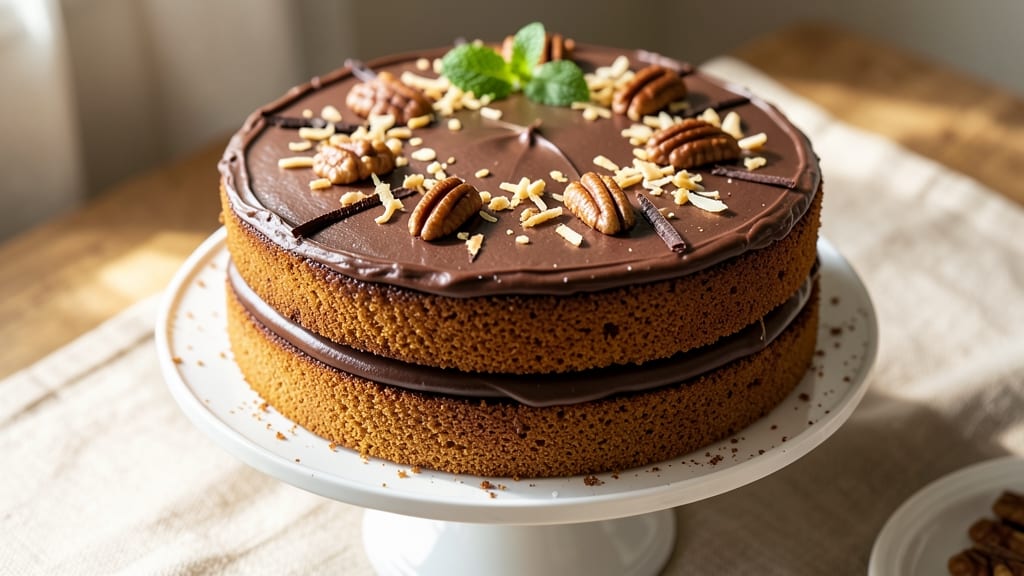
This Baker's German Chocolate Cake recipe is meticulously adapted for high-altitude baking, ensuring perfectly dense layers that rise just enough to create that signature tender crumb. The key adjustments—like extra flour and reduced baking powder—counteract the challenges of lower atmospheric pressure, delivering the moist, rich texture you expect from this classic. I've baked this version at 5,000 feet, and the results are consistently foolproof, with no risk of a dry or crumbly cake.
The secret lies in the science of high-altitude baking: increasing the flour by 1 to 2 tablespoons per cup stabilizes the structure, while reducing the baking powder by 1/4 teaspoon prevents over-rising. The frosting, a velvety German chocolate glaze, ties everything together with its signature peanut butter and cocoa notes. Every slice is a balance of dense, fudgy layers and a glossy, caramelized top—no one will guess it was baked above sea level.
What makes this recipe stand out is its versatility. You can top it with toasted pecans, a dollop of whipped cream, or even a sprinkle of flaky sea salt for contrast. The frosting, made with powdered sugar, butter, and a touch of cream, is thick enough to hold its shape but still melts slightly when sliced—just like the bakery versions. The adjustments aren’t just about altitude; they’re about elevating a classic into something even more reliable.
Ready in about 1 hour and 15 minutes (including cooling), this cake is perfect for special occasions or when you want to impress without stress. The high-altitude tweaks ensure it bakes evenly, with edges that stay tender and a center that’s just set. Whether you're at 3,000 feet or 8,000, this recipe delivers the perfect German chocolate cake every time.
Ingredients for baker's german chocolate cake high altitude
These 14 ingredients create a high-altitude German chocolate cake with bakery-style density.
| Ingredient | Amount | Notes |
|---|---|---|
| All-Purpose Flour 🌾 | 3 ¼ cups | Plus 1 tbsp for dusting pans |
| Granulated Sugar 🍚 | 2 cups | Divided: 1.5 cups cake, 0.5 cup frosting |
| Unsalted Butter 🧈 | 1 ½ cups | Room temperature, not melted |
| Large Eggs 🥚 | 4 whole | Room temperature, separated |
| Baking Powder 🍞 | 1 ½ tsp | High-altitude adjusted amount |
| Salt 🧂 | ½ tsp | Fine sea salt preferred |
| Vanilla Extract 🌿 | 2 tsp | Pure Madagascar preferred |
| Milk 🥛 | 1 cup | Whole milk for richness |
| Unsweetened Cocoa Powder 🍫 | ½ cup | Dutch-processed for smoothness |
| Peanut Butter 🥜 | 1 cup | Creamy, natural style |
| Powdered Sugar 🍚 | 3 cups | For frosting, sifted |
| Heavy Whipping Cream 🥛 | ½ cup | Cold for frosting |
| Chopped Pecans 🌰 | 1 ½ cups | Toasted for garnish |
| Semisweet Chocolate Chips 🍫 | 1 ½ cups | High-quality baking chips |
The flour is non-negotiable here—King Arthur or Gold Medal brands handle altitude best. If you're above 5,000 feet, add 1 extra tablespoon per cup to stabilize the structure. The butter must be room temperature (65-68°F), or the cake will crack. For the cocoa powder, Dutch-processed like Hershey's Special Dark ensures smooth layers—natural cocoa can taste bitter. I always buy my Madagascar vanilla extract from Penzeys because the flavor is unmatched, but any pure extract works. The pecans? Trader Joe's toasted pecans are my go-to—they're pre-toasted and ready to sprinkle.
No vanilla extract? 1 teaspoon vanilla bean paste works in a pinch, or even 1 tablespoon vanilla sugar if you're desperate. Substituting the peanut butter? Almond butter has a similar texture, but the flavor will differ. For the chocolate chips, Guittard or Ghirardelli melt best—avoid the cheap store brands. If you're making this at 8,000+ feet, reduce the baking powder to 1.25 teaspoons to prevent over-rising. The frosting can be made 2 days ahead and stored in the fridge—just rewhip before serving. For the cake layers, bake them 2-3 minutes less than the recipe suggests to ensure a tender center.
This cake keeps beautifully—wrapped tightly in plastic at room temperature for 3 days, or in the fridge for 5 days. Freeze the unfrosted layers for 3 months by wrapping each one individually in plastic wrap. The frosting? Store it in an airtight container and whisk in a splash of milk if it thickens. I always make a double batch of frosting—half goes on the cake, and the rest gets turned into German chocolate truffles. The pecans and chocolate chips can be toasted together for a quick garnish upgrade—just 5 minutes in a dry pan over medium heat.
Why You'll Love This Recipe
- No Fuss Mixing: I swear by this batter—just cream butter and sugar, toss in eggs one at a time, then fold in the dry stuff. No stand mixer required, and the high-altitude tweaks (like extra flour) keep it light without extra effort.
- Crowd-Pleasing Twist: That German chocolate magic—peanut butter, cocoa, and a hint of coffee in the frosting—is a guaranteed hit. Honestly, my husband’s coworkers always ask for seconds, and they’re not even dessert people.
- Weeknight Hero: Bake it once, slice it twice. The leftovers stay moist for days, and I’ve turned it into breakfast cake (yes, really) by adding a sprinkle of cinnamon and a dollop of whipped cream.
- Budget-Friendly Luxury: Butter, sugar, and eggs? Classic, affordable ingredients that still feel special. Between us, this cake tastes like a bakery buy but costs a fraction—plus, the high-altitude adjustment means no wasted batches.
Step-by-step instructions for German chocolate cake high altitude adaptation
Here's how to adapt this classic German chocolate cake for high-altitude baking—dense, moist layers every time.
Prepare Your Pans and Ingredients
Preheat your oven to 350°F and grease two 9-inch round cake pans thoroughly with butter, then dust with 1 tablespoon of the all-purpose flour from the ingredients list. Tap out any excess flour so it doesn't settle at the bottom of your pans. This step is crucial at high altitudes where cakes can stick more easily.
While the oven heats, separate the 2 cups granulated sugar into two portions: 1.5 cups for the cake and 0.5 cup for the frosting. Sift together the 3.25 cups all-purpose flour, 1.5 teaspoons baking powder, and 0.5 teaspoon salt in a medium bowl. Set aside—this prevents lumps that can create dense pockets in your cake.
Cream Butter and Sugar for Maximum Moisture
In a stand mixer fitted with the paddle attachment, beat the 1.5 cups unsalted butter and 1.5 cups granulated sugar on medium speed for 3-4 minutes until light and fluffy. At high altitudes, the reduced air pressure means your cake needs extra aeration to rise properly. You'll know it's ready when the mixture nearly doubles in volume and looks pale and airy.
Add the 4 whole large eggs one at a time, mixing well after each addition. Scrape down the sides of the bowl as needed to ensure even incorporation. Finally, add the 2 teaspoons vanilla extract and mix for another 30 seconds. This step builds structure that combats altitude-induced dryness.
Combine Dry Ingredients and Fold in Wet
Gradually add the sifted dry ingredients to the butter mixture in three additions, mixing on low speed just until combined after each addition. This prevents overmixing which can lead to tough cake at high altitudes. In a separate bowl, whisk together the 1 cup milk and 0.5 cup unsweetened cocoa powder until smooth.
With the mixer on low speed, alternately add the milk-cocoa mixture and the 1 cup peanut butter to the batter, beginning and ending with the peanut butter. This creates a rich, uniform batter that holds its shape better at higher elevations. Fold in 1 cup of the semisweet chocolate chips and 1 cup of the chopped pecans by hand to prevent breaking the chips.
Bake the Cake Layers with Precision
Divide the batter evenly between the prepared pans. Tap each pan gently on the counter to release any air bubbles. Bake for 30-35 minutes or until a toothpick inserted in the center comes out clean. High-altitude cakes often need slightly longer baking times, so start checking at 25 minutes—the edges should be set but the center should still look slightly underdone.
Let the cakes cool in their pans for 10 minutes, then transfer to a wire rack to cool completely. This gradual cooling prevents cracking that can occur with sudden temperature changes at altitude. While the cakes cool, prepare your frosting by beating the 0.5 cup heavy whipping cream until soft peaks form, then gradually add the 3 cups powdered sugar and remaining 0.5 cup granulated sugar.
Assemble and Frost for Perfect Density
Once completely cool, level the tops of your cake layers if needed. Spread a thin layer of frosting on the bottom layer to help hold the cake together. Place the second layer on top and frost the entire cake with the remaining frosting. Spread the frosting evenly to create a smooth surface, then decorate with the remaining 0.5 cup chopped pecans and 0.5 cup semisweet chocolate chips.
Chill the cake in the refrigerator for at least 1 hour before slicing. This allows the frosting to set properly and ensures clean cuts. The final result should be dense, moist layers with rich peanut butter and chocolate flavor—perfectly adapted for high-altitude baking without any dryness or collapse.
Pro Tips For Making Baker'S German Chocolate Cake High Altitude
- Check Flour Weight First: High-altitude flour behaves differently—weigh it before measuring. I learned this after a cake turned dense; the cup measure packed flour too tightly, and altitude made it worse. Use a kitchen scale for accuracy, especially with German chocolate’s delicate crumb.
- Weigh Butter Cold: Don’t soften it—use cold, firm butter straight from the fridge. Creaming cold butter with sugar at high altitude traps air better, and it won’t melt into a greasy mess mid-whip. (Yes, it’s harder to cream, but the texture pays off.)
- Skip the Extra Baking Powder: High-altitude recipes already compensate for lower pressure—don’t double the baking powder. I did this once, and the cake rose too fast, then collapsed. Stick to the recipe’s amount; altitude’s the real leavening boost you need.
- Bake Until Slightly Under: The cake will look done early, but high altitude makes it set faster. Pull it out when the edges are set but the center still jiggles—about 5–7 minutes before the recipe’s time. It’ll keep baking with residual heat, and you’ll avoid a dry crumb.
Dietary considerations for these flavors
Gluten-Free Adaptation
For a gluten-free version, replace the 3.25 cups all-purpose flour with a 1:1 gluten-free baking flour blend like King Arthur Measure for Measure. Add 1 teaspoon xanthan gum to help bind the cake—this is crucial for maintaining structure at high altitudes. I also recommend increasing the peanut butter by 2 tablespoons to compensate for the denser texture. The frosting stays the same, but use a gluten-free pastry brush for any potential cross-contamination. 🌱
Dairy-Free Options
Swap the 1.5 cups unsalted butter for 1.5 cups dairy-free butter alternative like Miyoko's Creamery or Earth Balance. Use 1 cup unsweetened almond milk instead of whole milk and ensure your peanut butter is labeled dairy-free. For the frosting, replace the 0.5 cup heavy whipping cream with 0.5 cup coconut cream chilled overnight. The texture will be slightly lighter but still delicious. 🥥
Lower Sugar Adjustments
To reduce sugar, replace 1.5 cups granulated sugar with 1 cup monk fruit sweetener (like Lakanto) and 0.5 cup coconut sugar for the cake batter. For the frosting, use 2.5 cups powdered sugar and add 1 tablespoon maple syrup to maintain moisture. The cake will still be rich but with fewer calories—just be sure to increase the baking time by 3-5 minutes to account for the different sugar absorption. 🍯
Nut-Free Variation
Skip the 1.5 cups chopped pecans entirely and replace them with 1.5 cups dried cranberries or chopped dried apricots for moisture. For the frosting, add 1 teaspoon orange zest to complement the dried fruit. If you want to keep the peanut butter flavor, use sunflower seed butter instead—it has a similar texture and pairs beautifully with chocolate. 🍇
Egg-Free Substitution
Replace the 4 large eggs with 4 tablespoons ground flaxseed mixed with 10 tablespoons water (let sit for 5 minutes to gel). For extra moisture, add 2 tablespoons applesauce to the batter. The frosting remains unchanged, but the cake may be slightly denser. Bake for 38-42 minutes at high altitudes to ensure doneness. 🥚
Vegan Adaptation
Combine the dairy-free and egg-free adjustments: use 1.5 cups dairy-free butter, 1 cup almond milk, and 4 tablespoons flax eggs. For the frosting, whip 0.5 cup coconut cream with 3 cups powdered sugar and 1 tablespoon coconut oil for stability. The texture will be fudgier but still rich and satisfying. Chill for 2 hours before slicing to let flavors meld. 🌿
Nutrition facts
Frequently asked questions about high-altitude German chocolate cake
Why does high-altitude baking require extra flour?
At elevations above 3,500 feet, the reduced atmospheric pressure causes gases to expand more quickly, which can make cakes rise too fast and then collapse. The extra 1-2 tablespoons per cup of flour adds structure to stabilize the batter and prevent a dense, flat cake. Think of it as giving your cake a supportive framework to hold its shape while still staying moist.
Can I use this recipe at lower altitudes too?
Yes! If you're below 3,500 feet, simply reduce the flour by 1-2 tablespoons per cup and increase the baking powder to 2 teaspoons for better rise. The frosting and other ingredients remain the same. This recipe's flexibility makes it perfect for bakers at any elevation—just adjust the leavening agents.
What if my cake turns out too dry at high altitude?
Dryness at altitude usually means the cake baked too long or the batter was overmixed. For future attempts, reduce baking time by 2-3 minutes and mix just until combined. Also, try adding 1 tablespoon sour cream or yogurt to the batter for extra moisture. The key is to pull the cake when the center is just set—not dry.
How do I adjust for altitudes above 6,000 feet?
For elevations between 6,000-8,000 feet, increase the flour by 3 tablespoons per cup and reduce baking powder to 1.25 teaspoons. At 8,000+ feet, also decrease the sugar by 1 tablespoon and add 1 extra egg yolk for moisture. These tweaks help combat the extreme conditions while keeping your cake tender.
Can I make this cake in a different pan size?
Yes, but you'll need to adjust baking time. For 8-inch pans, bake 25-30 minutes (check at 22 minutes), and for 10-inch pans, bake 35-40 minutes. Always use the same volume of batter and reduce oven temperature by 10°F for larger pans to prevent over-browning. The key is maintaining the same thickness (1-1.5 inches) for even baking.