
Desserts
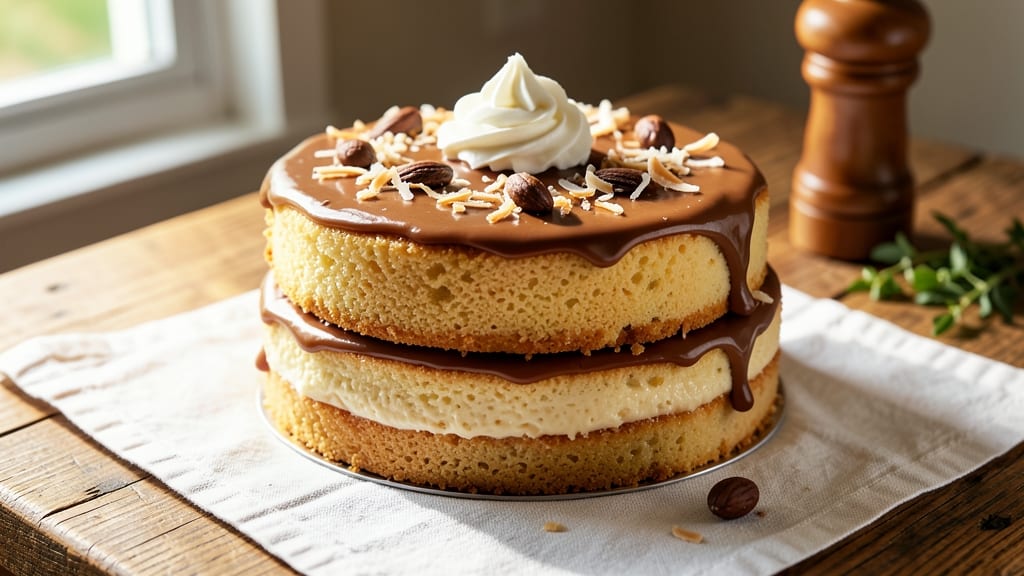
This Bahamian coconut cake delivers layers of moist vanilla cake and toasted coconut crunch that taste like a Bahamian sunset. 🌅 The secret lies in blending fresh coconut milk with traditional cake batter, creating a dessert that’s both rich and light—perfect for celebrations or a tropical treat any day. What sets this apart is the toasted coconut layer between each cake layer, adding texture that mimics the island’s signature coconut bread.
The recipe combines simple pantry staples with a few key techniques to achieve that signature Bahamian flavor. Fresh grated coconut isn’t just an ingredient—it’s the star, toasted to golden perfection for that irresistible crunch. The cake itself stays tender and moist thanks to a blend of coconut milk and buttermilk, while vanilla extract adds depth that feels authentically tropical. Every bite balances sweetness with the nutty, caramelized notes of toasted coconut.
Once baked, the cake reveals layers of golden cake separated by flakes of toasted coconut, creating a visual and textural masterpiece. The frosting—made with coconut cream—ties everything together, ensuring every forkful delivers that perfect tropical experience. This isn’t just dessert; it’s a taste of the Bahamas, brought to life in your own kitchen.
The best part? This cake keeps well for days, making it ideal for gatherings or meal prep. Serve it with a dollop of whipped cream or fresh berries for a modern twist, or enjoy it as-is to let the coconut flavors shine. Ready to bring a little Bahamian sunshine to your table? Let’s get baking.
Ingredients for bahamian coconut cake
Tropical flavors start with these 13 simple yet powerful ingredients.
| Ingredient | Amount | Notes |
|---|---|---|
| All-Purpose Flour 🌾 | 3 cups | Sifted for light texture |
| Granulated Sugar 🍚 | 2 cups | White or light brown |
| Coconut Milk (Canned, Full-Fat) 🥥 | 1 can | 13.5 oz, shaken well |
| Unsalted Butter 🧈 | 1 cup | Room temperature, full-fat |
| Buttermilk 🥛 | 1 cup | Fresh, not powdered |
| Pure Vanilla Extract 🌿 | 2 tbsp | Bottled, not imitation |
| Baking Powder 🍞 | 2 tsp | Aluminum-free preferred |
| Salt 🧂 | ½ tsp | Fine sea salt |
| Unsweetened Shredded Coconut 🥥 | 3 cups | Freshly grated, unsweetened |
| Large Eggs 🥚 | 3 whole | Room temperature |
| Coconut Cream (Canned, Chilled) 🥥 | 1 can | 13.5 oz, thick part only |
| Powdered Sugar 🍚 | 2 cups | For frosting, sifted |
| Lemon Juice 🍋 | 1 tbsp | Freshly squeezed |
The coconut milk and shredded coconut are non-negotiable for that Bahamian sunshine. Trader Joe's or Costco carry the best full-fat canned coconut milk—look for brands like Thai Kitchen or Goya. Freshly grated coconut makes all the difference (the pre-shredded kind lacks that caramelized crunch), so grab a box of unsweetened flakes and toast them yourself in a dry pan until golden. The buttermilk? Homemade is best—just mix 1 cup milk with 1 tbsp vinegar and let it sit for 5 minutes. For the frosting, chill the coconut cream overnight—the thick top layer is pure gold for that luscious texture.
No coconut milk? Substitute with evaporated milk plus 1 tbsp coconut oil—it won’t be identical, but close. Short on shredded coconut? Toasted coconut flakes from a jar work in a pinch, but they’re not the same. The vanilla extract is where you can splurge—Bouchon or Nielsen-Massey deliver that deep, tropical aroma. For the frosting, if you can’t find coconut cream, whipped coconut milk from a can (the thick part) works, but it’s less stable. And pro tip: Add lemon juice to the frosting—it brightens the coconut flavor and keeps it from tasting too sweet.
This cake keeps beautifully—5 days covered at room temperature or 1 week in the fridge. The frosting hardens in the fridge, so bring it to room temp before serving. For make-ahead magic, bake the cake layers 2 days ahead, wrap tightly, and store at room temp. The frosting can be made 1 day ahead—just whisk it back to fluffy before using. Freezing? Freeze unfrosted layers for 3 months—thaw and frost fresh for the best texture. Serve with berries or a sprinkle of toasted coconut for extra flair.
Why You'll Love This Recipe
- Pantry-Friendly Magic: I swear by this recipe because it uses what’s already in my cupboard—no weird imports or hard-to-find stuff. That can of coconut milk? The butter sitting in the fridge? Boom, you’re halfway there. No last-minute grocery runs, just pure convenience.
- Tropical Cream Dream: The buttermilk and coconut milk combo gives this cake this unreal texture—moist but not dense, with a hint of tang that cuts through the sweetness. It’s like a Bahamian vacation in every bite, and honestly? It’s the kind of flavor that makes people ask, “What’s in this?”
- Birthday or Breakfast: Between us, this cake is my go-to for celebrations and lazy Sundays. Slice it for a party dessert, or serve it warm with a dollop of whipped cream for a weekend treat. It’s fancy enough for company but simple enough to make when you’re just craving something special.
- Leftovers That Win: I make a double batch because this cake stays fresh for days—no sad, dry crumbs here. The coconut milk keeps it tender, and the butter crust? Still perfect after three days. Plus, it’s cheap to make, so I don’t feel guilty feeding the whole family seconds.
Step-by-step instructions for Bahamian coconut cake
Transform simple ingredients into a tropical masterpiece with these foolproof baking steps!
👨🍳 Step 1: Prepare the Coconut Crunch Topping
Preheat your oven to 350°F and line a baking sheet with parchment paper. In a medium bowl, combine the 3 cups unsweetened shredded coconut with the 2 tbsp pure vanilla extract and 1 tbsp lemon juice. Toss gently until the coconut is evenly moistened and fragrant.
Spread the coconut mixture in an even layer on the prepared baking sheet. Bake for 8-10 minutes until the coconut turns a beautiful golden brown and smells toasty. Watch it closely—the coconut burns quickly! Let it cool completely before using, as warm coconut will make your cake soggy. This topping is what gives Bahamian coconut cake its signature crunch!
🍳 Step 2: Cream Butter and Sugar for Light Texture
In a large mixing bowl, beat the 1 cup room temperature unsalted butter and 2 cups granulated sugar together on medium speed for 3-4 minutes until light and fluffy. You'll see the mixture nearly double in volume and become pale—this is crucial for that tender cake texture. Scrape down the sides of the bowl with a spatula to ensure even mixing.
Add the 3 whole large eggs, one at a time, mixing well after each addition. Then stir in the 1 cup buttermilk and 1 can coconut milk (shaken well). Mix until just combined—don't overmix or your cake will be dense. The batter should be smooth but slightly thick, like heavy pudding.
👨🍳 Step 3: Combine Dry Ingredients and Fold Gently
In a separate bowl, whisk together the 3 cups all-purpose flour (sifted), 2 tsp baking powder, and 0.5 tsp salt. Gently fold this dry mixture into your wet ingredients using a spatula, mixing just until no flour streaks remain. This prevents developing too much gluten, which keeps the cake tender.
Fold in half of the cooled toasted coconut (about 1.5 cups) using gentle motions. Be careful not to overmix—the coconut is delicate and will break down if stirred too vigorously. The batter should be thick but pourable. Here's where the magic happens: the toasted coconut will add both texture and that authentic Bahamian flavor!
🥘 Step 4: Layer and Bake the Tropical Delight
Pour half of the batter into a greased and floured 9-inch round cake pan (or two 8-inch pans if preferred). Sprinkle half of the remaining toasted coconut evenly over the batter. Top with the remaining batter, then sprinkle the final coconut layer. Tap the pan gently on the counter to release any air bubbles.
Bake for 30-35 minutes or until a toothpick inserted in the center comes out clean. The cake should be golden brown and spring back when gently pressed. Real talk: your oven might run hot, so start checking at the 25-minute mark. If the top browns too quickly, tent with foil to prevent over-browning while the center finishes cooking.
🍽️ Step 5: Frost and Assemble the Final Layer
While the cake cools, prepare the coconut cream frosting. Scoop out the thick coconut cream from the chilled can (discard the watery part) and whip it with the 2 cups powdered sugar until light and fluffy. This should take about 2-3 minutes with a hand mixer. The frosting should be thick enough to hold its shape but still spreadable.
Once the cake has completely cooled, spread a generous layer of the coconut cream frosting over the top. Press the remaining toasted coconut into the frosting, covering it completely. This final layer creates that signature crunchy-sweet contrast that makes Bahamian coconut cake so special. Serve at room temperature for the best texture and flavor experience!
Pro Tips For Making Bahamian Coconut Cake
- MEASURE COCONUT MILK PRECISELY: Canned coconut milk separates when opened—shake it hard for 30 seconds before measuring, then tap the can against the counter to settle the cream. Pour into your measuring cup slowly to avoid losing the thick layer; that cream is what makes this cake rich, not just sweet.
- WHISK BUTTERMILK AND FLOUR FIRST: Mix the buttermilk and flour together before adding anything else—this prevents lumps in your batter. Let it sit for 5 minutes while you melt the butter; the flour will start to soften, making the final mix smoother and lighter. (Yes, even if you’re impatient like me.)
- BAKE AT 325°F, NOT HIGHER: Coconut cake needs time to set properly—325°F is the sweet spot. I learned this the hard way: cranking it to 350°F gives you a cracked top and a dense center. Check for doneness at 45 minutes with a toothpick; it should come out clean but still have a slightly moist crumb.
- UPGRADE WITH BROWN SUGAR: Swap ¼ cup of the granulated sugar for light brown sugar—it adds depth and a subtle caramel note that cuts through the coconut’s sweetness. No brown sugar? A splash of molasses (1 tsp) in the coconut milk does the trick, but the texture won’t be quite the same.
Troubleshooting this dish
Coconut Too Dry?
If your toasted coconut turns out dry or loses its flavor, you likely toasted it too long. The ideal time is 8-10 minutes at 350°F—watch closely for golden brown color. For extra moisture, toss the coconut with 1 tbsp coconut milk before toasting. Store any extra toasted coconut in an airtight container for up to 2 weeks to preserve its crunch and flavor.
Cake Too Dense?
Overmixing the batter is the #1 culprit for dense cake. Mix wet ingredients until just combined, then fold dry ingredients gently with a spatula. Also, ensure your butter is truly room temperature (it should dent when pressed but not be greasy). For extra tenderness, replace ½ cup all-purpose flour with ½ cup cake flour if you have it.
Frosting Too Thin?
If your coconut cream frosting isn't holding its shape, it likely wasn't chilled long enough. The coconut cream needs 24 hours in the fridge to fully thicken. For immediate fixes, add 1 tbsp powdered sugar at a time while whipping, or chill the bowl in ice water for 5 minutes while mixing. Avoid adding too much powdered sugar at once—it can make the frosting grainy.
Uneven Layers?
Uneven cake layers usually mean the batter wasn't distributed evenly. Pour the first layer into the pan, then use a spatula to smooth the top. For the second layer, spread the remaining batter evenly over the first layer. Tap the pan gently on the counter 3-4 times to release air bubbles before baking. If using two 8-inch pans, divide the batter evenly between them using a kitchen scale for precision.
Cake Sticking?
Grease your cake pan thoroughly with butter, then dust with flour (or use a non-stick spray). For extra insurance, line the bottom with parchment paper. If the cake still sticks, run a thin knife around the edges while the cake is still warm. Never use metal utensils on a hot cake—it can tear the layers. Let the cake cool in the pan for 10 minutes before transferring to a wire rack.
Frosting Too Sweet?
The coconut cream frosting can taste overly sweet if the powdered sugar isn't balanced. Add 1 tsp lemon juice or ½ tsp vanilla extract to brighten the flavor. For a less sweet version, reduce powdered sugar to 1.5 cups and add 1 tbsp coconut milk to maintain consistency. Taste as you whip—adjust gradually to avoid overcorrecting.
Nutrition facts
Frequently asked questions
Can I make this cake without fresh coconut?
Yes, but the texture and flavor won't be quite the same. Use unsweetened coconut flakes from a jar instead of freshly grated coconut. Toast them in a dry pan for 3-4 minutes until golden, then proceed with the recipe. For extra richness, add 1 tbsp coconut oil to the batter to compensate for the lack of fresh coconut's moisture.
How do I know when the cake is fully baked?
Insert a toothpick into the center of the cake—it should come out clean or with just a few moist crumbs. The cake should also spring back slightly when gently pressed in the middle. If the top browns too quickly, cover loosely with aluminum foil after 20 minutes to prevent over-browning while the center finishes baking.
Can I substitute buttermilk in this recipe?
If you don't have buttermilk, mix 1 cup milk (any kind) with 1 tbsp lemon juice or vinegar, then let it sit for 5 minutes to curdle. This homemade version works just as well. For a dairy-free option, use 1 cup coconut milk (from the can) plus 1 tbsp vinegar—it adds extra coconut flavor that pairs perfectly with the cake.
Why does my frosting separate when I whip it?
This usually happens if the coconut cream wasn't chilled long enough or if you add too much powdered sugar too quickly. Scoop out only the thick cream from the chilled can (discard the watery part) and whip it gradually. If separation occurs, mix in 1 tbsp coconut milk to re-emulsify, then whip again until smooth. For extra stability, chill the bowl in ice water while whipping.
How can I make this cake gluten-free?
Replace the 3 cups all-purpose flour with a 1:1 gluten-free baking flour blend (like Bob's Red Mill or King Arthur). Add ½ tsp xanthan gum to help bind the cake. For the coconut crunch topping, ensure your coconut flakes are certified gluten-free. The texture may be slightly denser, but the tropical flavor will still shine!