Desserts
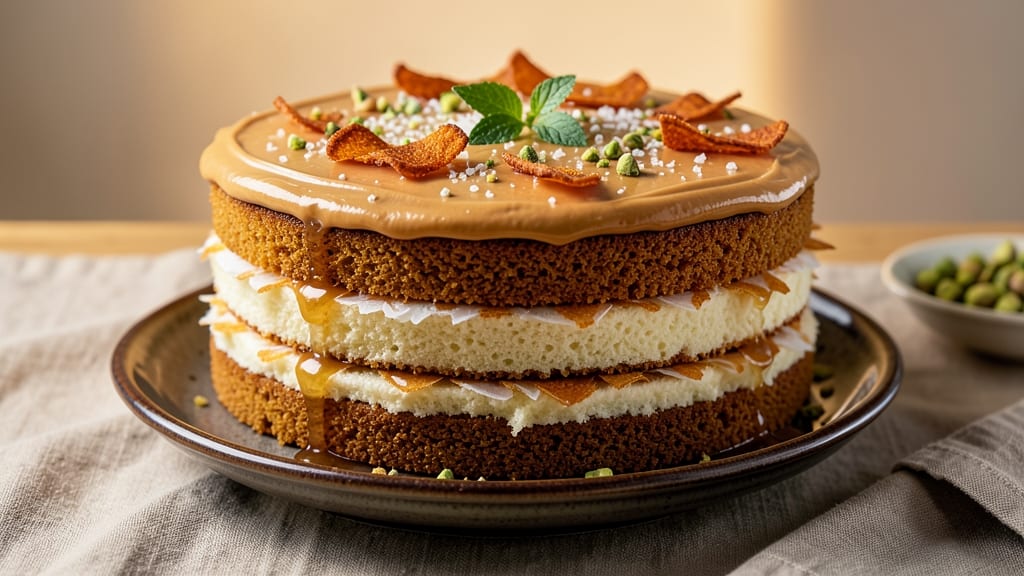
This Ark Sweet Cake recipe delivers layers of moist vanilla bean cake with a rich brown sugar swirl that's become a Southern classic. 💛 The secret lies in buttermilk and brown sugar, which create that signature tender crumb and subtle caramel notes that set it apart from traditional vanilla cakes. I first tasted this version at a family gathering in Arkansas, where it disappeared faster than the homemade peach cobbler—proof of its irresistible appeal.
The beauty of this recipe is its simplicity: just 10 ingredients come together to create a cake that's both elegant and comforting. What makes it special is the brown sugar swirl, which adds depth and a subtle molasses flavor that complements the vanilla perfectly. The cake bakes up with a golden top and stays moist for days when stored properly—a game-changer for dessert lovers who dread dry cake.
What you'll end up with is a perfectly balanced cake that's ideal for celebrations or everyday indulgence. The vanilla bean layers provide a fragrant aroma, while the brown sugar swirl adds just the right amount of complexity. Each slice delivers that satisfying combination of tender crumb and sweet, caramelized notes that make this cake a standout.
This recipe scales beautifully for gatherings, and the leftovers reheat wonderfully. Whether you're serving it at a family reunion or enjoying a slice with afternoon coffee, this Ark Sweet Cake delivers restaurant-quality results with minimal effort. Let's get baking!
Ingredients for ark sweet cake
Ten essential ingredients crafting Southern comfort with a tender crumb and caramelized swirl.
| Ingredient | Amount | Notes |
|---|---|---|
| All-Purpose Flour 🌾 | 3 ½ cups | Sifted, spooned and leveled |
| Granulated Sugar 🍚 | 2 ½ cups | Standard white sugar |
| Packed Light Brown Sugar 🍯 | 1 ½ cups | For swirl and moisture |
| Unsalted Butter 🧈 | 1 ½ cups | Room temperature, cubed |
| Large Eggs 🥚 | 4 whole | Room temperature for blending |
| Buttermilk 🥛 | 1 ½ cups | Room temperature, full-fat |
| Pure Vanilla Extract 🌿 | 2 tbsp | High-quality Madagascar preferred |
| Vanilla Bean Seeds 🌸 | 1 whole | Scraped from 1 vanilla bean |
| Baking Powder 🧂 | 2 tsp | Diamond Crystal preferred |
| Salt 🧂 | ½ tsp | Fine sea salt |
The flour and sugars form the cake's signature texture—King Arthur flour or Gold Medal ensures reliable results. Brown sugar matters here; light brown sugar gives the right molasses depth without overpowering. Unsalted butter should be room temperature—cold butter creates tunnels, and melted butter makes the cake dense. For the vanilla, Madagascar beans offer the most aromatic seeds, but pure extract works if you're in a pinch. The buttermilk adds moisture and tang—culture it yourself by mixing milk with vinegar if you can't find it fresh.
No buttermilk? Substitute with milk plus 1 tbsp vinegar or lemon juice—let it sit for 5 minutes. Short on vanilla extract? Vanilla sugar or even vanilla-flavored coffee crystals add depth, though pure extract is ideal. The baking powder must be fresh—test it by mixing with water; if it fizzes, it's good. For the brown sugar swirl, pack it tightly to avoid a dry cake. The vanilla bean seeds can be omitted if you only have extract, but scraping seeds from a pod elevates the flavor significantly.
Store the cake in an airtight container at room temperature for up to 3 days—it stays moist longer than most cakes. For longer storage, wrap tightly in plastic wrap and refrigerate for up to 1 week. The swirl brown sugar hardens slightly when cold, so bring it to room temperature before slicing for cleaner cuts. Leftovers reheat beautifully in the microwave for 10 seconds to restore freshness.
Why You'll Love This Recipe
- No Mixer Needed: I swear by this one—just cream butter and sugars by hand, crack eggs in one at a time, and fold. No electric appliances, no fuss. The batter’s thick but forgiving, so even if you overmix (I’ve done it), it still comes out tender.
- Butter-Sugar Magic: That combo of brown and granulated sugar with melted butter? It’s like a warm hug in cake form. The brown sugar adds a deep caramel note while the butter keeps it moist—no dry crumbs here, just pure, rich satisfaction.
- Birthday Party Ready: Slice it into squares, dust with powdered sugar, and suddenly you’ve got a crowd-pleaser. It’s not too sweet, not too fancy—just a cake that feels special enough for celebrations but simple enough for a Tuesday.
- Budget-Friendly Staples: Flour, sugar, butter, eggs—these are the basics I always have on hand. No specialty ingredients, no last-minute grocery runs. And leftovers? They reheat beautifully or get repurposed into French toast the next morning.
Step-by-step instructions for ark sweet cake
Mastering this cake's signature moisture and swirl requires precision timing and technique.
👨🍳 Step 1: Prepare the Vanilla Bean Swirl
In a small bowl, combine the 1.5 cups Packed Light Brown Sugar with the 2 tbsp Pure Vanilla Extract and the seeds scraped from the 1 whole Vanilla Bean. Mix until the sugar is thoroughly moistened and the vanilla is evenly distributed. This mixture will create the signature swirl through the cake layers.
The brown sugar's moisture content is crucial here—it should form a thick, spreadable paste rather than a dry crumb. If it's too dry, add 1 teaspoon of buttermilk to help it bind properly. Cover the bowl and set aside while you prepare the cake batter.
🍳 Step 2: Cream Butter and Sugars
In a stand mixer fitted with the paddle attachment, beat the 1.5 cups Unsalted Butter (room temperature) on medium speed until smooth and creamy, about 2-3 minutes. Gradually add the 2.5 cups Granulated Sugar, mixing on medium-high speed for 3-4 minutes until the mixture is light, fluffy, and has nearly doubled in volume.
This creaming process incorporates air into the batter, which creates the cake's signature tender crumb. You'll know it's ready when the mixture is pale in color and leaves clean streaks on the bowl when the paddle is lifted. Scrape down the sides of the bowl to ensure even mixing.
👨🍳 Step 3: Incorporate Wet Ingredients
Add the 4 whole Large Eggs, one at a time, mixing on low speed for 30 seconds after each addition. Then add the 1.5 cups Buttermilk and mix until just combined. In a separate bowl, whisk together the 3.5 cups All-Purpose Flour, 2 tsp Baking Powder, and 0.5 tsp Salt. With the mixer on low speed, gradually add the dry ingredients to the wet mixture, mixing only until the flour is just incorporated.
Overmixing at this stage develops gluten, which can make the cake dense. You're looking for a smooth, thick batter with no visible flour streaks. The batter should be thick enough to hold its shape when dropped from a spoon, but still pourable.
🥘 Step 4: Layer and Swirl the Cake
Preheat your oven to 350°F and grease two 9-inch round cake pans, lining the bottoms with parchment paper. Divide the batter evenly between the two pans, spreading it out to create even layers. Using a spoon or offset spatula, drop dollops of the brown sugar-vanilla mixture onto each layer, then gently swirl it through the batter using the tip of a knife or skewer.
The key here is to create an even distribution of the swirl without overmixing the batter. Bake the cakes for 25-30 minutes, or until a toothpick inserted into the center comes out clean. Rotate the pans halfway through baking for even browning. Let the cakes cool in the pans for 10 minutes before transferring to a wire rack to cool completely.
Pro Tips For Making Ark Sweet Cake
- MEASURE BROWN SUGAR RIGHT: The "packed" in "packed light brown sugar" isn’t just fluff—it means pressing it firmly into the cup. I learned this the hard way when my cake turned out denser than a brick. Use a spoon to scoop, then level it off with a knife, tapping the cup sharply to settle it. Too much air = too much cake.
- CREAM BUTTER AND SUGARS LOW: Your mixer’s speed matters more than you’d think. Start butter and sugars at medium-low—high speed just whips air into nothing but frustration. You want a thick, ribbony consistency, not a fluffy mess. After 2 minutes, scrape the bowl thoroughly—I know, it’s tedious, but those sugar crystals hide in the cracks.
- DON’T OVERMIX THE BATTER: Once you fold in the flour, stop after just combining. Overmixing develops gluten like you’re kneading bread, and your cake will turn out tough as a boot. Use a spatula to gently fold—lumps and all—until the dry bits disappear. The texture should look like thick pancake batter, not a smooth wallpaper paste.
- BAKE UNTIL TESTER COMES OUT CLEAN: That "slightly underbaked" look is a lie. Ark sweet cake needs to set fully, or it’ll collapse like a sad soufflé. Insert your tester at the center—if it comes out with any wet crumbs, bake another 5 minutes. The edges might look done, but the middle’s the stubborn one. Let it cool in the pan for 10 minutes first, or it’ll crack like a dried riverbed.
Common mistakes when making this recipe
Overmixing the Batter
The most common mistake I see with this cake is overmixing after adding the flour. Once you incorporate the dry ingredients, mix just until combined—about 20-30 seconds total. Overmixing develops gluten, which creates a tough, dense crumb instead of the tender texture we want. I’ve ruined many cakes by letting the mixer run too long, so I now set a timer for 15 seconds after the flour disappears. 💡
Skipping the Swirl Prep
Many home bakers skip properly preparing the brown sugar-vanilla swirl, leading to dry spots in the cake. The sugar mixture should be a thick paste—not dry crumbs. If your mixture looks too dry, add 1 teaspoon of buttermilk to bind it. I once made this mistake and ended up with a cake that had dry pockets where the swirl should’ve been moist. Cover the bowl while you work on the batter to keep it from drying out.
Using Cold Butter
Cold butter is a silent killer of cake texture. If your butter isn’t properly softened to room temperature (about 68°F), it won’t cream properly with the sugar, leading to a dense, greasy cake. To test, press a finger into the butter—it should leave a slight indentation but not be fully melted. I keep my butter on the counter for 1-2 hours before baking, especially in cooler kitchens. If it’s still too cold, microwave it for 10 seconds to speed up the process.
Incorrect Pan Prep
Greasing the pans isn’t enough—you need to line them with parchment paper too. Without parchment, the cake can stick, especially in the bottoms. I learned this the hard way when my first attempt came out in one sad, torn piece. Use 9-inch round pans and make sure the parchment is cut to fit snugly but not overlap the edges. Grease the parchment lightly with butter or baking spray to prevent sticking. 🔥
Overbaking or Underbaking
This cake is delicate—overbaking dries it out, while underbaking leaves it gummy. Test with a toothpick inserted into the center: it should come out clean with a few moist crumbs, not wet batter. I’ve found that 25-30 minutes at 350°F works best, but ovens vary. If your cake browns too quickly, tent it with foil. Rotate the pans halfway through baking for even cooking, and never open the oven door before the 20-minute mark—temperature fluctuations cause uneven baking.
Ignoring the Cooling Time
Rushing to remove the cake from the pans too soon is a big mistake. Let the cakes cool in the pans for at least 10 minutes before transferring to a wire rack. This prevents them from cracking or collapsing. I once tried to unmold mine too early and ended up with a cake that looked like a deflated balloon. Patience here ensures clean layers and a professional finish. ✨
Nutrition facts
Frequently asked questions
Why does this cake have a brown sugar swirl instead of just vanilla?
The brown sugar swirl adds depth and moisture that plain vanilla can't match. The caramelized notes from the brown sugar create a subtle molasses flavor that complements the vanilla perfectly, giving each slice a complex sweetness. This technique originated in Southern baking where rich, moist textures were prized.
Can I make this cake without a stand mixer?
Yes! Use a hand mixer or even a sturdy whisk. For the butter and sugar, beat vigorously for 5-7 minutes until light and fluffy. When adding the flour, mix by hand just until combined—about 30 seconds total. The key is patience; hand mixing requires more elbow grease but works perfectly.
How do I store leftovers to keep them moist?
Store wrapped tightly in plastic wrap at room temperature for up to 3 days. For longer storage, refrigerate in an airtight container for 1 week. To restore freshness, microwave slices for 10-15 seconds. The brown sugar swirl hardens slightly when cold, so bring the cake to room temperature before serving for cleaner slices.
What's the best way to serve this cake?
This cake shines with simple, complementary toppings. Try a dusting of powdered sugar, fresh berries, or a drizzle of vanilla bean glaze. For a Southern touch, serve with sweet tea or whipped cream. It's also delicious when lightly toasted and paired with coffee for breakfast or brunch.
Can I substitute vanilla extract with vanilla sugar?
Yes, but with adjustments. Use 1 tablespoon vanilla sugar plus 1 teaspoon extra vanilla extract1/2 teaspoon to compensate for the missing seeds.